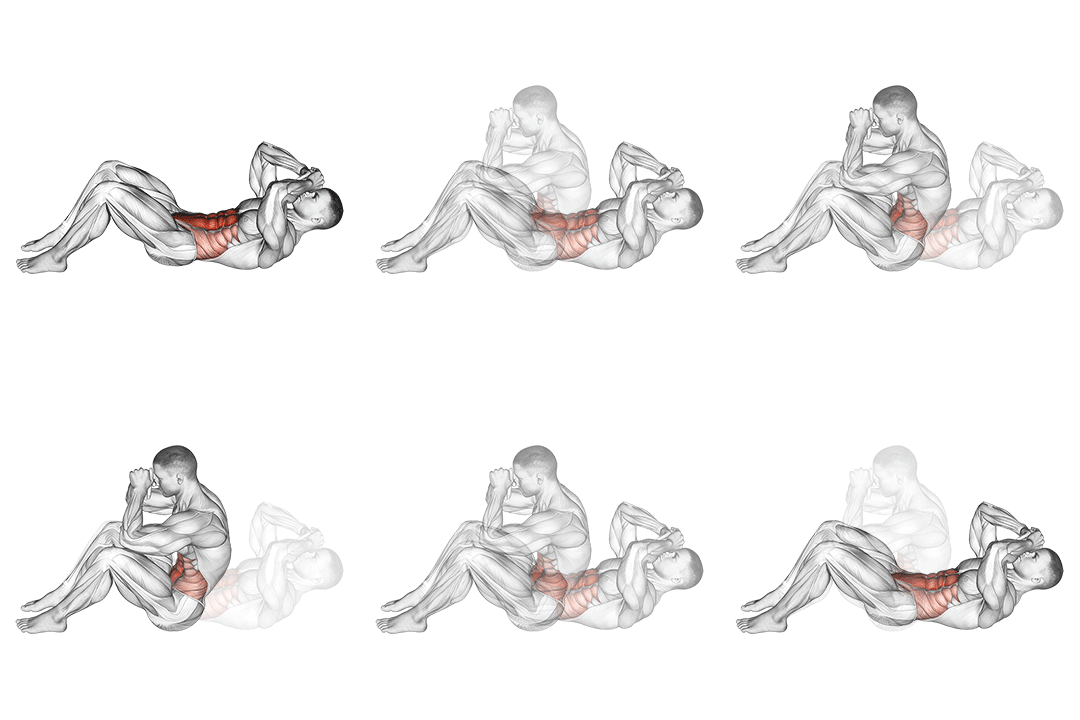
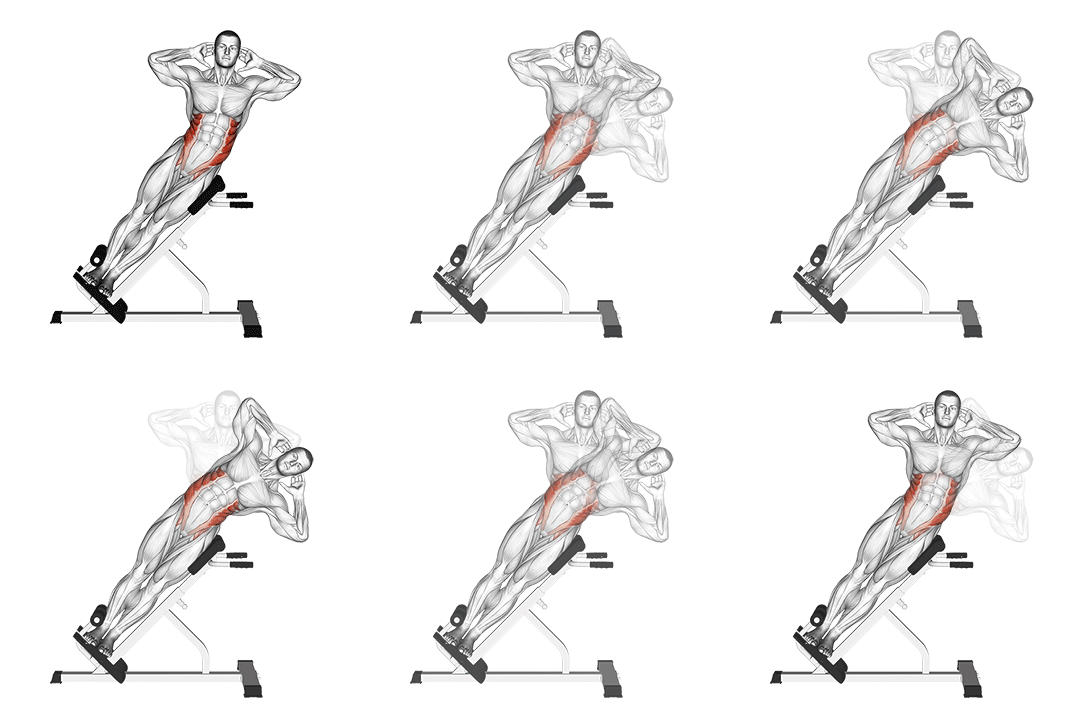
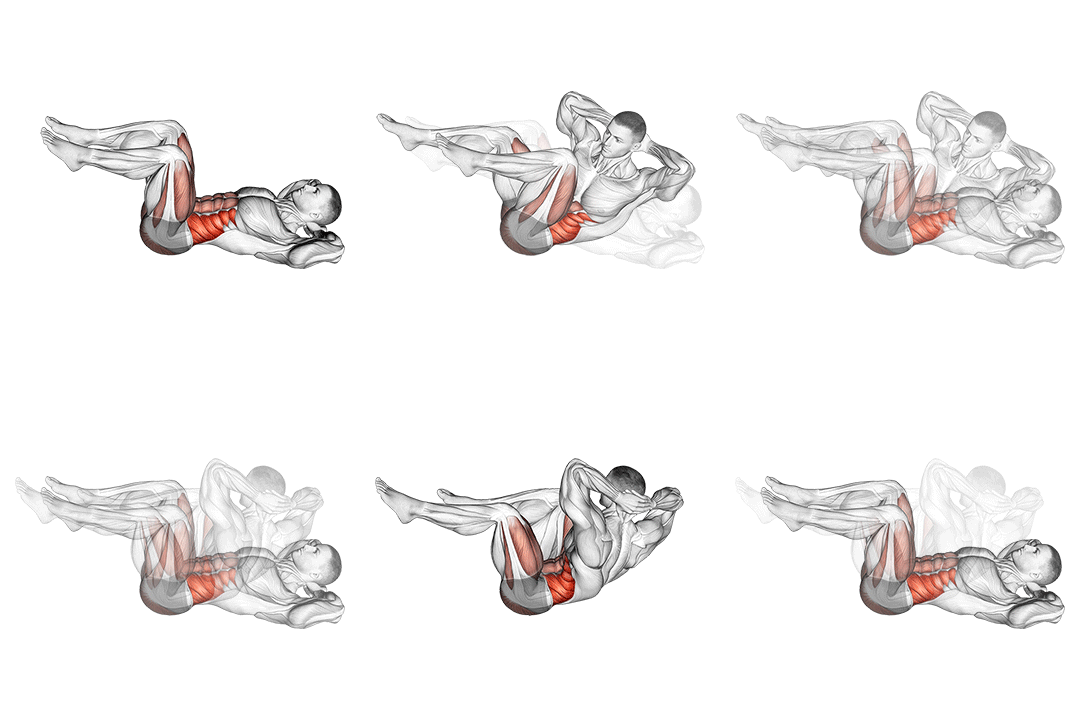
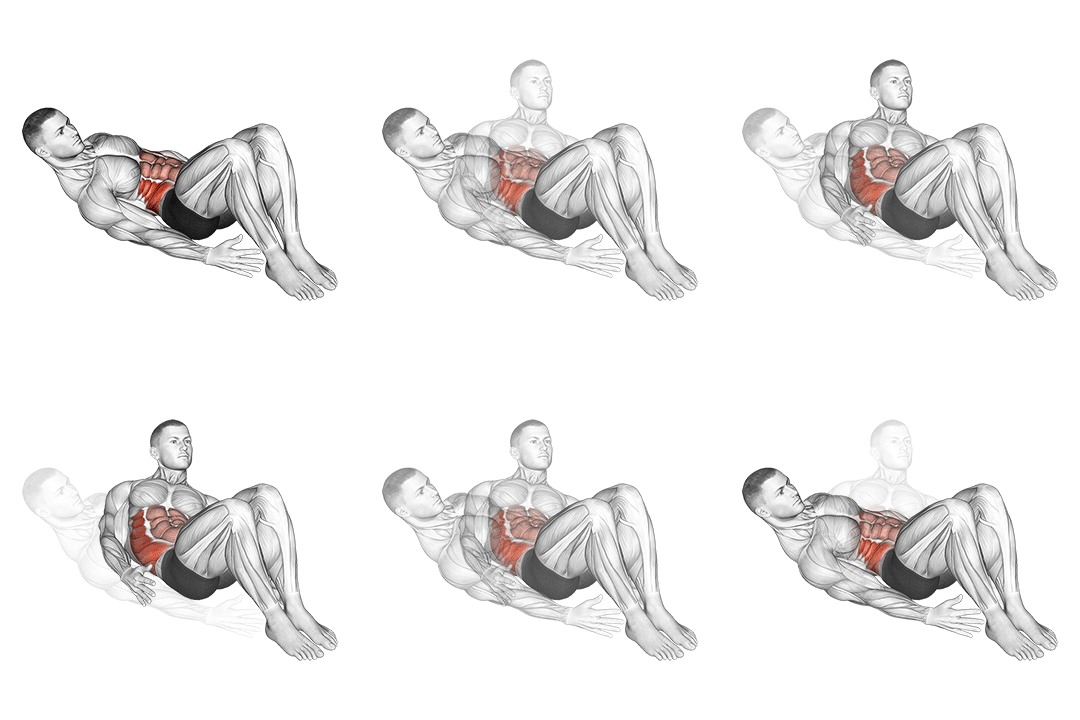
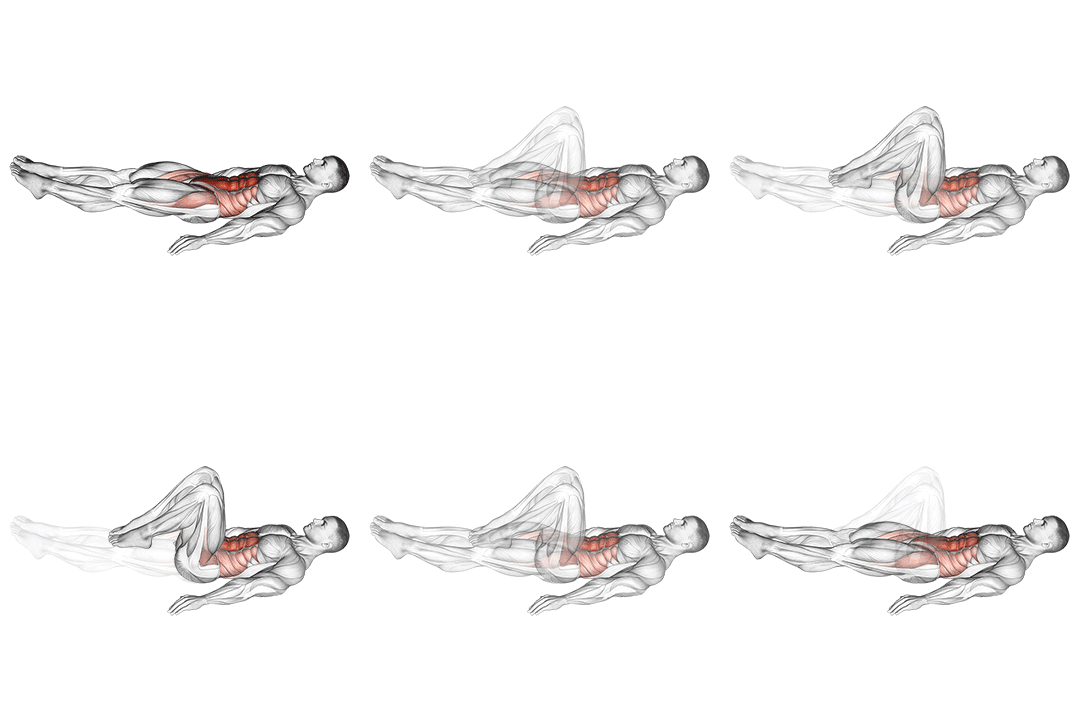
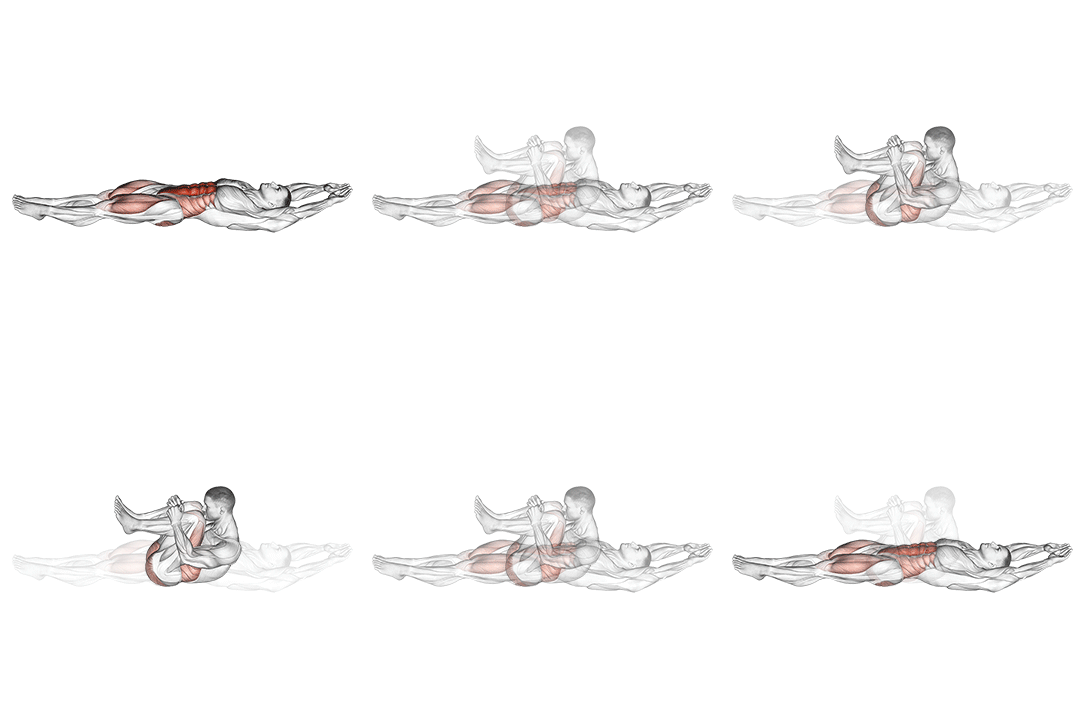
Lying Leg Raise Flat Bench
intermediate strength exercise · body weight · targets abs
- Body part
- waist
- Primary target
- abs
- Equipment
- body weight
- Difficulty
- intermediate
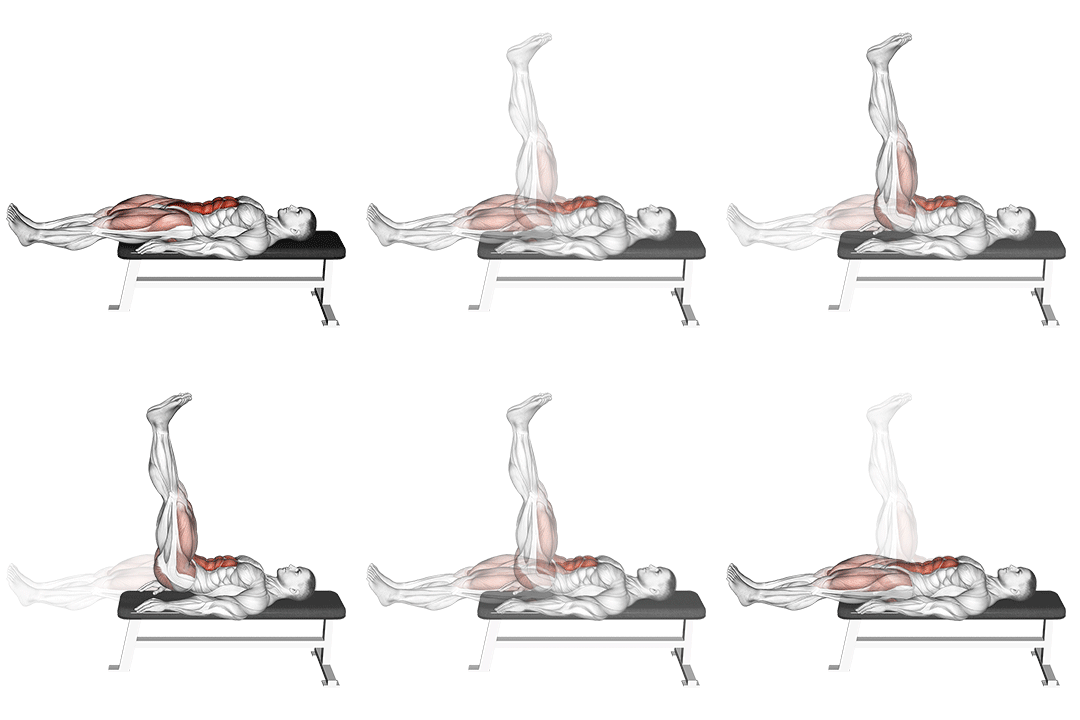
The lying leg raise on a flat bench is performed face-up on a bench with hands gripping the bench edges or under the hips for stability. From this anchored position, you raise the legs (typically straight) toward vertical, then lower under control. The bench provides anchor points the floor doesn't, which lets you load the lower abs through a full range of motion without the swinging that floor-based leg raises sometimes cause. It's a useful intermediate progression between floor leg raises and hanging leg raises. The bench allows for greater range than the floor (legs can go below bench level on the descent), but doesn't require the grip strength that hanging variations demand. This makes lying leg raises accessible to trainees who want serious lower-ab work but can't yet manage hanging exercises. The range matters here. The most valuable part of a lying leg raise is the bottom position — when the legs are below the bench level and the lower abs are fully stretched and contracted. Cutting that range to 'easier' versions (legs only descending to bench level) misses most of the benefit. Build to full range over weeks if needed, but don't stay in shortened range indefinitely.
Why train the Lying Leg Raise Flat Bench?
- Loads the lower abs through full range with bench-aided positioning.
- Bridges floor leg raises and hanging leg raises in a logical progression.
- Doesn't require grip strength like hanging variations.
- Allows for added load via ankle weights or holding a medicine ball.
- Pairs well with crunches and planks for complete ab training.
- Useful for trainees who can't yet do hanging leg raises but have outgrown floor versions.
How to do the Lying Leg Raise Flat Bench: step by step
- 1Lie flat on a flat bench with your back pressed against it.
- 2Place your hands under your glutes for support.
- 3Keep your legs straight and together, and lift them up towards the ceiling.
- 4Pause for a moment at the top, then slowly lower your legs back down to the starting position.
- 5Repeat for the desired number of repetitions.
Muscles worked
Primary
abs
Secondary
hip flexors
Common mistakes to avoid
Letting the lower back arch off the bench at the bottom
The lower back should stay pressed into the bench throughout the rep. If it arches as the legs lower, you're stressing the lumbar spine. Press the lower back firmly into the bench — if you can't maintain that, reduce range.
Using momentum to swing the legs up
Hip flexor momentum bypasses the lower abs. Move slowly: 1-2 seconds up, brief pause at the top, 2-3 seconds down. The negative phase is where the abs do most of their hardest work.
Bending the knees mid-rep
The exercise is straight-leg by design. Bending the knees turns it into a different exercise (essentially a reverse crunch). Keep the legs straight throughout.
Cutting range to 'easier' versions
If you only lower the legs to bench level (not below), you're missing the most valuable part of the rep. Build to full range — legs descending well below bench level — over weeks if needed.
Choosing this before mastering reverse crunches
If you can't yet do clean reverse crunches, lying leg raises will likely be too demanding. Build the basic pattern first.
Easier and harder variations
Easier
Reverse crunches (knees bent throughout). Or lying leg raises with bent knees (knees stay bent at 90 degrees). Or reduce the range — only lower the legs to bench level instead of below.
Harder
Add ankle weights for resistance. Hold a medicine ball between the feet. Slow the tempo (5+ seconds per phase). Or progress to hanging straight leg raises.
Alternative exercises
Hanging straight leg raise
The next progression. Same lower-ab focus performed hanging from a bar. More demanding due to grip and shoulder demands.
Reverse crunch
Easier baseline performed on the floor. Bent-knee version of the same lower-ab pattern.
Captain's chair leg raise
Same straight-leg pattern performed in a captain's chair. Removes back support but uses a fixed apparatus.
How to program the Lying Leg Raise Flat Bench into your training
Lying leg raises work as a primary lower-ab exercise in a focused core session. Sets and reps: 3 sets of 10-15 reps with 60-90 seconds rest. Total weekly volume of 60-100 reps drives most adaptations. In a complete core circuit: 3 sets of 12 lying leg raises, 30-second front plank, 12 standard crunches, 30-second side plank per side. Done 2-3 times per week. As accessory after compound work: 2-3 sets of 12-15 reps at the end of an upper body or full body session. For those building toward hanging straight leg raises: 3 sessions per week of lying leg raises (3 sets of 12-15), with periodic hanging knee raise practice on a pull-up bar.
Recovery and frequency
Lying leg raises in moderate volume have low recovery cost — daily training is fine for most people. Higher volumes can leave the lower abs and hip flexors sore in the first 1-2 weeks. Hip flexor tightness is the most common feedback. Daily hip flexor stretches between sessions help. Lower back fatigue points to form errors (back arching at the bottom).
Frequently asked questions
How many sets and reps of lying leg raises should I do?
3 sets of 10-15 reps with 60-90 seconds rest.
How often should I train lying leg raises?
2-3 times per week as part of a structured core program; daily at moderate volume is fine.
Lying leg raise vs reverse crunch: what's the difference?
Lying leg raises have legs straight throughout, creating a longer lever arm and more difficulty. Reverse crunches have bent knees and focus more on the pelvic curl. Both are useful.
Will lying leg raises give me a six-pack?
They build the lower abs, but visible abs come from low body fat. Diet drives the visibility; training drives the muscle development.
Can I do lying leg raises without a bench?
Yes — perform on the floor. The bench allows for greater range (legs can go below bench level), but floor versions provide most of the benefit at lower load.
Why do my hip flexors hurt during lying leg raises?
The hip flexors do significant work in this exercise. Daily stretches (couch stretch, kneeling lunge stretch) prevent cumulative tightness. If discomfort persists, reduce volume or alternate with bent-knee variations.
Useful tools for this exercise
Build a workout with the Lying Leg Raise Flat Bench
Puna gives you guided bodyweight workouts you can do anywhere — no equipment, no gym, just structured progressions that build real strength.