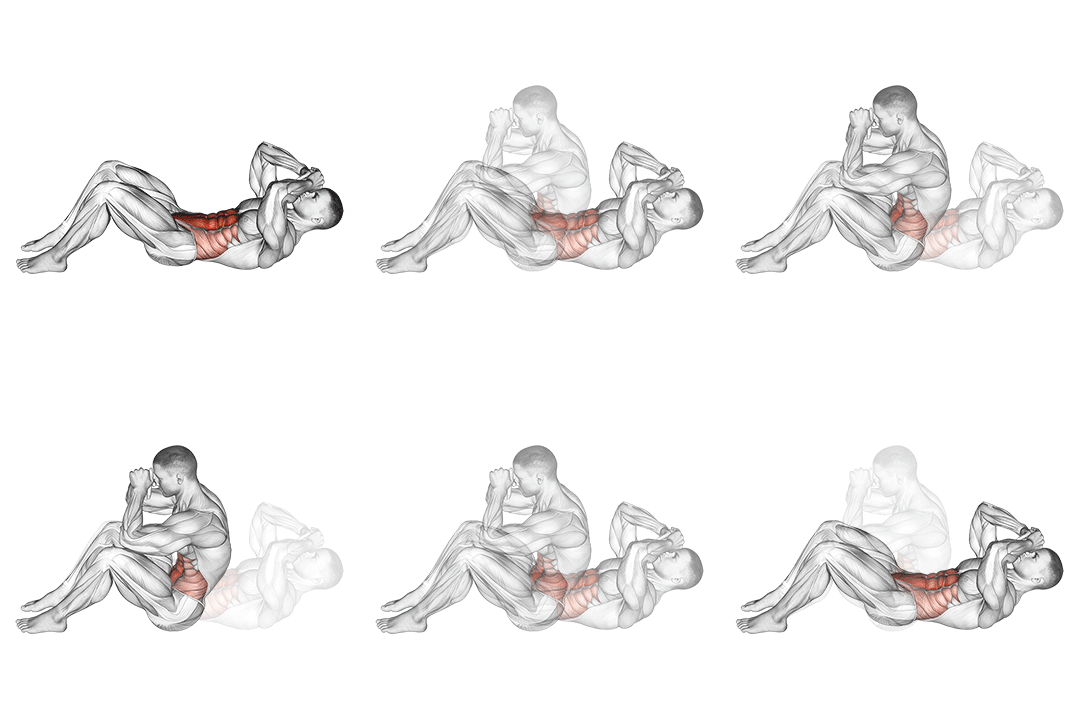
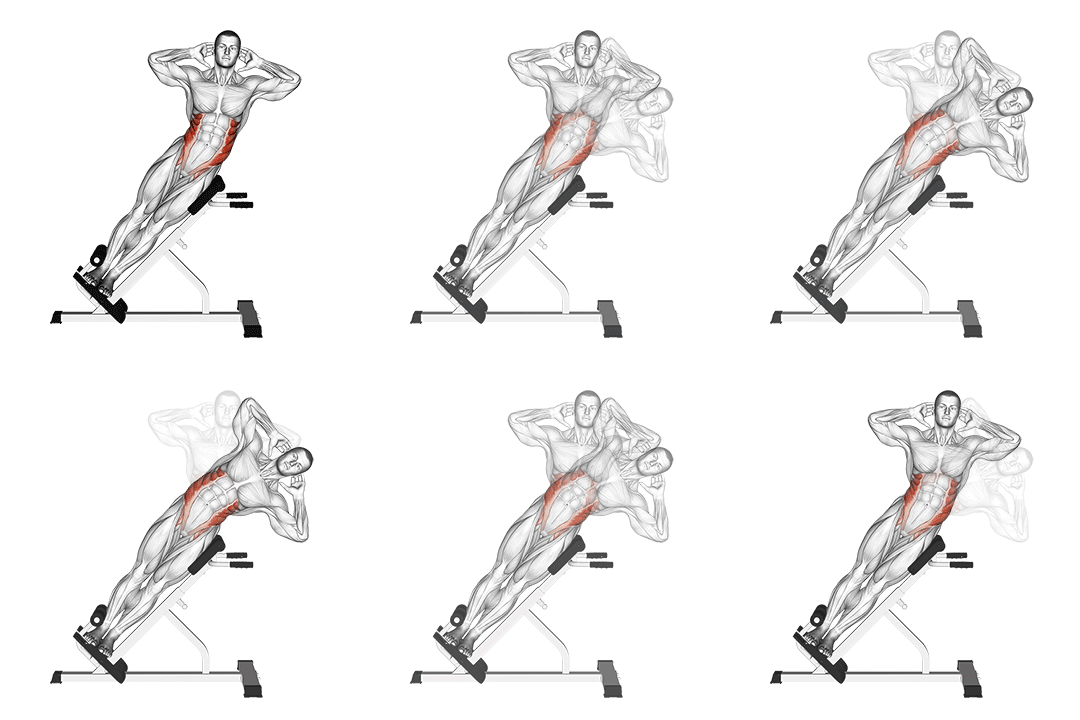
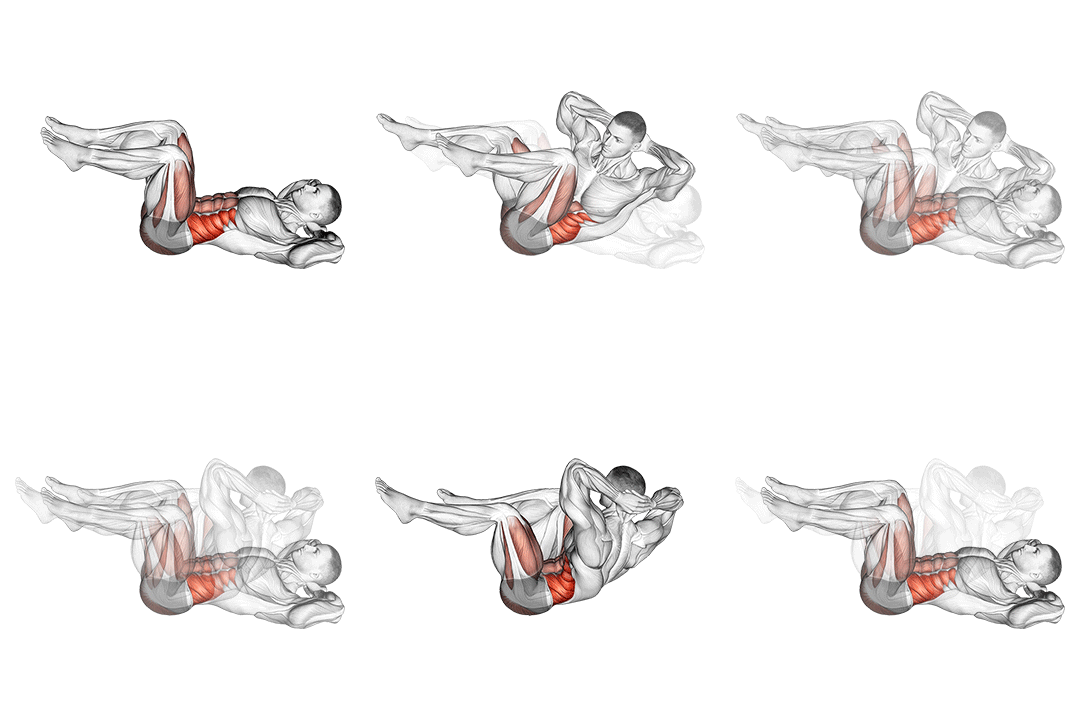
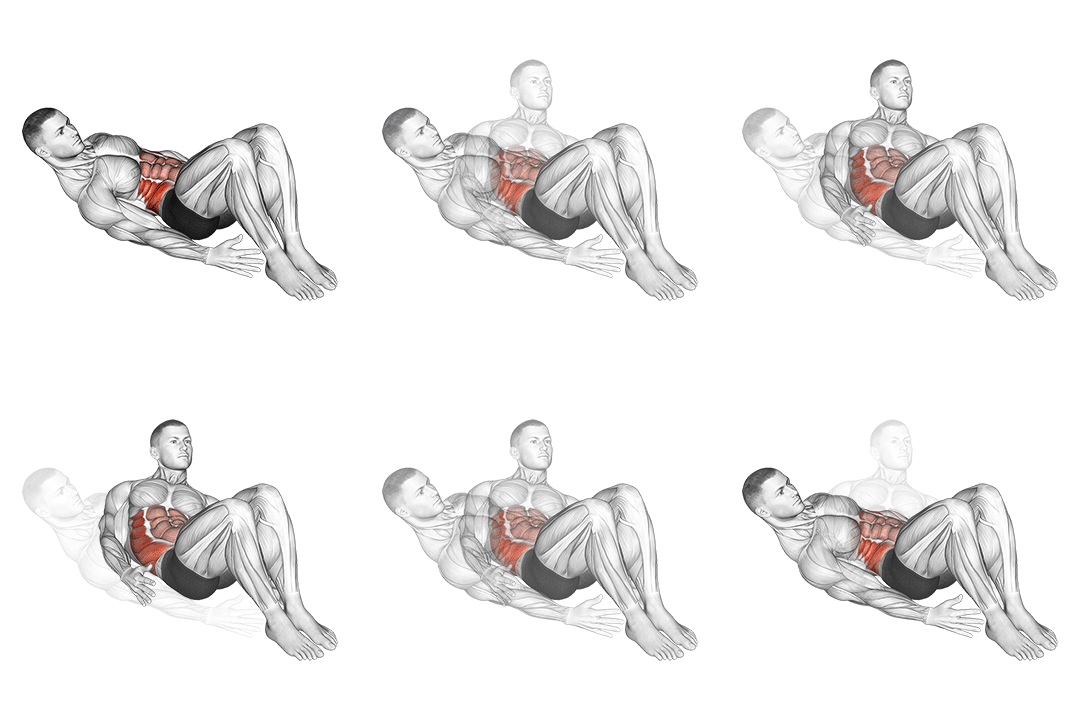
Lunge With Twist
intermediate strength exercise · body weight · targets abs
- Body part
- waist
- Primary target
- abs
- Equipment
- body weight
- Difficulty
- intermediate
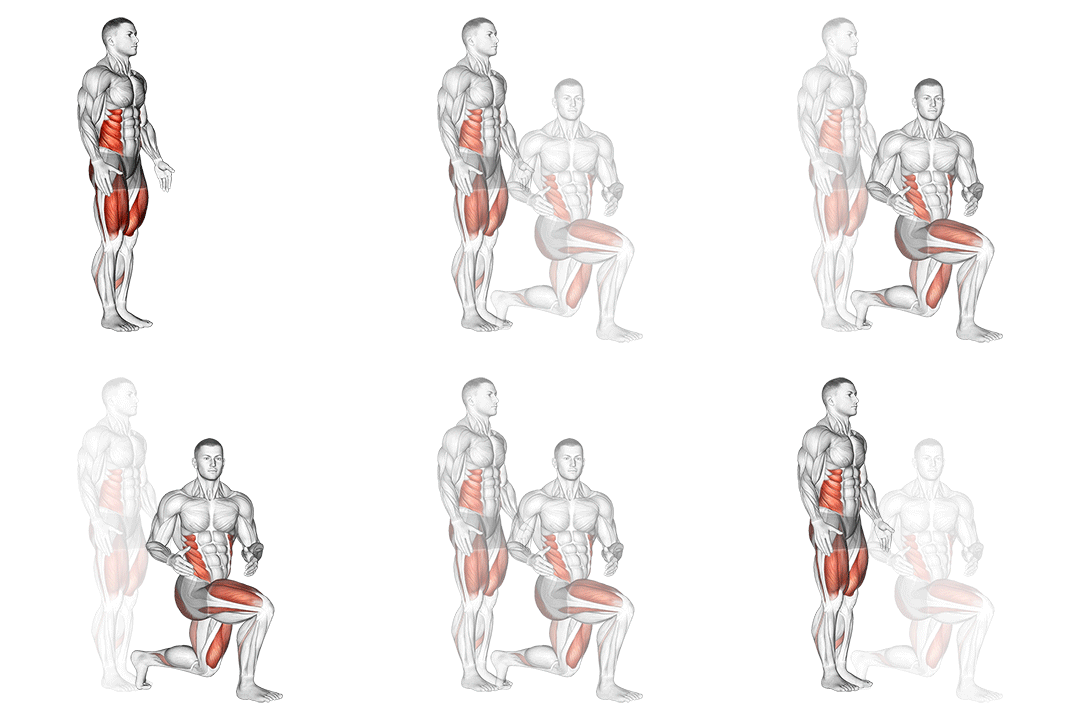
The lunge with twist combines a forward lunge with a thoracic spine rotation. As you step forward into the lunge, you rotate the upper body toward the side of the front leg (e.g., right twist when right leg is forward), holding the rotation briefly at the bottom of the lunge before standing and switching sides. The combination loads the lower body through the lunge while training thoracic mobility and rotational core strength. This is one of the most useful dynamic mobility exercises in any program. Most lower-body exercises ignore the thoracic spine entirely; most rotational core work doesn't load the legs. The lunge with twist combines both demands in a movement pattern that resembles real-world activities — picking something up from the side, throwing a ball, swinging a tool. The carryover to general athleticism is significant. It's also a useful warm-up exercise. The dynamic combination of hip flexion (lunge depth), hip extension (back leg position), and thoracic rotation addresses major joint ranges in one fluid movement. Three sets of lunges with twist before sport practice or strength training warms up almost everything that needs warming.
Why train the Lunge With Twist?
- Combines lower-body strength with thoracic mobility and rotational core work.
- Excellent dynamic warm-up before sport practice or strength training.
- Addresses thoracic stiffness common in desk-bound trainees.
- Trains rotational stability under load.
- Reveals mobility limitations on each side of the body.
- Requires no equipment.
How to do the Lunge With Twist: step by step
- 1Start by standing with your feet shoulder-width apart.
- 2Take a step forward with your right foot, lowering your body into a lunge position.
- 3As you lunge, twist your torso to the right, bringing your left elbow towards your right knee.
- 4Pause for a moment, then return to the starting position.
- 5Repeat on the other side, stepping forward with your left foot and twisting your torso to the left.
- 6Continue alternating sides for the desired number of repetitions.
Muscles worked
Primary
abs
Secondary
quadriceps, glutes, hamstrings
Common mistakes to avoid
Twisting from the lower back instead of the upper back
The rotation should come from the thoracic spine, not the lumbar spine. Engage the abs and rotate from the chest, keeping the lower back stable.
Rushing through the rotation
Speed defeats the mobility purpose. Take 2-3 seconds to rotate, hold for 1-2 seconds at the end position, then return slowly.
Letting the front knee track past the toes
Step long enough that the front shin can stay close to vertical at the bottom. The rotation shouldn't compromise lunge form.
Letting the back knee crash into the floor
Lower the back knee with control to an inch or two from the floor. Slamming uses momentum and stresses the joint.
Choosing this before mastering basic lunges
If your lunge form is shaky, adding the twist reinforces bad patterns. Build to clean basic lunges first.
Easier and harder variations
Easier
Reduce the depth of the lunge. Or perform the twist with arms crossed at the chest (less lever arm) instead of arms extended.
Harder
Hold a light weight (5-10 lb plate or medicine ball) at the chest during the rotation. Add a hold at the bottom of each lunge with full rotation. Or progress to lunge with overhead reach and twist.
Alternative exercises
Forward lunge
Same lower-body pattern without the twist. Easier baseline.
Squat to overhead reach with twist
Different lower-body pattern (squat instead of lunge) with similar twist component. Useful complement.
World's greatest stretch
Mobility flow that includes a similar lunge-and-twist component plus other movements. More comprehensive warm-up.
How to program the Lunge With Twist into your training
Lunge with twist works as warm-up, dynamic mobility work, or accessory training in any session. As warm-up: 2 sets of 8-10 reps per side before sport or strength training. Wakes up the lower body, hips, and thoracic spine. As accessory: 3 sets of 10-12 reps per side with 60-90 seconds rest. Programmed 2-3 times per week. For mobility focus: daily practice of 3 sets of 10 per side, focusing on full rotation and depth. In a complete dynamic warm-up: walking lunges, lunges with twist, walking high knees, jogging — progressing from simpler to more dynamic movements over 5-10 minutes.
Recovery and frequency
Lunges with twist have moderate recovery cost. Glute and quad soreness in the first 1-2 weeks is normal. Daily moderate-volume practice is fine for mobility benefits.
Frequently asked questions
How many sets and reps of lunges with twist should I do?
3 sets of 10-12 reps per side with 60-90 seconds rest. As warm-up: 2 sets of 8-10 reps per side.
How often should I train lunges with twist?
2-3 times per week as part of a structured program; daily at moderate volume is fine for mobility.
Should I twist toward the front leg or away from it?
Toward the front leg (e.g., right twist with right leg forward). This is the more common and biomechanically natural rotation pattern.
Will lunges with twist improve my golf or tennis swing?
Indirectly — by improving thoracic mobility and rotational stability, they support better swing mechanics. They don't replace sport-specific practice but complement it well.
Why does my lower back hurt during the twist?
Almost certainly twisting from the lower back instead of the thoracic spine. Engage the abs and rotate from the chest. If pain persists, see a physical therapist.
Should I count one rep as both sides or each side separately?
Each side separately. Counting per side prevents accidentally favoring one direction.
Useful tools for this exercise
Build a workout with the Lunge With Twist
Puna gives you guided bodyweight workouts you can do anywhere — no equipment, no gym, just structured progressions that build real strength.