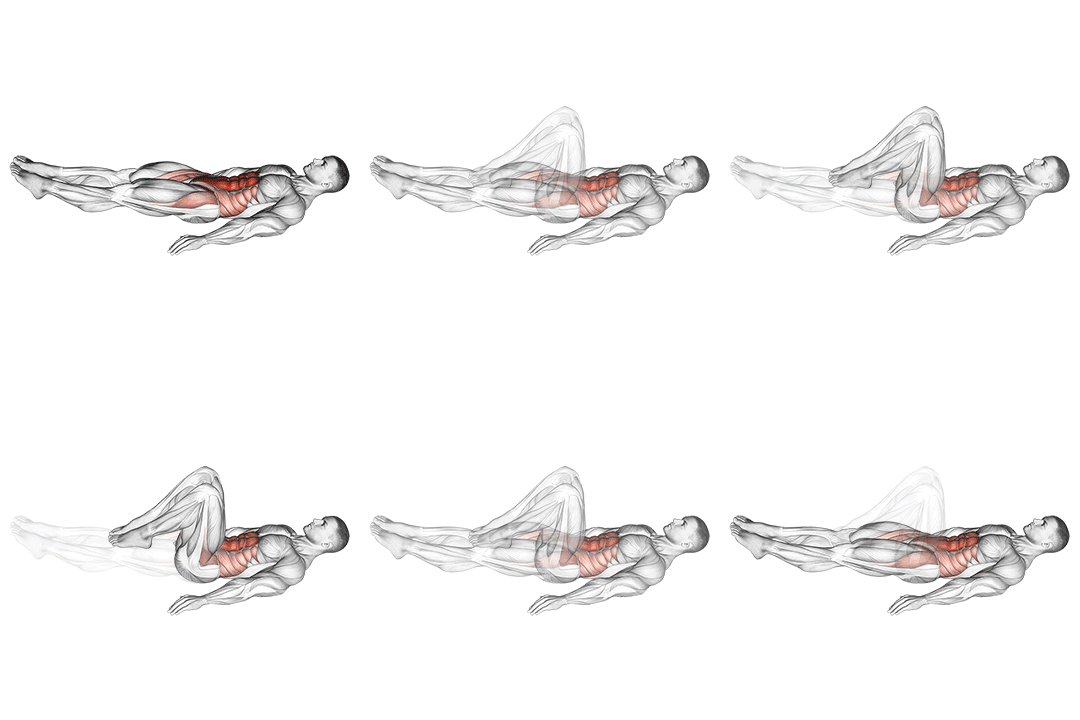
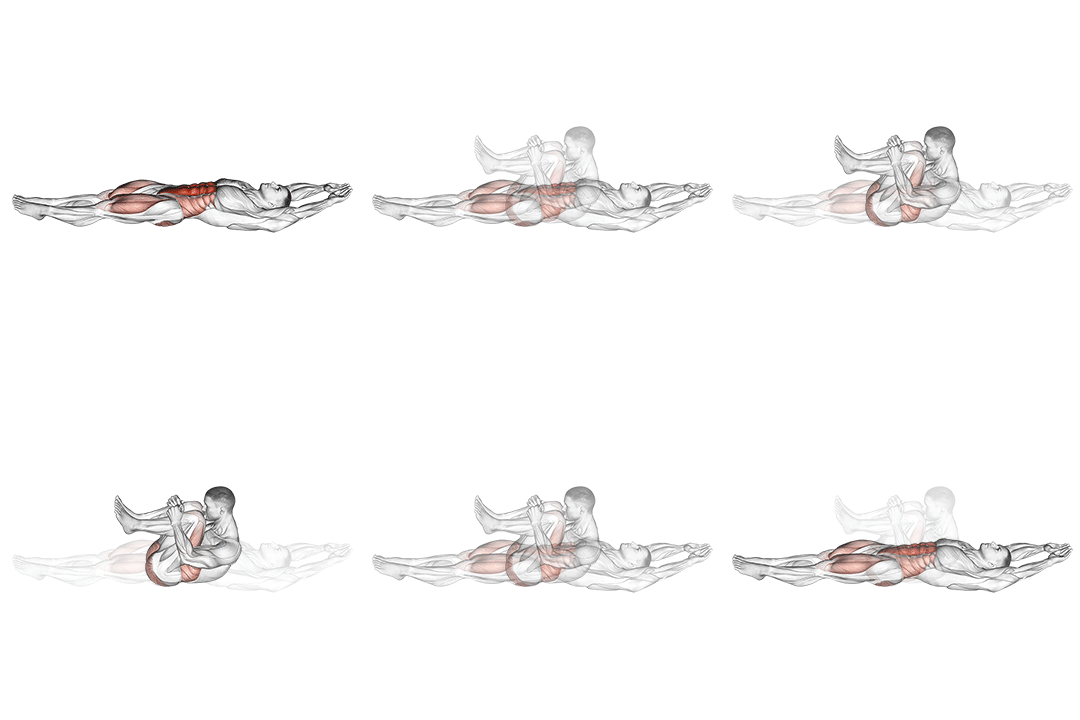
Janda Sit-up
advanced strength exercise · body weight · targets abs
- Body part
- waist
- Primary target
- abs
- Equipment
- body weight
- Difficulty
- advanced
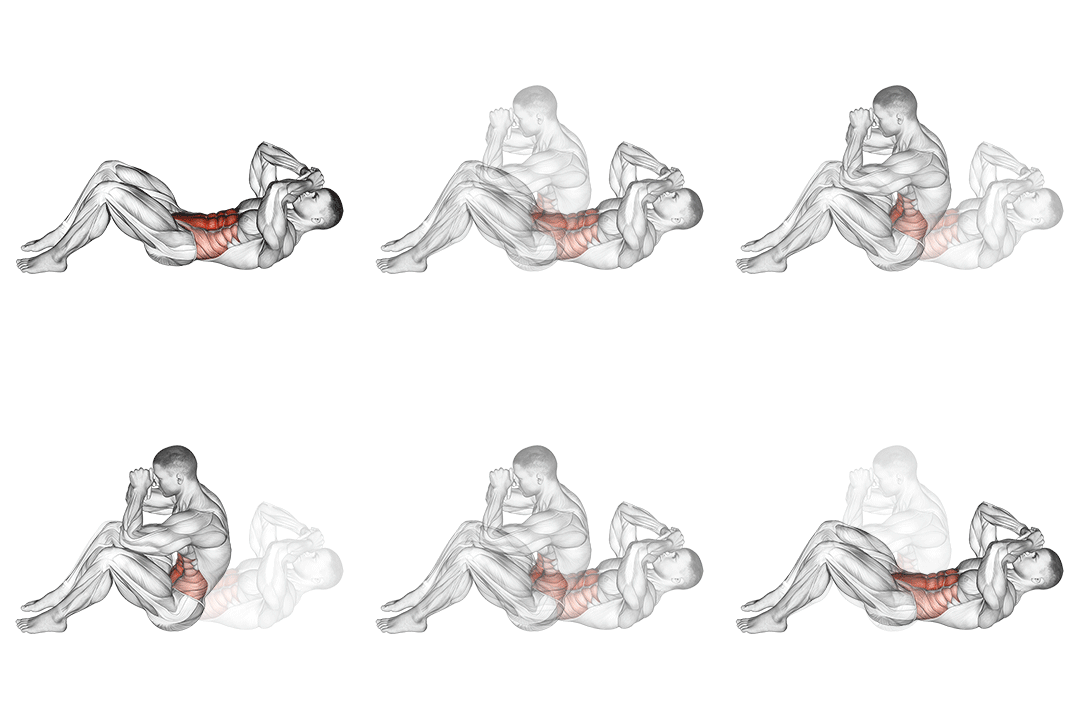
The Janda sit-up is an advanced ab exercise designed by Czech physical therapist Vladimir Janda specifically to deactivate the hip flexors and isolate the rectus abdominis. The defining feature: while performing a sit-up, you actively contract the hamstrings (often by pressing the heels into the floor as if pulling them toward your hips). This hamstring contraction triggers reciprocal inhibition of the hip flexors — the body's nervous system can't fully activate both groups at once — forcing the abs to do all the work of the sit-up. The result is one of the few ab exercises that genuinely isolates the abs without hip flexor recruitment. Most sit-up variations rely heavily on the hip flexors, which is why people with weak abs can still do sit-ups (and why sit-ups can stress the lower back). The Janda variation eliminates that compensation, exposing exactly how strong your abs really are. Most trainees who can do 30+ regular sit-ups can only do 10-15 strict Janda sit-ups in their first attempt. That gap reveals what regular sit-ups have been hiding. Used as the primary sit-up variation in a focused ab program, the Janda sit-up builds genuine ab strength faster than higher-volume regular sit-ups, with significantly less risk of lower back strain.
Why train the Janda Sit-up?
- Deactivates the hip flexors via reciprocal inhibition — pure ab isolation.
- Reduces lower back stress compared to regular sit-ups.
- Reveals true ab strength that regular sit-ups can mask.
- Used in physical therapy for trainees with hip flexor tightness or back issues (under medical guidance).
- Builds genuine ab strength more efficiently than higher-volume regular sit-ups.
- Requires no equipment beyond a soft surface for the heels to press against.
How to do the Janda Sit-up: step by step
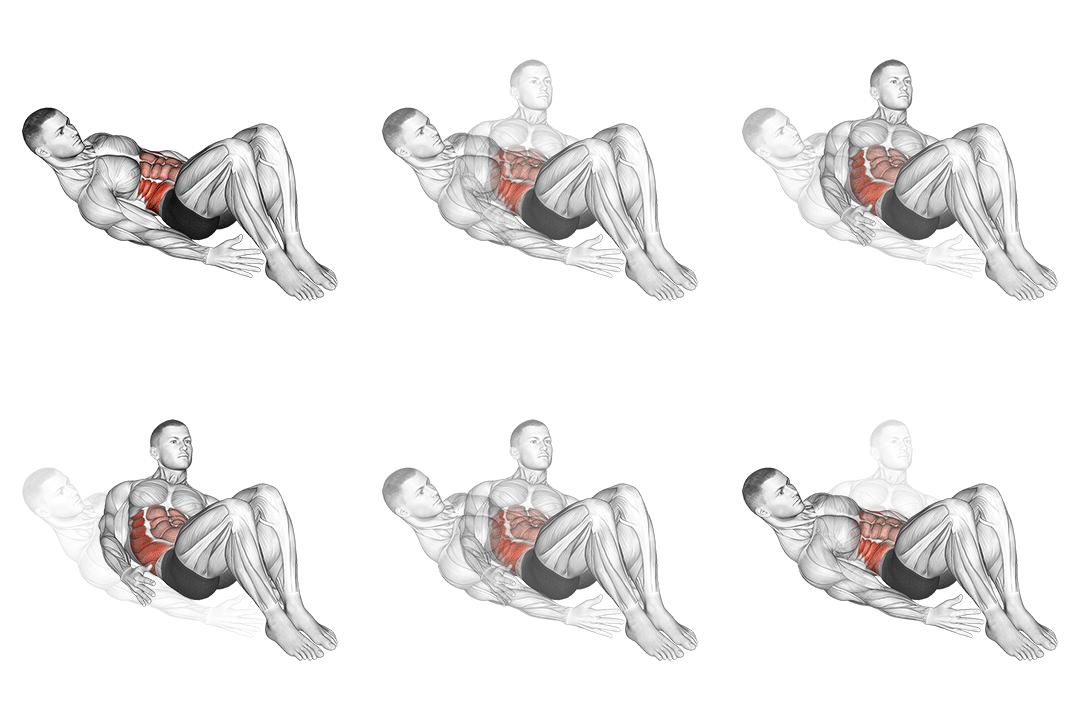
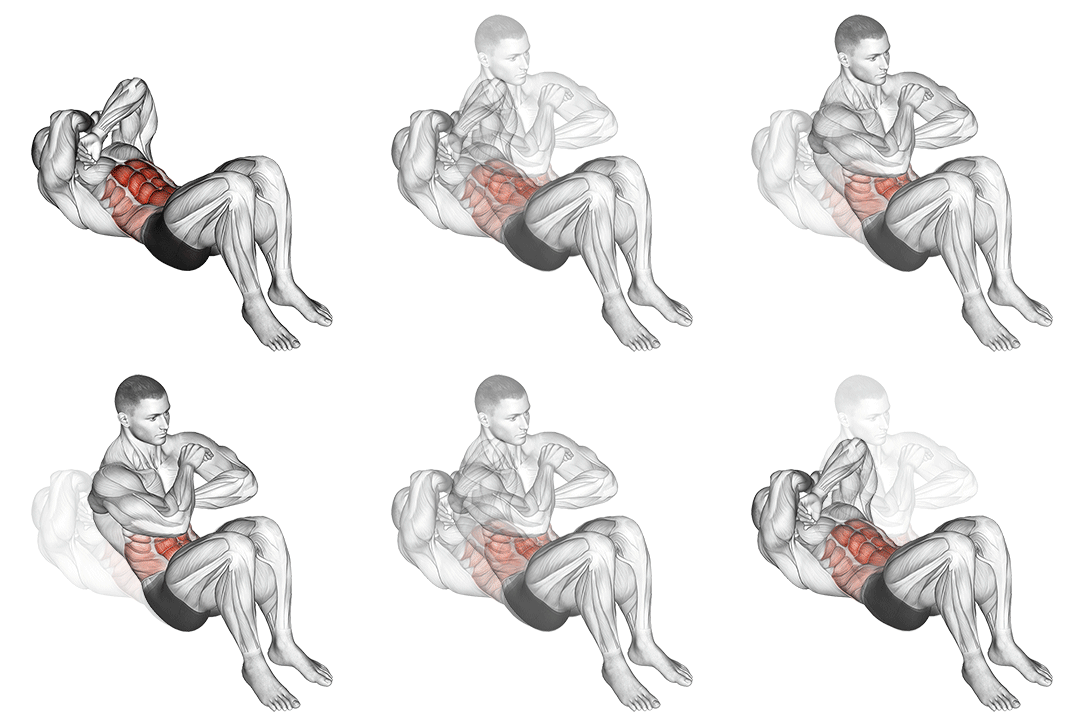
- 1Lie flat on your back with your knees bent and feet flat on the ground.
- 2Place your hands behind your head with your elbows pointing outwards.
- 3Engaging your abs, slowly lift your upper body off the ground, curling forward until your torso is at a 45-degree angle.
- 4Pause for a moment at the top, then slowly lower your upper body back down to the starting position.
- 5Repeat for the desired number of repetitions.
Muscles worked
Primary
abs
Secondary
hip flexors, lower back
Common mistakes to avoid
Not actively contracting the hamstrings
The Janda sit-up only works if the hamstrings contract during the rep. Press your heels into the floor (or against a wall, partner's hands, or an immovable object) throughout every rep. Without this contraction, you're just doing a regular sit-up.
Trying to come fully upright
Most trainees can't reach full sit-up depth in the Janda variation because the abs alone aren't strong enough yet. That's normal — only come up as far as the abs can lift you without help from the hip flexors. Even half-way up is more honest ab work than a full regular sit-up.
Pulling on the neck with the hands
Hands behind the head are a guide, not a tool. Pulling the head forward strains the cervical spine and partially defeats the purpose by activating muscles that should stay relaxed.
Using momentum to compensate
Whipping the upper body up uses momentum to overcome the lack of hip flexor assistance. Move slowly: 2-3 seconds up, brief pause at the top, 2-3 seconds down. The slow tempo forces the abs to do the actual work.
Programming Janda sit-ups for high volume
Because the abs are fully isolated, fatigue builds faster than in regular sit-ups. Limit to 10-15 reps per set; trying to push 25+ reps usually means form breakdown or hip flexor recruitment sneaking back in.
Easier and harder variations
Easier
Regular sit-ups (with hip flexor recruitment) for trainees not yet strong enough for the Janda version. Or partial-range Janda sit-ups (only come halfway up) until ab strength builds.
Harder
Add weight (a plate held at the chest). Slow the tempo further (5-second descent). Or progress to weighted Janda sit-ups for advanced ab development.
Alternative exercises
Standard sit-up
Same flexion movement without the hamstring activation. Easier and faster to perform but recruits hip flexors heavily.
Crunch
Smaller range that naturally limits hip flexor involvement. Easier alternative to Janda sit-ups for trainees building ab strength.
Hollow hold
Static ab isolation. Different exercise modality but similar pure ab focus.
How to program the Janda Sit-up into your training
Janda sit-ups work as a primary ab exercise in a focused core session, not as casual finisher work. The reduced volume and increased intensity per rep make them more like a strength exercise than an endurance one. Sets and reps: 3 sets of 8-12 reps with 60-90 seconds rest. Total weekly volume of 30-60 reps drives most adaptations. In a complete core circuit: 3 rounds of 10 Janda sit-ups, 30-second front plank, 12 reverse crunches, 30-second side plank per side. Done twice per week. For athletes recovering from lower back issues (under medical guidance): Janda sit-ups are often a useful return-to-training exercise because they deactivate the hip flexors that pull on the lumbar spine. Start with 2 sets of 5-8 reps, build slowly. As a regression for trainees who can't yet do full Janda sit-ups: 3 sets of 5-8 partial-range reps, focusing on form. Build to full range over 4-6 weeks. Do not pair Janda sit-ups with high-volume regular sit-ups — pick one or the other. The point of the Janda variation is to replace, not supplement, regular sit-ups for trainees seeking pure ab work.
Recovery and frequency
Janda sit-ups at moderate volume have moderate recovery cost. The pure ab isolation creates more focused soreness in the abs than regular sit-ups, especially in the first 2-3 weeks of training. 48-72 hours between sessions is the right cadence. Hamstring fatigue from the maintained contraction is the most common feedback. Daily hamstring stretches between sessions help. Lower back fatigue is uncommon but signals form errors — usually trying to come too high in the rep, which sneaks the hip flexors back in.
Frequently asked questions
How many sets and reps of Janda sit-ups should I do?
3 sets of 8-12 reps with 60-90 seconds rest. Total weekly volume of 30-60 reps drives most adaptations.
How often should I train the Janda sit-up?
2-3 times per week with 48-72 hours between sessions.
Janda sit-up vs regular sit-up: which is better?
For pure ab strength and back-friendly training, Janda is better. For testing maximum sit-up rep counts (military test prep), regular sit-ups are more relevant. Match the exercise to your goal.
Why can't I come fully upright in a Janda sit-up?
Because your abs alone (without hip flexor help) aren't strong enough yet. That's the entire point of the exercise — it reveals your real ab strength. Build to full range over weeks of consistent practice; don't fake it.
Are Janda sit-ups safe with back pain?
Often yes — they're frequently used in physical therapy for trainees rehabbing back issues because they reduce hip flexor pull on the lumbar spine. Confirm with a healthcare provider, and start with reduced range if needed.
How do I activate my hamstrings during the Janda sit-up?
Press the heels firmly into the floor as if trying to pull them toward your hips (you won't actually move). Some trainees use a wall, a partner's hands, or an immovable object to push against for stronger hamstring activation. The contraction should feel deliberate and continuous throughout every rep.
Useful tools for this exercise
Build a workout with the Janda Sit-up
Puna gives you guided bodyweight workouts you can do anywhere — no equipment, no gym, just structured progressions that build real strength.