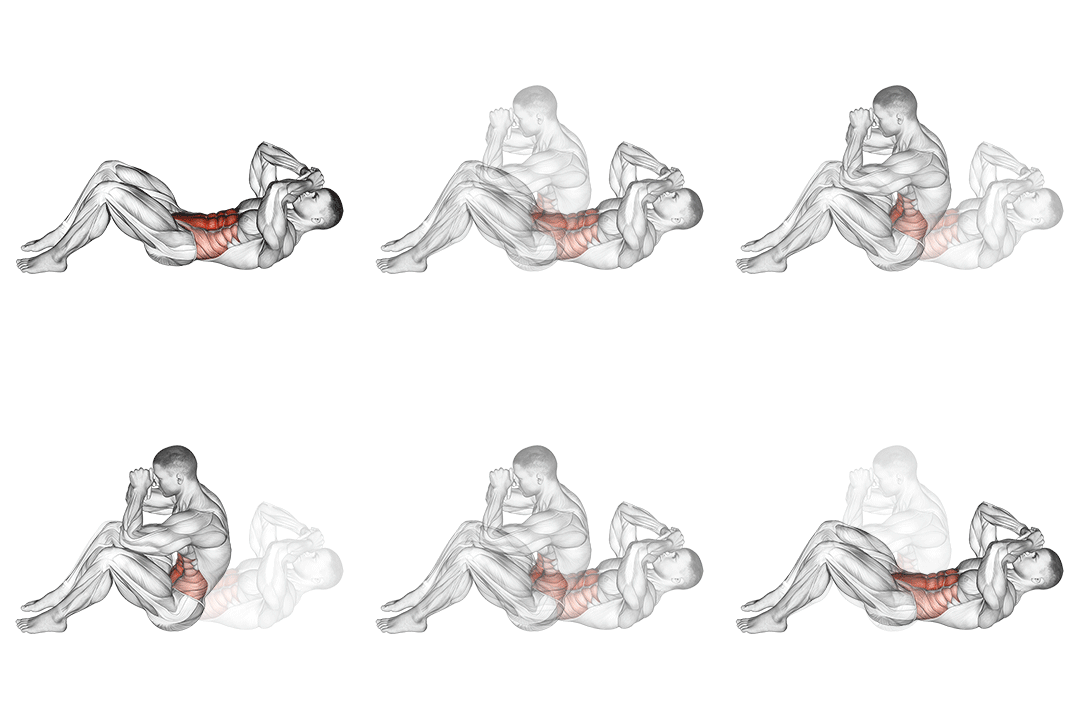
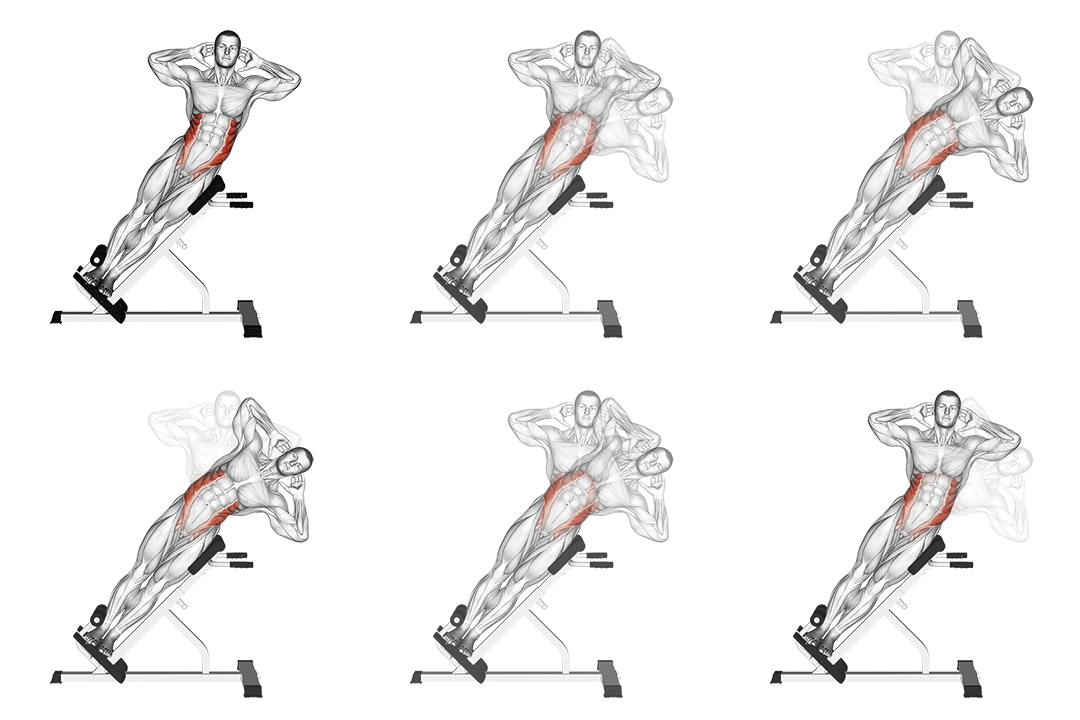
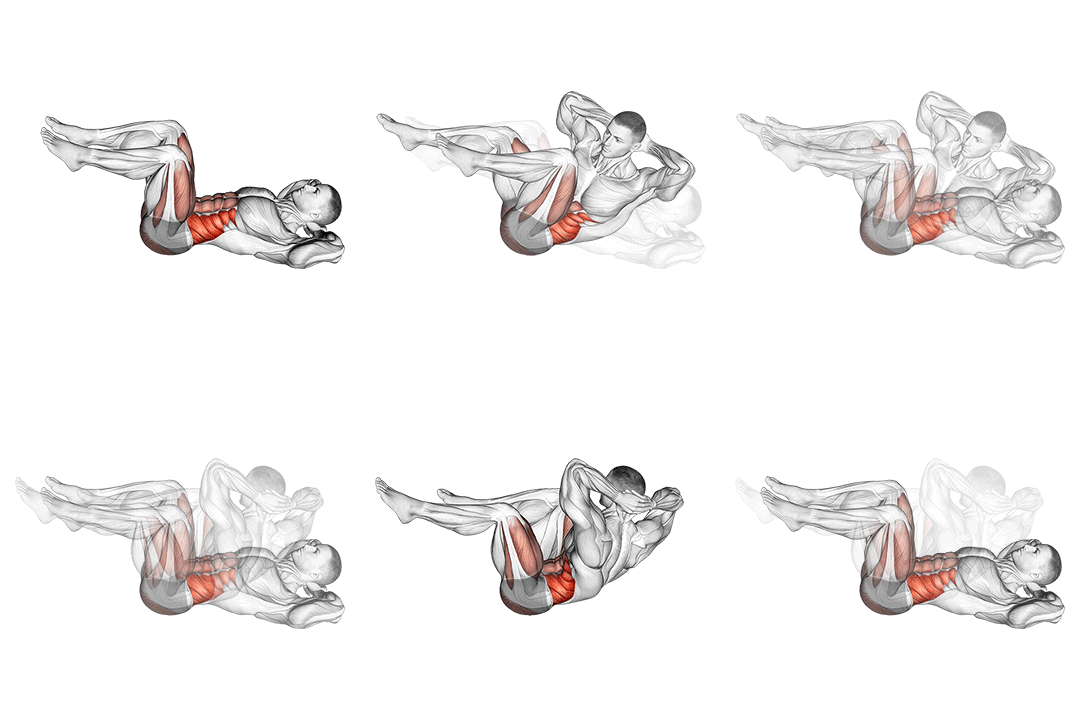
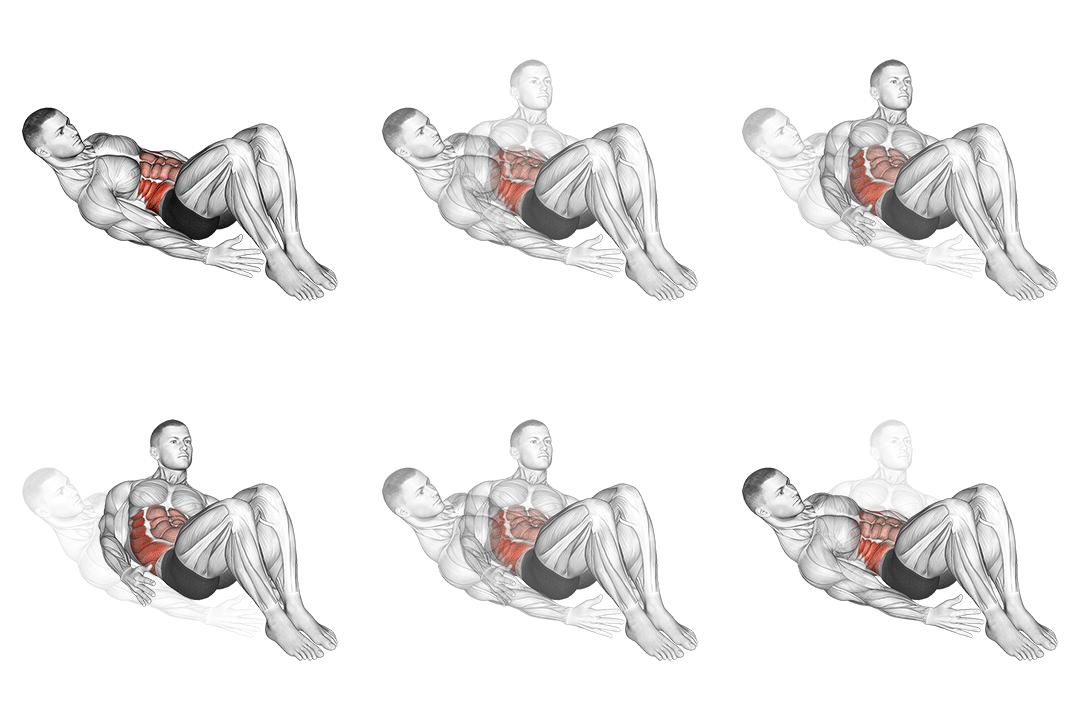
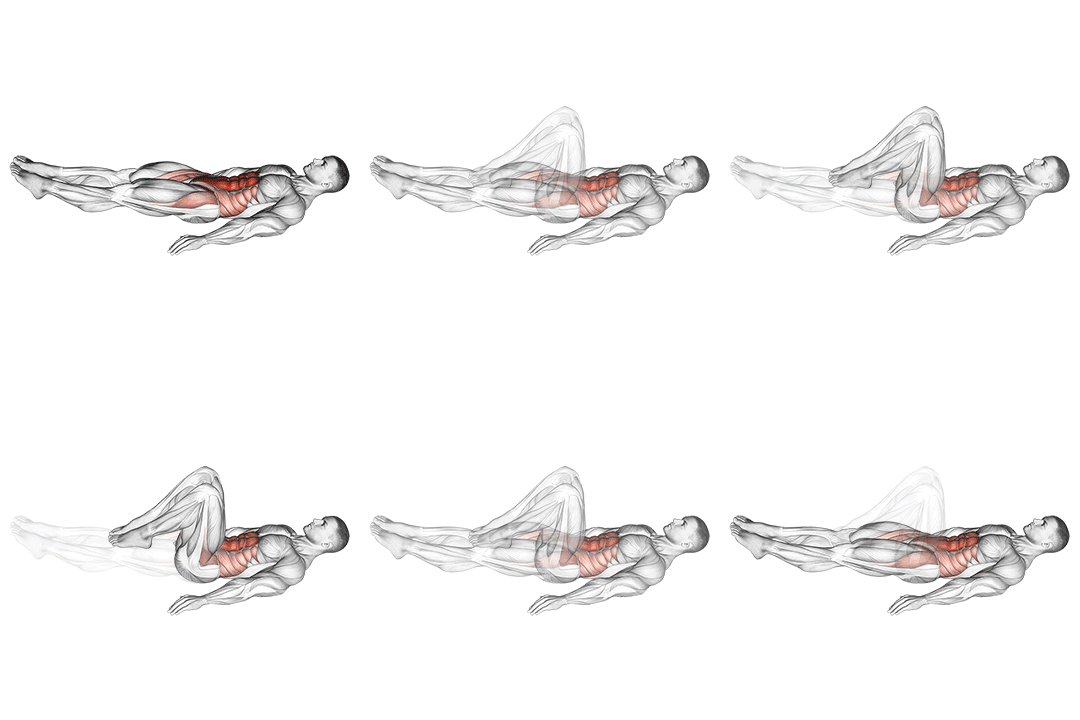
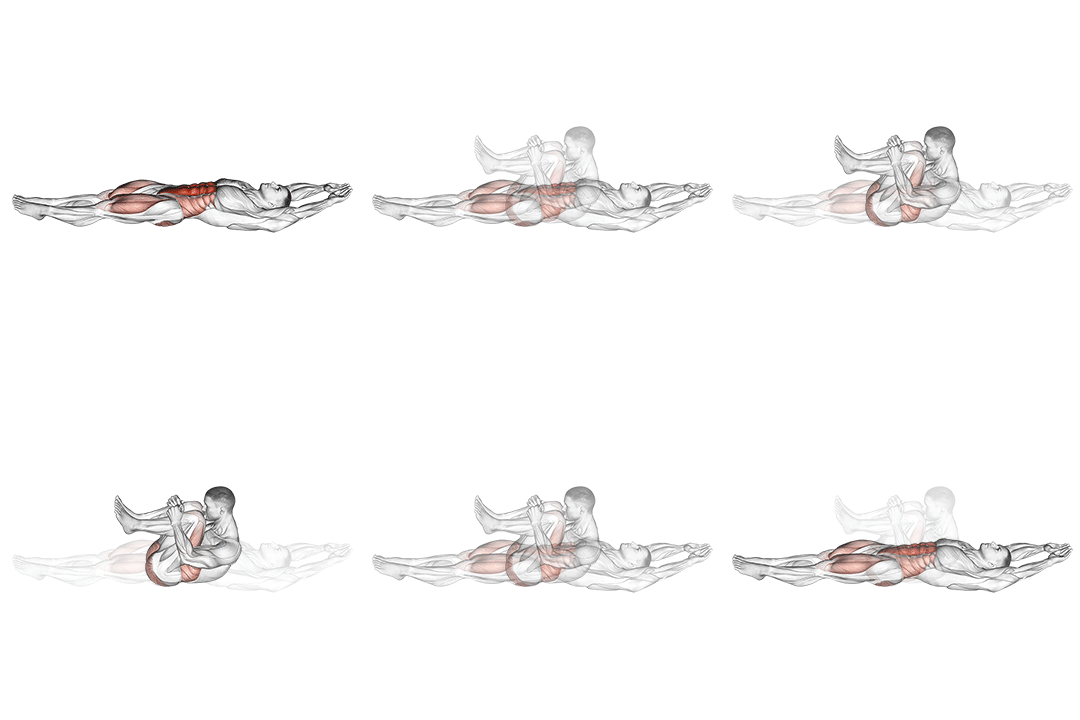
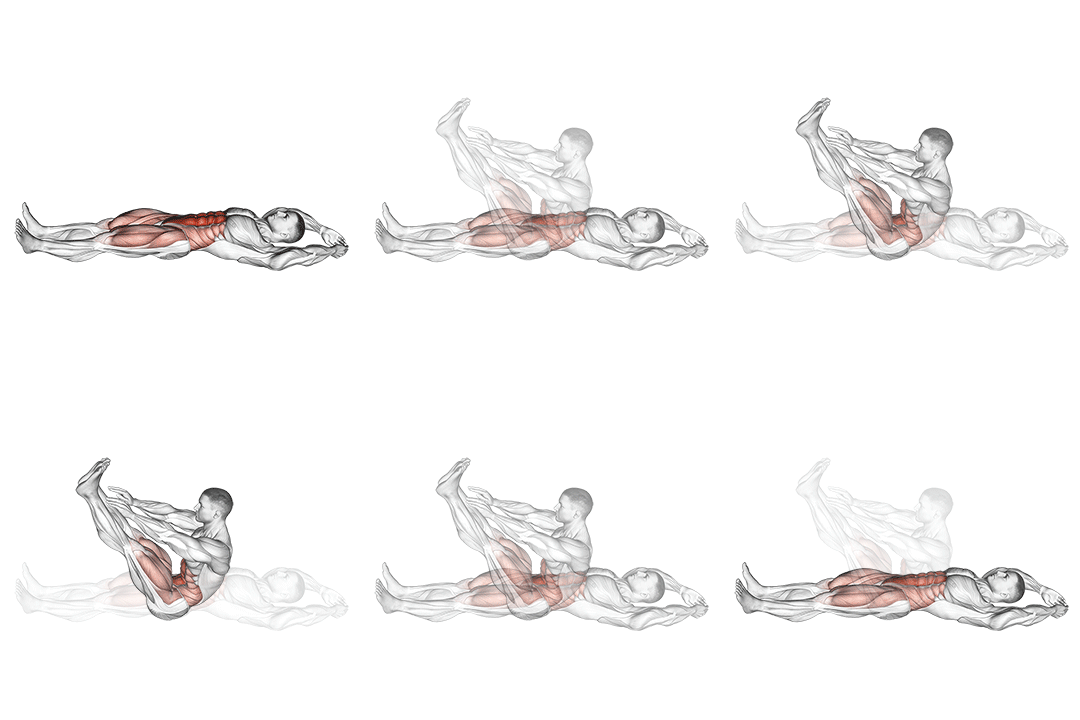
Jackknife Sit-up
intermediate strength exercise · body weight · targets abs
- Body part
- waist
- Primary target
- abs
- Equipment
- body weight
- Difficulty
- intermediate
The jackknife sit-up is a dynamic full-body ab exercise that combines a sit-up with a leg lift, executed simultaneously. From a face-up position with arms extended overhead and legs straight, you crunch the upper body up while lifting the legs to meet your hands at the top — folding the body roughly in half. Then return to start under control. The combination demands strong upper abs, lower abs, and hip flexors all working in coordination. What makes the jackknife valuable is what it trains that simpler crunches don't: the simultaneous upper-and-lower contraction pattern. Most ab exercises load either the upper rectus abdominis (crunches) or the lower portion (leg raises). The jackknife trains both ends contracting toward each other, which is closer to how the abs actually work in real-life movements like getting up from the floor or controlling the trunk during athletic movements. It's also a useful conditioning exercise because each rep recruits significant muscle mass through a long range of motion. Compared to a basic crunch, the jackknife elevates heart rate noticeably — useful if you want to combine ab work with conditioning in shorter sessions. The trade-off is the demand on coordination and lower-back tolerance; people new to it usually take 2-3 weeks before they can do clean reps without compensating.
Why train the Jackknife Sit-up?
- Trains upper and lower abs simultaneously through a long range of motion.
- Elevates heart rate more than typical ab exercises — useful for combined ab work and conditioning.
- Builds coordination between upper-body and lower-body movement patterns.
- Carries over to athletic movements that require trunk control during dynamic actions.
- Requires no equipment and minimal space — fits into any ab routine.
- Provides a useful intermediate-difficulty exercise between basic crunches and hanging leg raises.
How to do the Jackknife Sit-up: step by step
- 1Lie flat on your back with your legs extended and your arms overhead.
- 2Engage your core and lift your legs and upper body simultaneously, reaching your hands towards your toes.
- 3Pause for a moment at the top, then slowly lower your legs and upper body back down to the starting position.
- 4Repeat for the desired number of repetitions.
Muscles worked
Primary
abs
Secondary
hip flexors
Common mistakes to avoid
Using momentum to swing the body together
Whipping the arms and legs together uses momentum and skips the actual ab work. Move slowly: 1-2 seconds to the top, brief pause, 2-3 seconds back to start. The negative phase is where the abs do their hardest work.
Letting the lower back arch off the floor at the bottom
When the limbs lower, the lower back wants to arch as the abs lengthen. Press the lower back into the floor at the bottom — never let it lift away. Stop the limbs an inch above the floor if you can't maintain back contact.
Pulling on the neck during the upward phase
Reaching the arms toward the legs sometimes turns into yanking the head forward. Keep the neck in line with the spine; lift from the abs, not from the cervical area.
Not lifting the legs and torso to meet in the middle
Some trainees do most of the work with the upper body, barely lifting the legs. The jackknife should genuinely fold the body — both ends meet at the top. If you can't lift the legs that high, regress to single-leg or partial range jackknives until you can.
Holding the breath through the rep
Bracing tightly often means stopping breathing. Exhale as you fold the body together, inhale as you lower. Continuous breathing supports better core engagement.
Easier and harder variations
Easier
Single-leg jackknives — alternate which leg lifts on each rep instead of both together. Or reduce range — only lift the legs partway and only crunch the upper body partway. Build to full jackknives over 2-4 weeks.
Harder
Hold a weight in the hands or between the feet (a small medicine ball). Add a slow tempo (3-5 seconds per phase). Or progress to V-ups — straight legs throughout the entire movement.
Alternative exercises
V-up
Same body-folding pattern but with straight legs throughout. Significantly harder due to the longer lever arm.
Hanging knee raise
Different position (vertical hang) that emphasizes the lower abs more. Useful complement to jackknives.
Toe touch crunch
Legs lifted vertically, reach hands up to touch the toes. Similar contraction pattern with simpler movement.
How to program the Jackknife Sit-up into your training
Jackknife sit-ups work as either the primary ab exercise in a focused core session or as a finisher in a general workout. Sets and reps: 3 sets of 10-15 reps with 60-90 seconds rest. Total weekly volume of 60-100 reps drives most adaptations. In a complete core circuit: 3 rounds of 12 jackknife sit-ups, 30-second front plank, 12 reverse crunches, 30-second side plank per side. Done 2-3 times per week. As a finisher: 2-3 sets of 10-12 jackknife sit-ups at the end of an upper-body or full-body workout. Adds focused ab volume in 3-5 minutes. For conditioning circuits, jackknives work well due to their full-body recruitment. Example: 10 jackknives, 10 push-ups, 10 squats — repeat 3-5 times with 60 seconds rest between rounds. Do not program jackknife sit-ups on the same day as heavy hanging leg raises or other intensive lower-ab work — the cumulative hip flexor and lower-ab load is excessive.
Recovery and frequency
Jackknife sit-ups recover similarly to standard sit-ups — 48 hours between dedicated sessions is generally enough. The hip flexors and lower abs may stay sore for 2-3 days during the first weeks of training the variation. Hip flexor tightness is the most common feedback. Daily hip flexor stretches between sessions help. Lower back discomfort during or after the exercise points to form errors — usually the back arching at the bottom of the rep. Address form first, reduce range second.
Frequently asked questions
How many sets and reps of jackknife sit-ups should I do?
3 sets of 10-15 reps with 60-90 seconds rest. Total weekly volume of 60-100 reps drives most adaptations.
How often should I train the jackknife sit-up?
2-3 times per week as part of a structured core program. The combined demand on upper and lower abs needs 48 hours of recovery.
Are jackknife sit-ups effective for getting abs?
They build the muscle effectively, but visible abs come from low body fat. They train more muscle mass per rep than basic crunches, so for time-constrained training they're efficient. Diet drives visibility regardless of exercise choice.
Jackknife vs V-up: what's the difference?
Jackknife sit-ups have bent knees during the movement; V-ups keep the legs straight throughout. V-ups are significantly harder due to the longer lever arm. Use jackknives as a stepping stone.
Why does my lower back hurt during jackknife sit-ups?
Almost certainly form — usually the lower back arching off the floor at the bottom of each rep. Press the lower back into the floor and stop the limbs from going so low that you can't maintain that contact.
Can I do jackknife sit-ups daily?
Not at full volume. Daily light jackknives (10-20 reps total) are fine, but high-volume sessions every day will cause hip flexor tightness and lower-back fatigue. Stick to 2-3 dedicated sessions per week.
Useful tools for this exercise
Build a workout with the Jackknife Sit-up
Puna gives you guided bodyweight workouts you can do anywhere — no equipment, no gym, just structured progressions that build real strength.