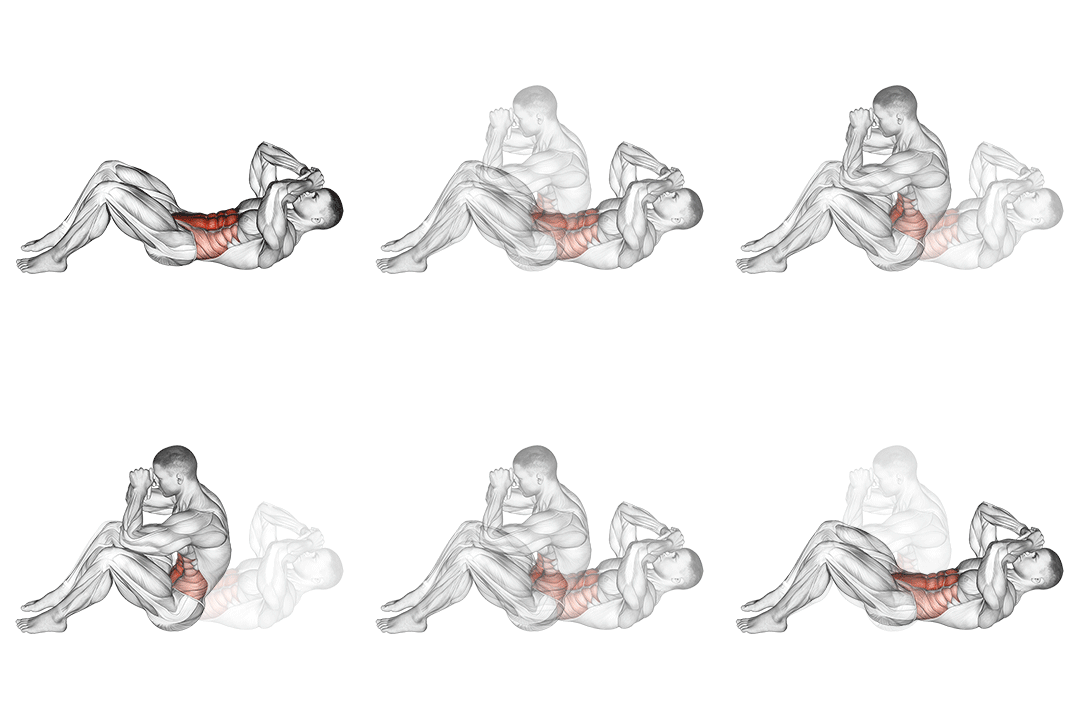
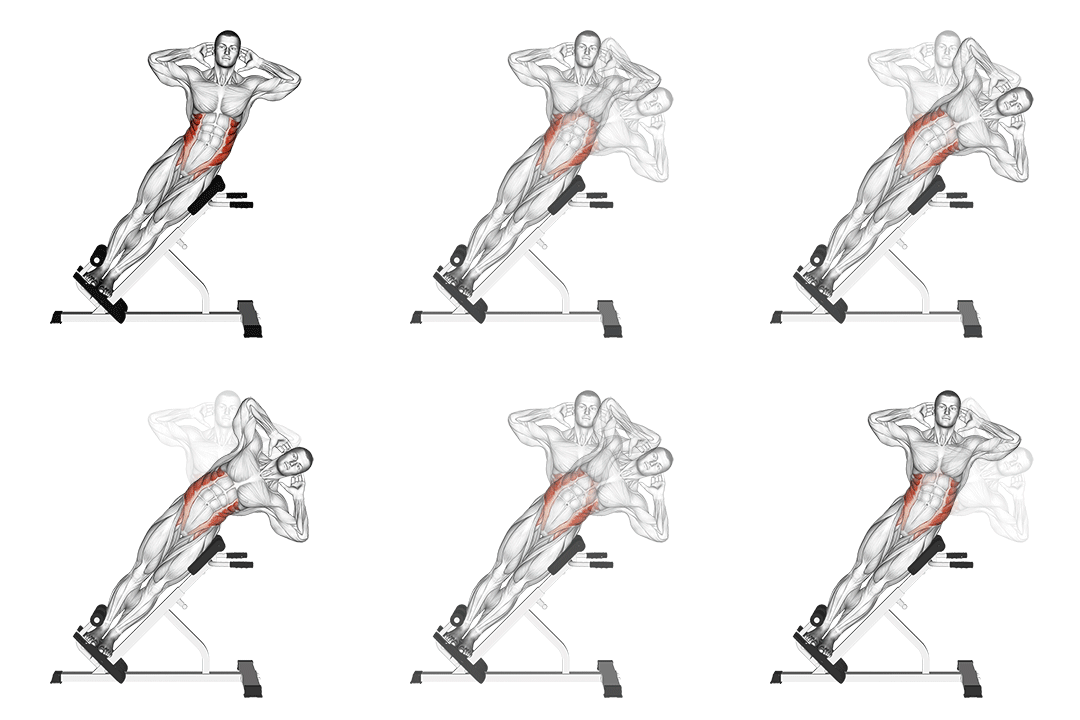
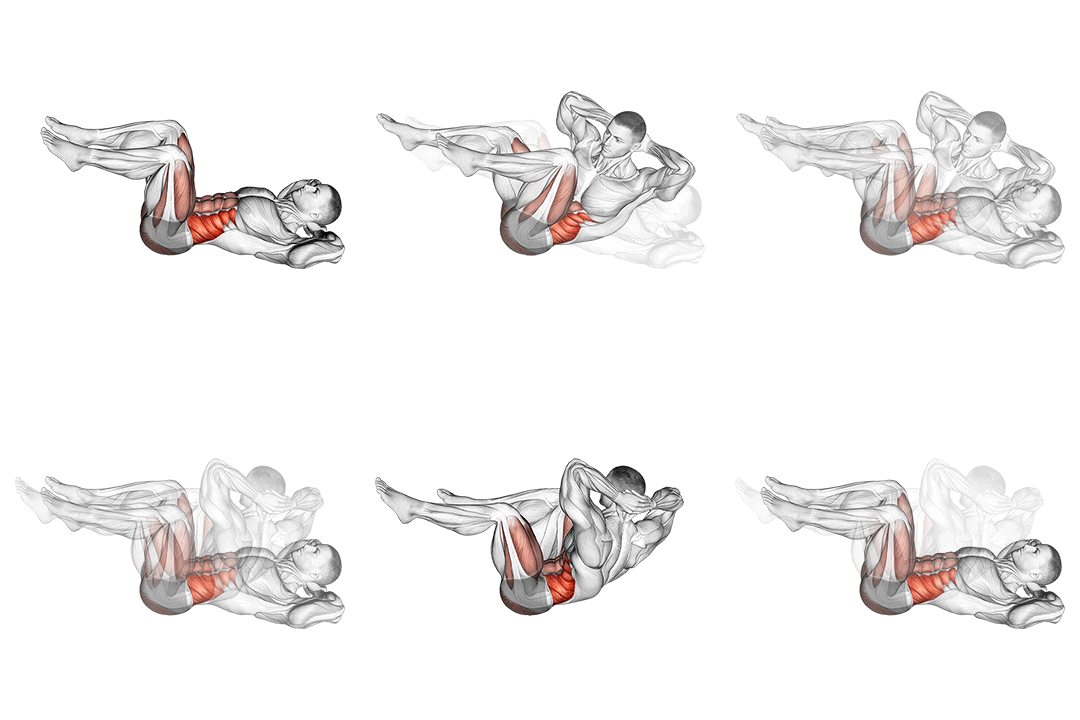
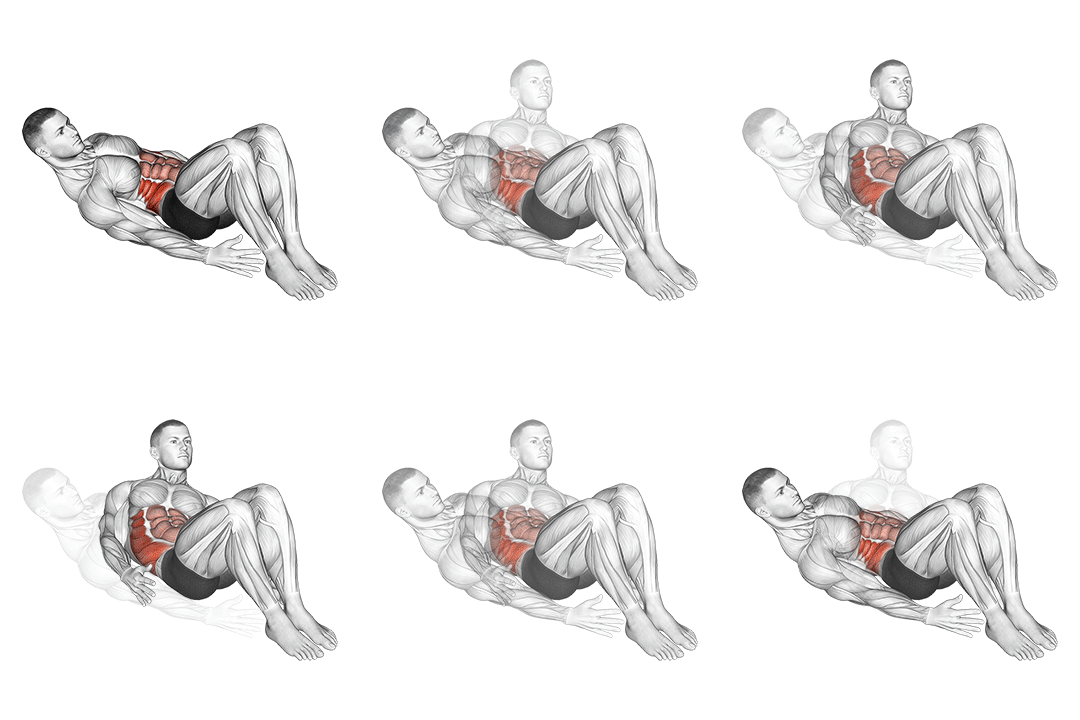
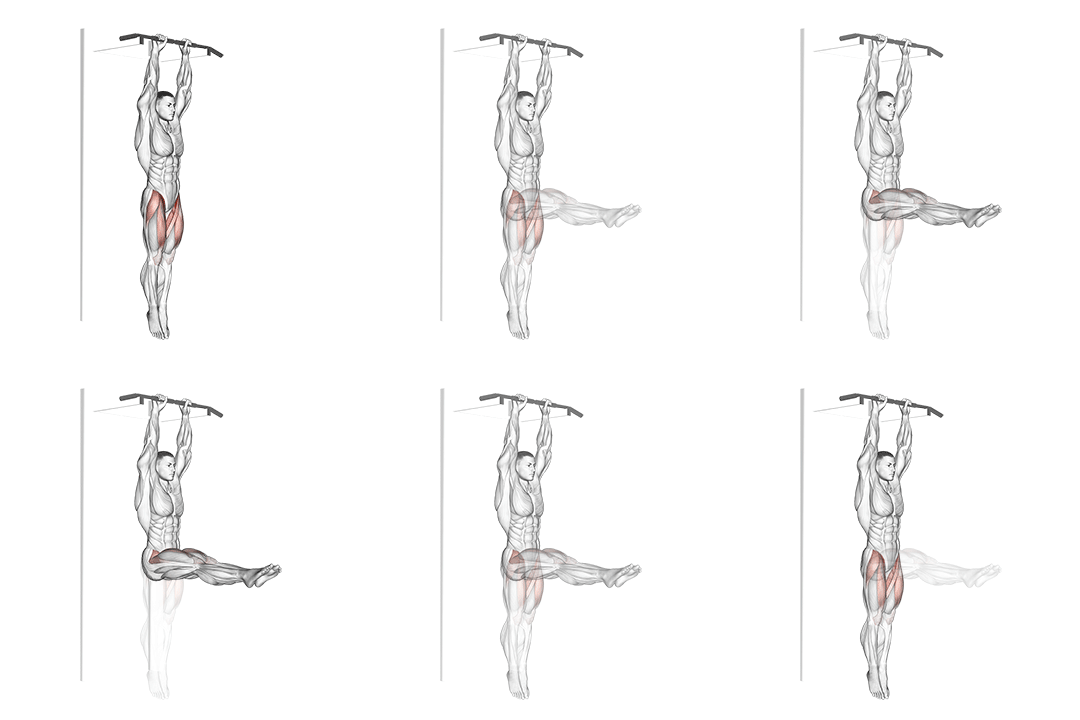
Hanging Straight Leg Raise
advanced strength exercise · body weight · targets abs
- Body part
- waist
- Primary target
- abs
- Equipment
- body weight
- Difficulty
- advanced
The hanging straight leg raise is the harder progression of the hanging leg raise — performed with the legs straight throughout the entire rep instead of bent at the knees. The straight legs create a much longer lever arm, dramatically increasing the load on the lower abs and hip flexors. The result is one of the most demanding bodyweight ab exercises in any program. Where the bent-knee hanging leg raise is the entry point to hanging core work, the straight-leg version is what experienced calisthenics athletes use to continue building lower-ab strength. Most trainees who can do 10+ strict hanging knee raises can manage only 4-6 straight-leg hanging leg raises in their first attempts. The exercise is unforgiving — there's no way to cheat the lever arm. Reaching strict straight-leg hanging leg raises typically takes 4-12 weeks of progression from a base of clean hanging knee raises. The path involves partial-range straight-leg work and dead-stop variations before full clean reps become possible. Programmed twice per week as the primary lower-ab exercise, the strength builds quickly.
Why train the Hanging Straight Leg Raise?
- Maximum bodyweight lower-ab loading without external resistance.
- Builds grip strength and shoulder stability simultaneously.
- Most direct path to advanced lower-ab development.
- Carries over to gymnastics, climbing, and L-sit progressions.
- Provides clear progression milestones (knee tucks, knee raises, leg raises, toes-to-bar).
- Requires only a pull-up bar.
How to do the Hanging Straight Leg Raise: step by step
- 1Hang from a pull-up bar with your arms fully extended and your palms facing away from you.
- 2Engage your core and lift your legs up in front of you, keeping them straight.
- 3Continue lifting until your legs are parallel to the ground or as high as you can comfortably go.
- 4Pause for a moment at the top, then slowly lower your legs back down to the starting position.
- 5Repeat for the desired number of repetitions.
Muscles worked
Primary
abs
Secondary
hip flexors
Common mistakes to avoid
Bending the knees mid-rep to cheat
If you bend the knees during the rep, you've turned a straight-leg raise into a knee raise. Keep the knees locked straight throughout the entire range — that's what makes the exercise valuable.
Using momentum to swing the legs up
Body swing or leg whip is hip flexor momentum, not ab work. Keep the body still — only the lower abs and hip flexors should move the legs.
Letting the lower back arch at the bottom
Some trainees let the pelvis tilt anteriorly at the bottom. Keep the pelvis tucked slightly posteriorly throughout — the lower abs should stay engaged even at the lowest position.
Cutting range at the top
Lifting the legs only to waist height misses most of the lower-ab benefit. Bring the legs to at least horizontal (parallel to the floor); for full range, even higher.
Skipping prerequisite work
Don't attempt straight-leg hanging leg raises until you can do strict hanging knee raises (3 sets of 10) and a 60-second dead hang. Rushing leads to either swinging or hip flexor strain.
Easier and harder variations
Easier
Hanging knee raises (knees bent throughout). Hanging knee tucks (knees fully bent, just bringing the knees toward the chest). Or hanging straight leg raises with reduced range (only lift to 45 degrees instead of horizontal).
Harder
Toes-to-bar (legs all the way up to touch the bar). Add weight (ankle weights). Or progress to L-sit holds for a different lower-ab challenge.
Alternative exercises
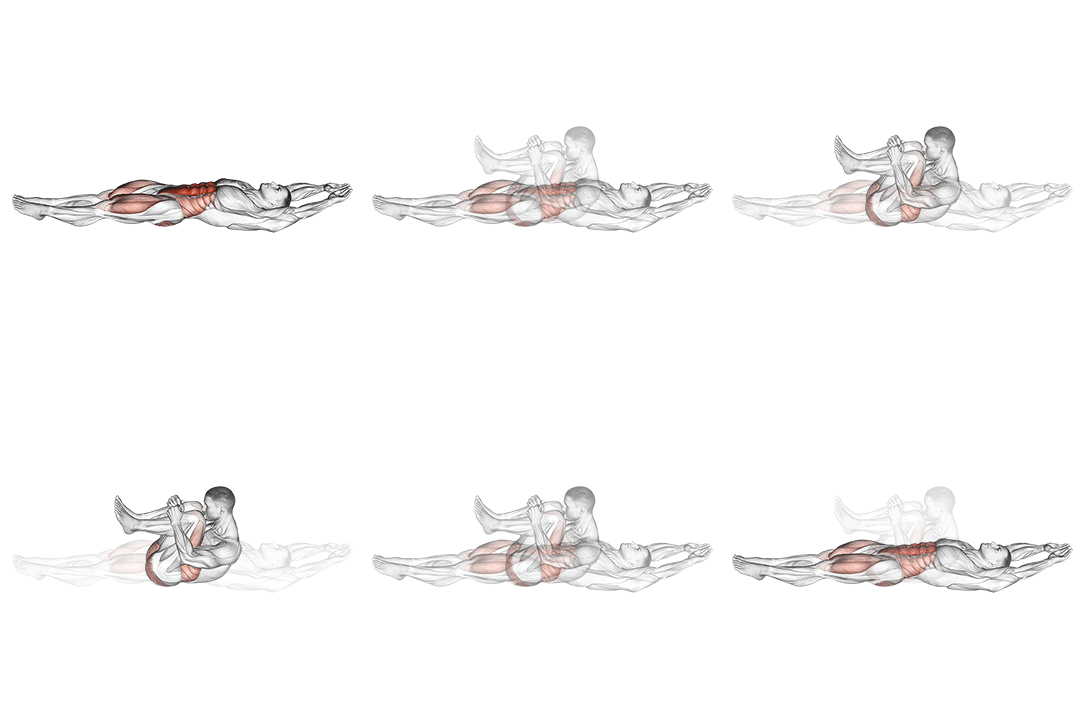
Hanging leg raise (bent knee)
Standard hanging core exercise with bent knees. Significantly easier and the standard regression.
Toes-to-bar
Even more demanding — the legs come all the way up to touch the bar. The natural progression after straight-leg raises.
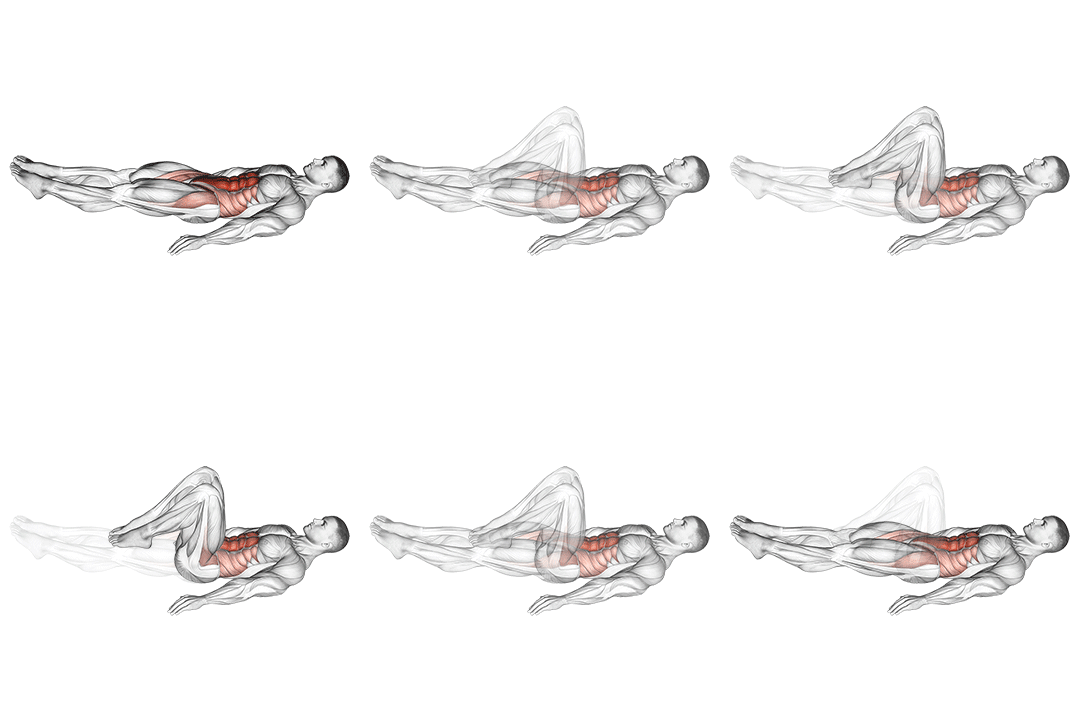
Lying leg raise
Performed lying on the floor instead of hanging. Easier alternative when grip is the limiting factor.
How to program the Hanging Straight Leg Raise into your training
Hanging straight leg raises work as the primary lower-ab exercise once you have the prerequisite strength. Sets and reps: 3-4 sets of 6-12 reps with 90-120 seconds rest. Total weekly volume of 30-60 reps drives most adaptations. In a complete core circuit: 3 sets of 8 hanging straight leg raises, 30-second front plank, 12 standard crunches, 30-second side plank per side. Done 2-3 times per week. For athletes building toward toes-to-bar: alternate weeks between hanging straight leg raises and toes-to-bar attempts. For those still building toward strict reps: 3 sessions per week with hanging knee raises (3 sets of 10), partial straight-leg raises (3 sets of 4-6), and dead hangs (3 sets of 30-60 seconds). Do not pair with heavy pull-ups in the same session — grip and forearm fatigue compromises hanging position quality.
Recovery and frequency
Hanging straight leg raises load the lower abs, hip flexors, grip, and shoulders. 48-72 hours between sessions is the right cadence. Hip flexor tightness is the most common cumulative issue. Daily hip flexor stretches between sessions help.
Frequently asked questions
How many sets and reps of hanging straight leg raises should I do?
3-4 sets of 6-12 reps with 90-120 seconds rest.
How often should I train hanging straight leg raises?
2-3 times per week with 48-72 hours between sessions.
Hanging knee raise vs hanging straight leg raise: what's the difference?
Knee raises have bent knees throughout; straight leg raises have legs fully straight, creating a much longer lever arm and significantly more difficulty.
How long until I can do straight-leg hanging leg raises?
From a base of strict hanging knee raises, expect 4-12 weeks of progression. Faster if you have strong core baseline; slower if starting from scratch.
Why does my grip give out before my abs?
Common — grip strength is often the bottleneck. Build it with dead hangs (3 sets of 30-60 seconds, 3 times per week) until grip can hold long enough for full ab sets.
Are hanging straight leg raises bad for the lower back?
Done with proper pelvic control (posterior tilt at the bottom), no. Done with arched lumbar spine at the bottom, they can stress the lower back.
Useful tools for this exercise
Build a workout with the Hanging Straight Leg Raise
Puna gives you guided bodyweight workouts you can do anywhere — no equipment, no gym, just structured progressions that build real strength.