Hanging Pike
advanced strength exercise · body weight · targets abs
- Body part
- waist
- Primary target
- abs
- Equipment
- body weight
- Difficulty
- advanced
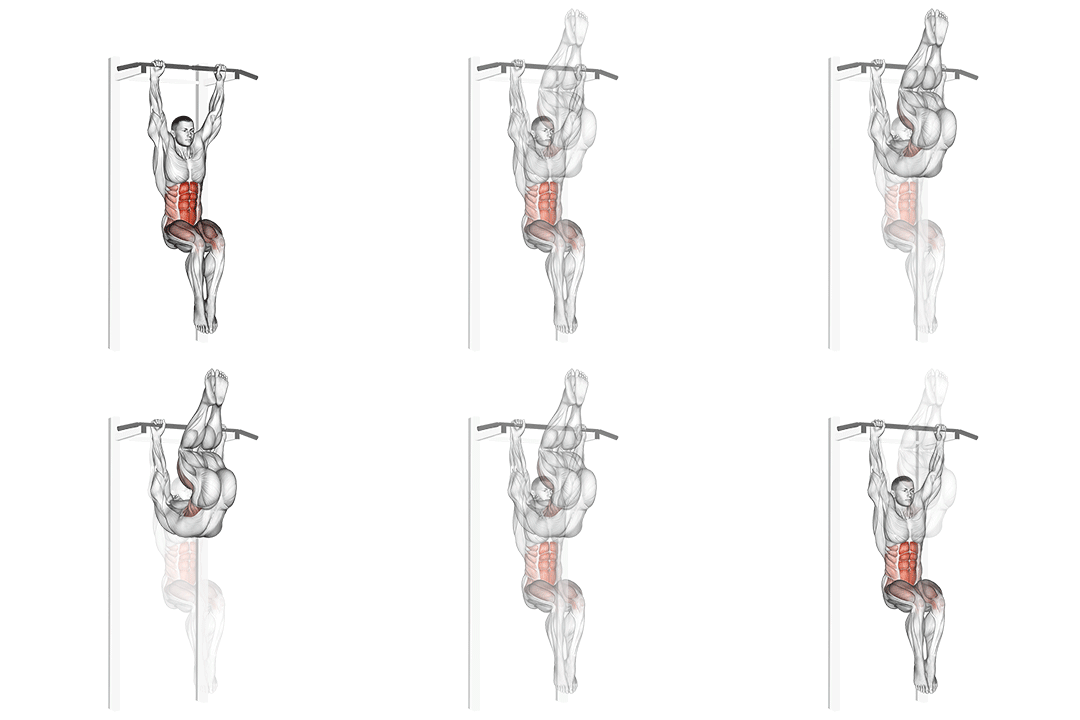
The hanging pike is an advanced ab exercise performed hanging from a pull-up bar, then lifting both legs straight up in a pike position so the toes approach the bar. The exercise demands extreme core strength, hip flexor flexibility, and grip endurance simultaneously. It's one of the most demanding bodyweight ab exercises in existence. This is a serious progression for trainees who've mastered hanging leg raises and want to push core training further. The straight-leg position multiplies the difficulty compared to bent-knee raises, while the full pike to bar level demands both strength and flexibility. Most trainees take 6-12 months of consistent hanging work to develop the strength and mobility for genuine hanging pikes. The trade-off is the demand. The exercise stresses the grip, shoulders, and core all simultaneously, with form often breaking down before strength fails. Programmed thoughtfully (1-2 times per week, conservative volume), hanging pikes produce elite-level core development. For advanced trainees pursuing front lever or other gymnastic skills, this exercise is essential preparation.
Why train the Hanging Pike?
- Builds elite core strength through extreme demand.
- Develops hip flexor flexibility alongside ab strength.
- Trains grip endurance through sustained hanging.
- Provides clear progression toward gymnastic skills like front lever.
- Engages the lats and shoulders alongside the core.
- Useful as advanced finisher in core programs.
How to do the Hanging Pike: step by step
- 1Hang from a pull-up bar with your arms fully extended and your palms facing away from you.
- 2Engage your core and lift your legs up towards the bar, keeping them straight.
- 3Continue lifting until your body forms a 'V' shape, with your legs parallel to the ground.
- 4Hold the position for a moment, then slowly lower your legs back down to the starting position.
- 5Repeat for the desired number of repetitions.
Muscles worked
Primary
abs
Secondary
hip flexors, shoulders
Common mistakes to avoid
Insufficient prerequisites
Build to 15+ hanging leg raises before attempting hanging pikes.
Swinging or kipping
Strict form only. Momentum reduces ab stimulus and stresses the shoulders.
Bouncing through reps
Slow controlled motion (3 seconds up, 3 seconds down) drives core development.
Cutting range
Toes should approach the bar. Partial reps reduce stimulus.
Programming too aggressively
1-2 sessions per week. The combined demand needs significant recovery.
Easier and harder variations
Easier
Perform hanging leg raises (knees bent or partial straight leg). Or progress through bent-knee → straight-leg → pike over months.
Harder
Add ankle weights. Or progress to front lever progressions.
Alternative exercises
Hanging leg raise
Easier version without full pike. Use as foundation.
L-sit on floor
Floor-based version with similar strength demand.
V-up
Floor-based combined motion. Different stimulus.
How to program the Hanging Pike into your training
Sets and reps: 3 sets of 4-8 reps with 90-120 seconds rest. Frequency: 1-2 times per week. In advanced sessions: as core finisher after main work.
Recovery and frequency
Steep recovery cost. 72 hours between sessions typical. Watch for grip fatigue and shoulder issues.
Frequently asked questions
How many reps?
4-8 per set.
How often?
1-2 times per week.
How long to learn?
6-12 months from solid hanging leg raise foundation.
Hanging pike vs leg raise?
Pike requires full straight-leg lift to bar. Significantly harder.
Will this build front lever strength?
Yes — the core demand is similar. Useful preparation work.
Is this safe?
Yes when prerequisites are met. Without grip and core foundation, form breaks down.
Useful tools for this exercise
Build a workout with the Hanging Pike
Puna gives you guided bodyweight workouts you can do anywhere — no equipment, no gym, just structured progressions that build real strength.