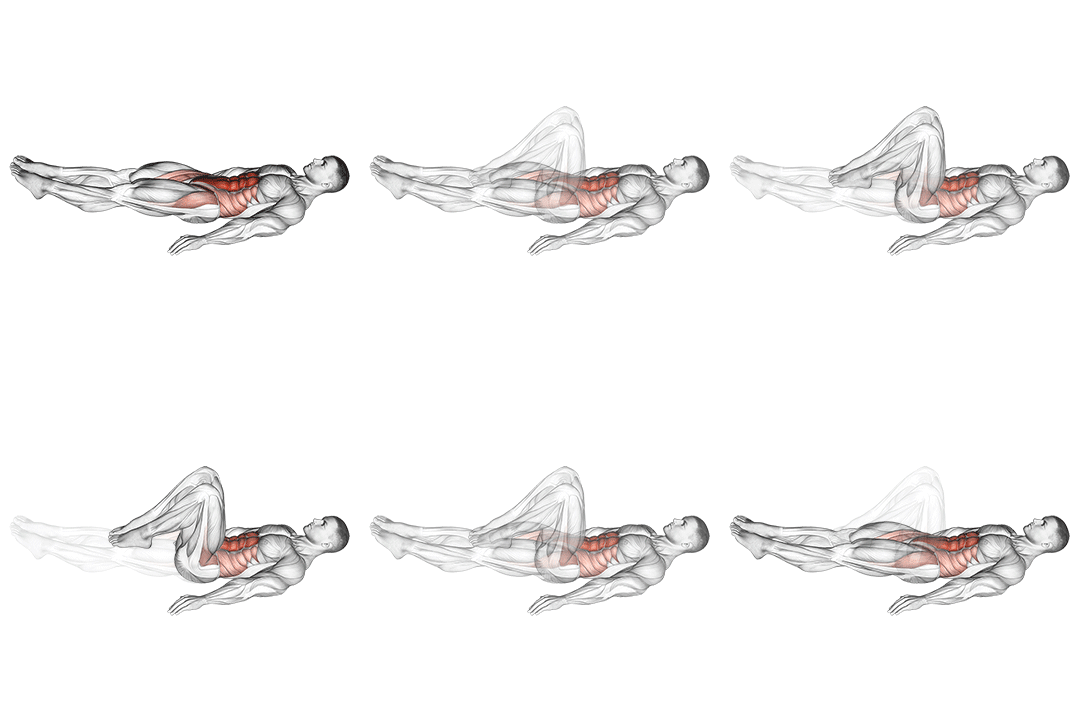
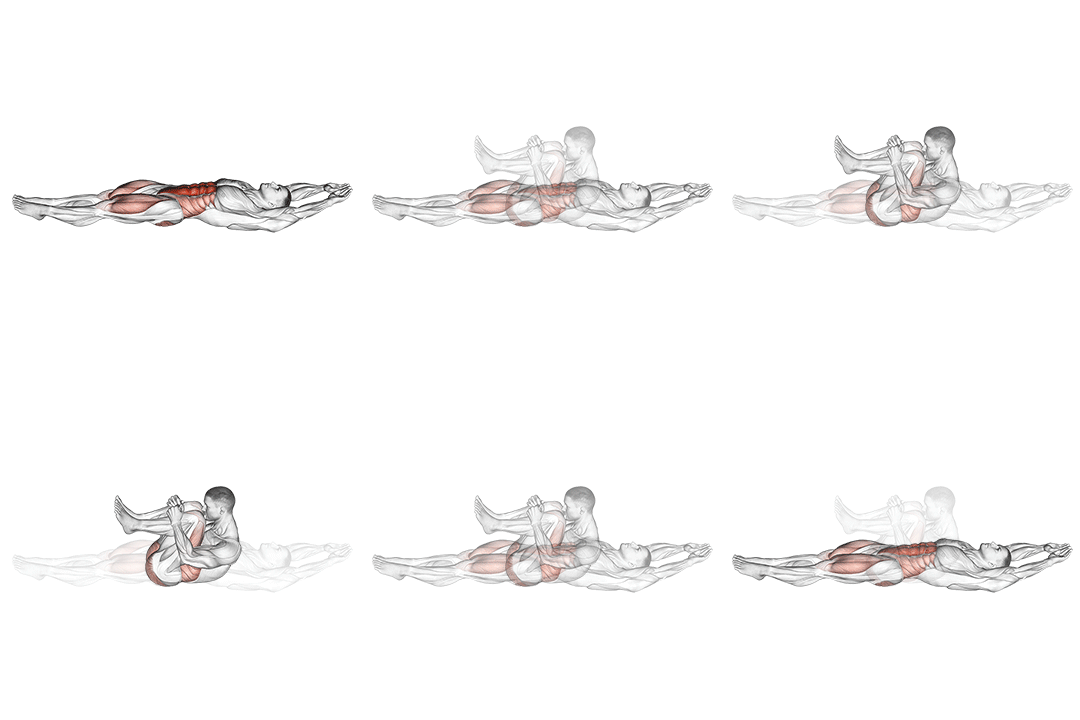
Frog Crunch
beginner strength exercise · body weight · targets abs
- Body part
- waist
- Primary target
- abs
- Equipment
- body weight
- Difficulty
- beginner
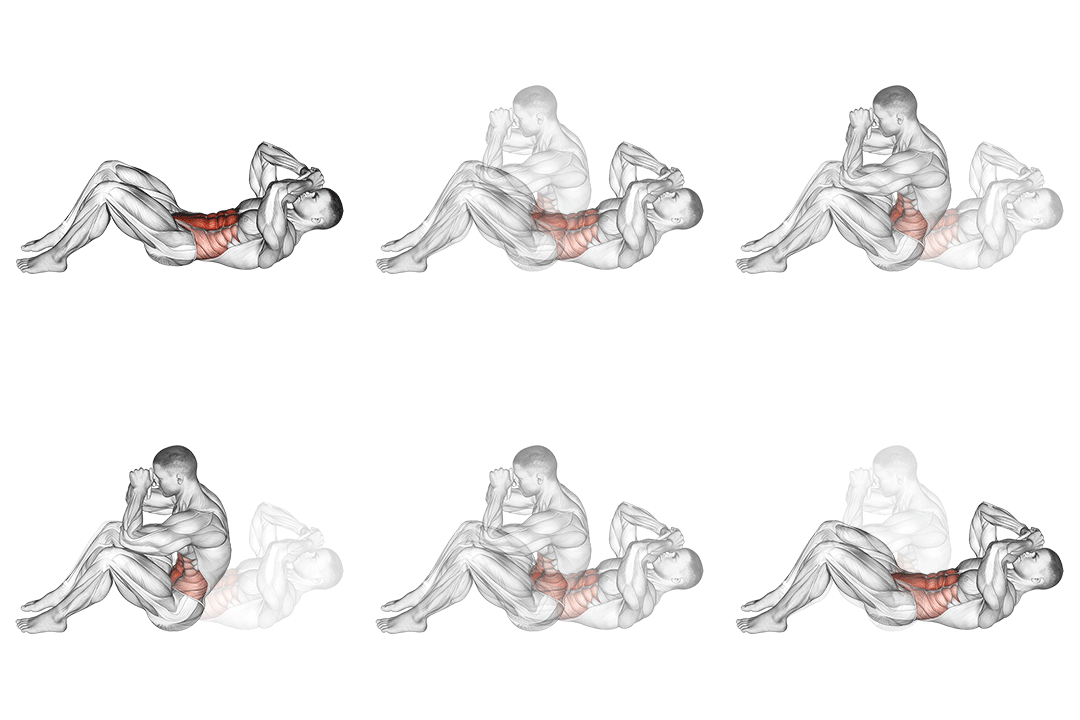
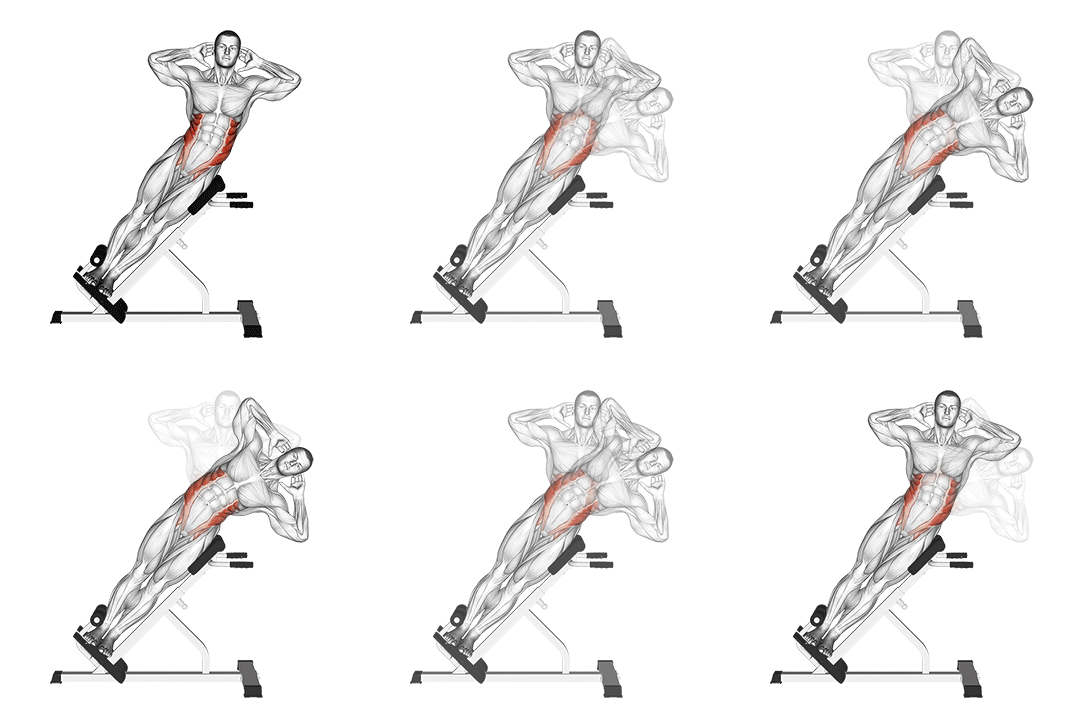
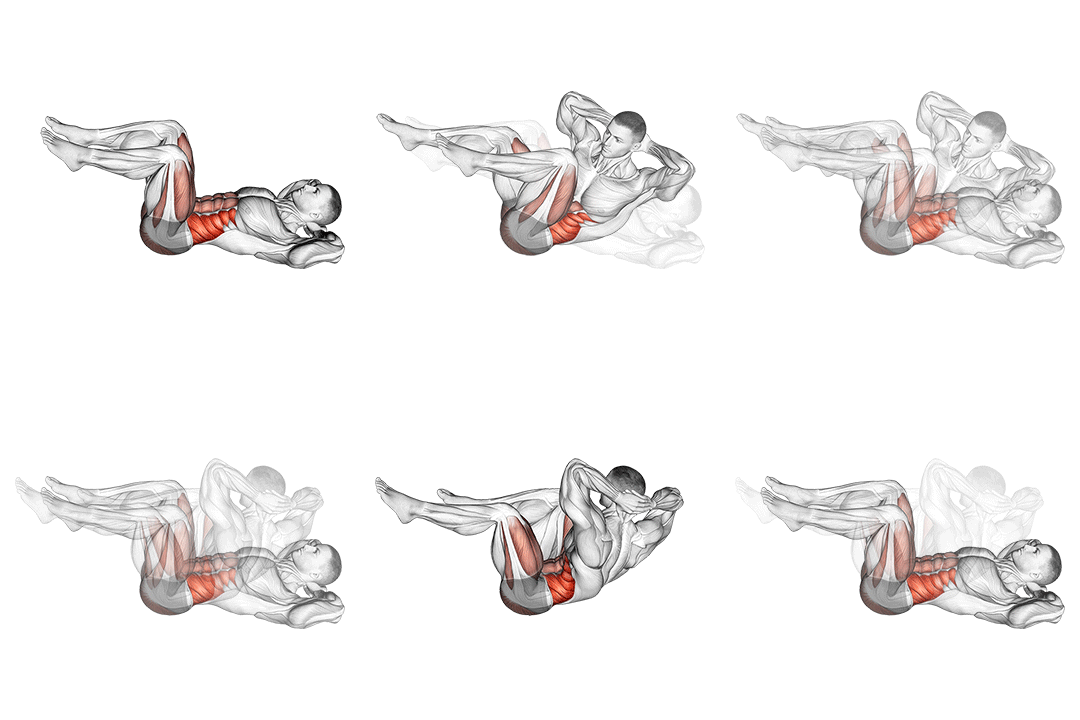
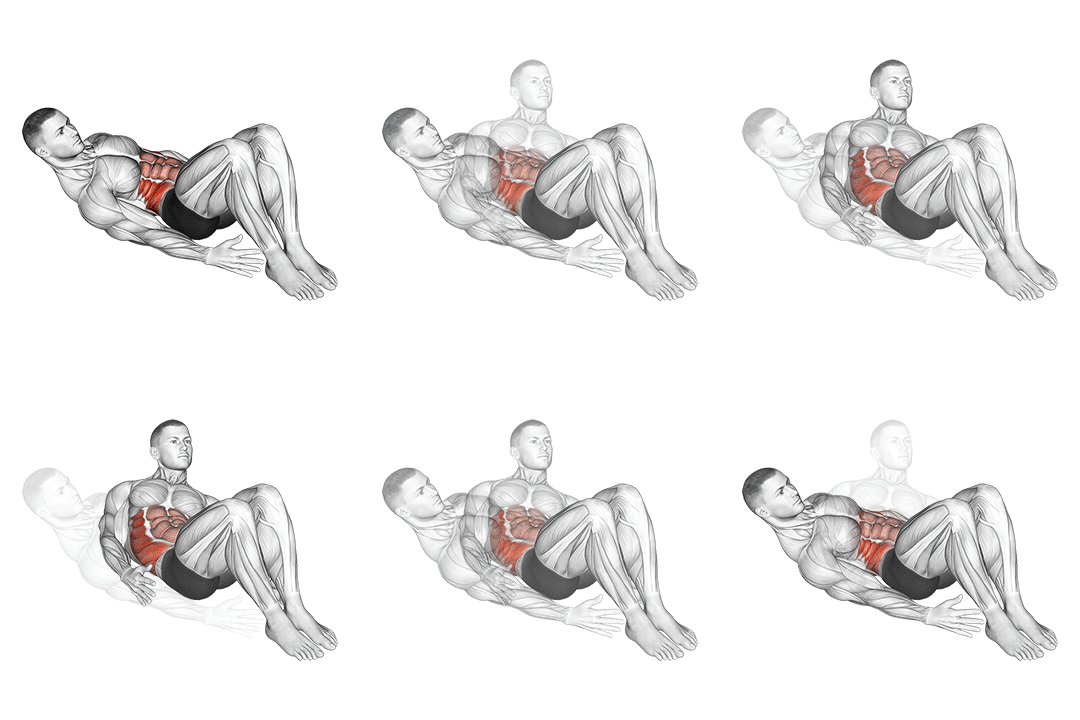
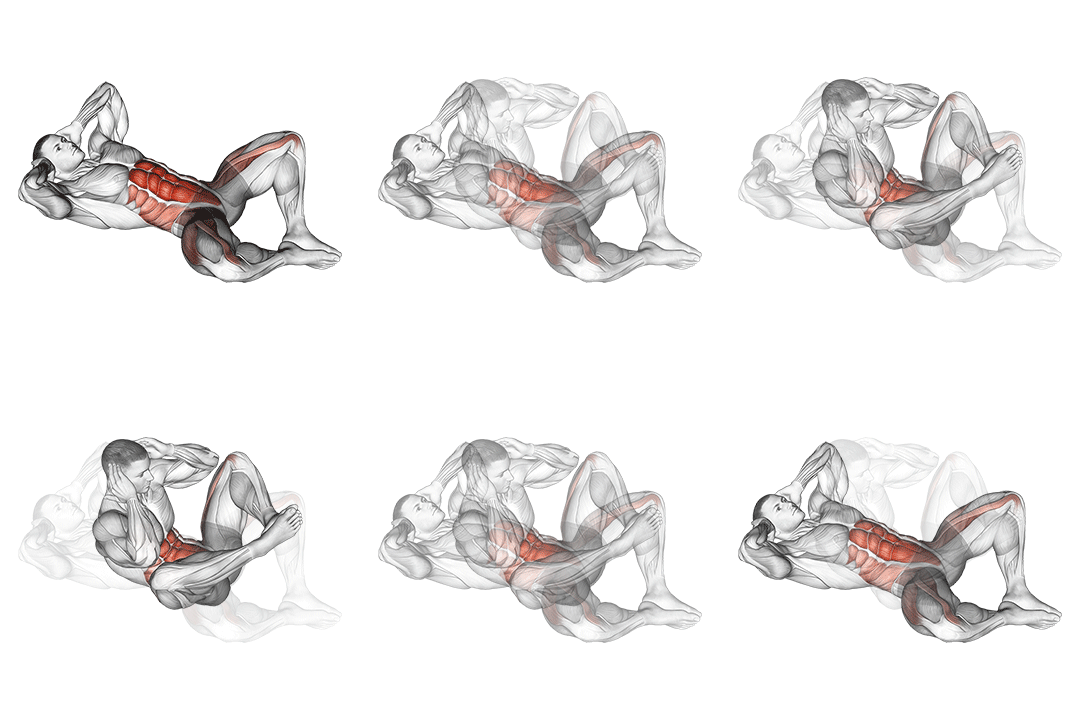
The frog crunch is an ab exercise performed face-up with the knees splayed out to the sides and the soles of the feet pressed together (a butterfly position from the legs' perspective). From this position, you crunch the upper body up while the legs maintain the splayed butterfly position. The combination loads the upper abs through the crunch while the spread-leg position activates the inner thighs and reduces hip flexor recruitment. The leg position is what distinguishes this from a standard crunch. By splaying the knees, the hip flexors are placed in a stretched position where they're less able to contribute to the lift. This forces the abs to do more of the work — similar in principle to the Janda sit-up but without the deliberate hamstring contraction. It's a useful variation for trainees who feel hip flexor dominance during standard crunches. Many people can do crunches but feel the front of the hips burning more than the abs — the frog position significantly reduces this issue. Programmed twice per week as a primary or secondary ab exercise, it builds focused ab strength while training inner thigh activation.
Why train the Frog Crunch?
- Reduces hip flexor recruitment compared to standard crunches.
- Activates inner thighs alongside ab work.
- Easier on the lower back than full sit-ups.
- Accessible to most fitness levels.
- Useful for trainees who feel hip flexor dominance in standard crunches.
- Requires no equipment.
How to do the Frog Crunch: step by step
- 1Lie flat on your back with your knees bent and feet flat on the ground.
- 2Place your hands behind your head with your elbows pointing outwards.
- 3Engaging your abs, lift your upper body off the ground, curling forward until your torso is at a 45-degree angle.
- 4Pause for a moment at the top, then slowly lower your upper body back down to the starting position.
- 5Repeat for the desired number of repetitions.
Muscles worked
Primary
abs
Secondary
hip flexors
Common mistakes to avoid
Pulling on the neck with the hands
Hands behind the head are a guide, not a tool. Pulling the head forward strains the cervical spine.
Letting the knees come together during the crunch
The frog position should be maintained throughout — knees splayed out, soles pressed together. If the knees drift inward, you've lost the position that distinguishes this exercise.
Lifting too high to chase a 'big' rep
A crunch only lifts the shoulder blades a few inches off the floor. Don't try to come fully upright.
Rushing through reps
Speed kills ab work. Take 1-2 seconds up, brief pause at the top, 1-2 seconds down.
Forcing the leg position when hip mobility is limited
The frog position requires hip mobility some people don't have comfortably. Don't force it — splay the knees only as wide as feels natural. Forcing the position can stress the hips.
Easier and harder variations
Easier
Reduce the leg-splay angle. Or perform standard crunches if the frog position is uncomfortable. Or perform with arms at the chest instead of behind the head.
Harder
Hold a weight at the chest. Slow the tempo. Or progress to weighted frog crunches or to a frog-position reverse crunch combination.
Alternative exercises
Standard crunch
Easier baseline without the frog leg position. More hip flexor involvement.
Janda sit-up
Different mechanism for reducing hip flexor recruitment — uses hamstring contraction instead of leg position.
Reverse crunch
Lower-ab focus with bent knees. Useful complement to upper-ab frog crunches.
How to program the Frog Crunch into your training
Frog crunches work as accessory or stand-alone ab exercise. Pair with planks (anti-extension) and reverse crunches (lower abs) for complete core development. Sets and reps: 3 sets of 12-20 reps with 30-60 seconds rest. Total weekly volume of 75-150 reps drives most adaptations. In a complete core circuit: 3 sets of 15 frog crunches, 3 sets of 30-second front planks, 3 sets of 12 reverse crunches. Done 2-3 times per week. Daily at moderate volume is fine.
Recovery and frequency
Frog crunches at moderate volume have low recovery cost — daily training is fine. Inner thigh tightness from the frog position can occur in early weeks. Daily inner thigh stretches help.
Frequently asked questions
How many sets and reps should I do?
3 sets of 12-20 reps with 30-60 seconds rest.
How often should I train frog crunches?
2-3 times per week as part of a structured program; daily at moderate volume is fine.
Frog crunch vs standard crunch: which is better?
Different tools. Frog crunch reduces hip flexor recruitment, useful for trainees who feel hip flexor dominance. Standard crunches are more accessible. Use both for variety.
Will frog crunches give me visible abs?
They build the muscle, but visible abs come from low body fat.
Why does the frog position feel uncomfortable in my hips?
The position requires hip mobility some people don't have. Don't force the angle — splay the knees only as wide as feels natural. Hip mobility work over time often improves the position.
Can I do frog crunches if I have lower back pain?
Often yes — the reduced hip flexor recruitment makes them gentler on the lower back than full sit-ups. Confirm with a healthcare provider for specific conditions.
Useful tools for this exercise
Build a workout with the Frog Crunch
Puna gives you guided bodyweight workouts you can do anywhere — no equipment, no gym, just structured progressions that build real strength.