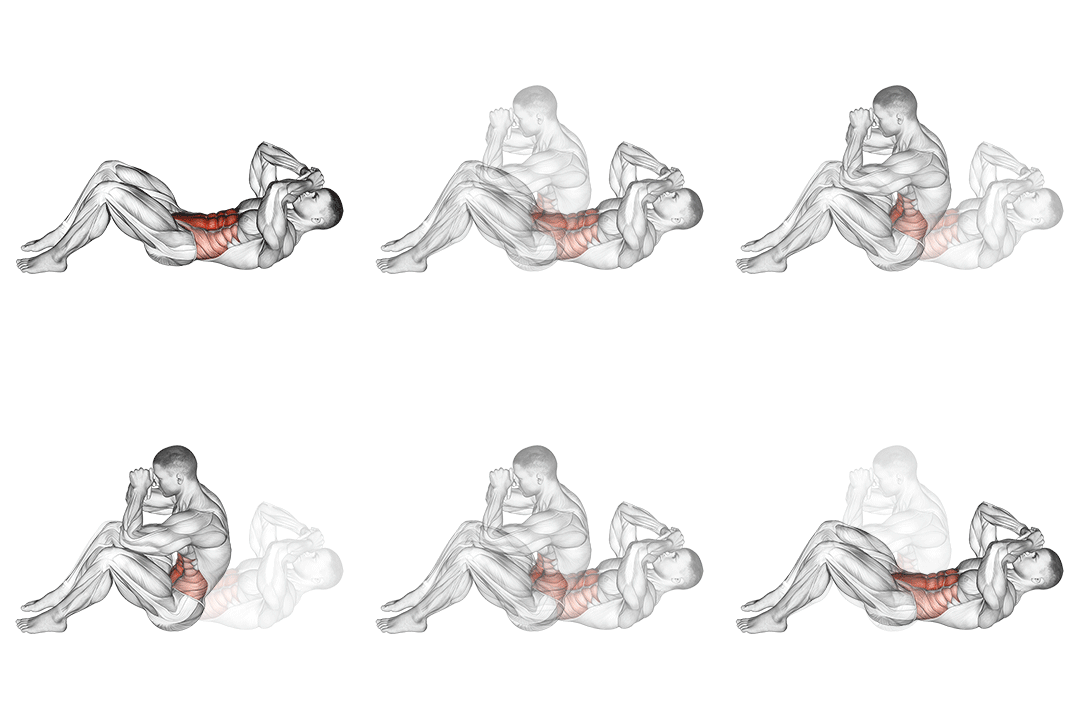
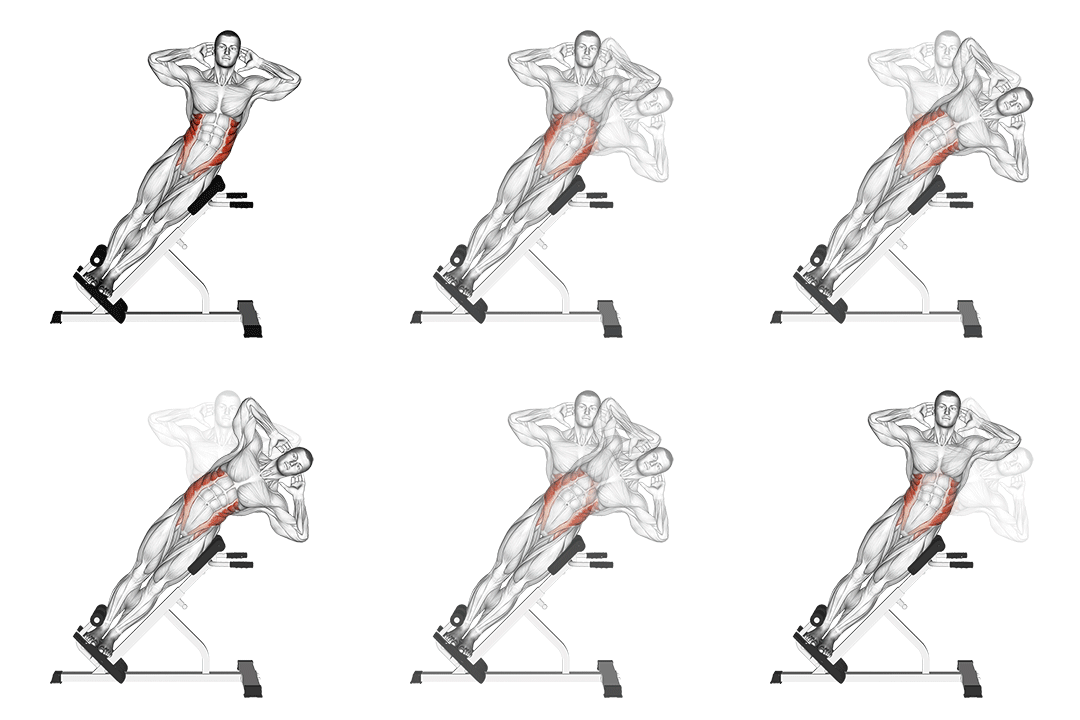
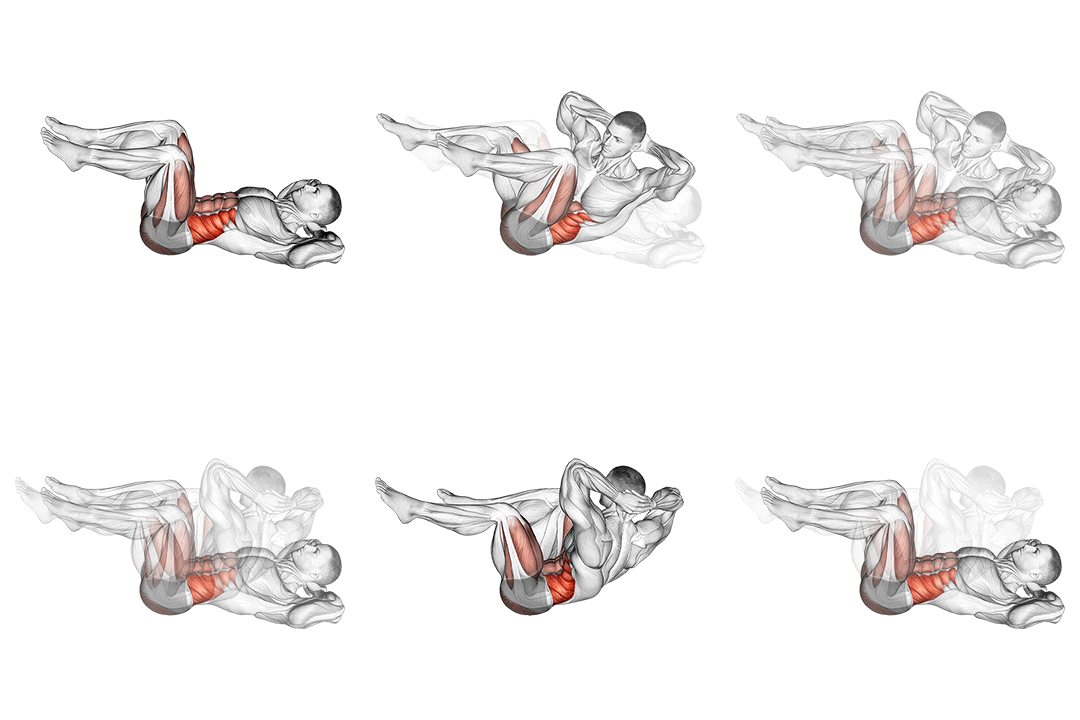
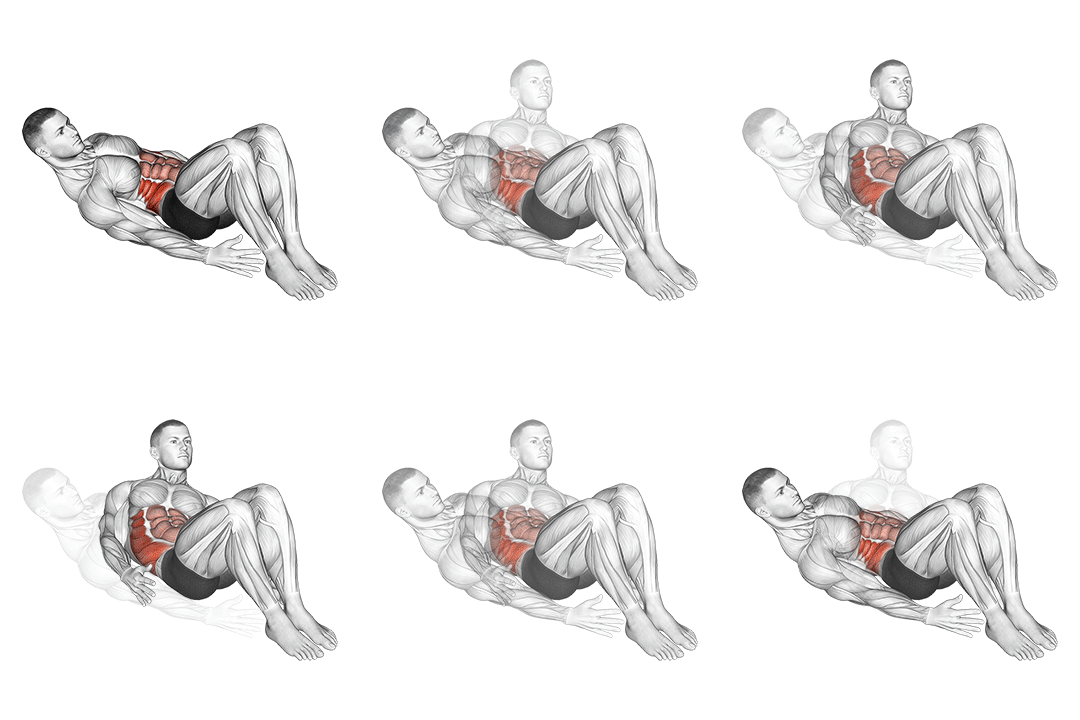
Decline Crunch
intermediate strength exercise · body weight · targets abs
- Body part
- waist
- Primary target
- abs
- Equipment
- body weight
- Difficulty
- intermediate
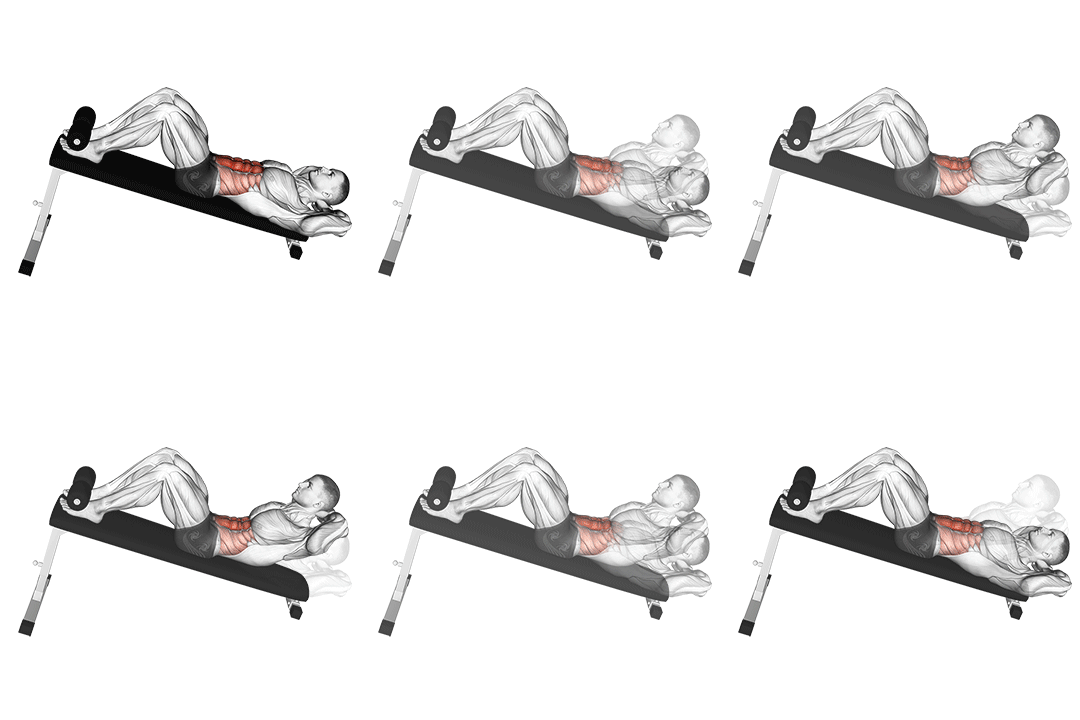
The decline crunch is performed on a sit-up bench with the feet anchored higher than the head, requiring you to crunch the upper body up against the resistance of gravity from a downward angle. Unlike a flat-floor crunch, the decline angle adds significant load to the upper abs throughout the range — typically 30-50% more than a flat crunch. The exercise targets the upper portion of the rectus abdominis with focused intensity that's hard to match without weights or specialized equipment. It fills the gap between basic crunches (which become too easy with progressive training) and weighted ab exercises (which require equipment access). Most trainees who can do 3 sets of 25+ flat-floor crunches without challenge will find decline crunches genuinely demanding even at lower rep ranges. The angle does the work that adding weight would otherwise require. The trade-off compared to flat crunches is the equipment requirement and the increased neck strain risk. The decline angle puts the head lower than the chest, which can cause head rush and tempts trainees to pull on the neck for leverage. Done with proper form — controlled tempo, no neck strain, full range — decline crunches earn a place in any progressive ab program once basic crunches no longer challenge.
Why train the Decline Crunch?
- Loads the upper abs significantly more than flat crunches due to the gravity angle.
- Provides progression for trainees who have outgrown standard crunches.
- Targets the upper rectus abdominis through full range with concentrated tension.
- Equipment is straightforward — most gyms have a decline sit-up bench.
- Scales further with added weight (a plate held at the chest or behind the head).
- Useful for athletes whose sport demands strong upper-ab development.
How to do the Decline Crunch: step by step
- 1Lie on a decline bench with your feet secured and your knees bent at a 90-degree angle.
- 2Place your hands behind your head or across your chest.
- 3Engage your abs and lift your upper body towards your knees, curling your torso.
- 4Pause for a moment at the top, then slowly lower your upper body back down to the starting position.
- 5Repeat for the desired number of repetitions.
Muscles worked
Primary
abs
Secondary
hip flexors
Common mistakes to avoid
Pulling on the neck with the hands
If your hands are behind your head, they're a guide — not a tool. Pulling the head forward strains the cervical spine and removes the abs from the work. Imagine an apple under your chin; keep that space throughout every rep.
Lifting too high to mimic a sit-up
A crunch should only lift the shoulder blades a few inches off the bench. The decline crunch is the same — don't try to come fully upright. Stop at the peak ab contraction; coming higher shifts work to the hip flexors.
Letting the angle make you dizzy
The head-down position can cause head rush, especially in the first sessions. If you feel light-headed, reduce the angle or sit up between sets. Don't push through dizziness.
Rushing through reps for high counts
Speed and the decline angle combine to make momentum easy to use. Slow each rep down: 1-2 seconds up, brief pause at the top, 2-3 seconds down. The negative phase is where the abs do most of their hardest work.
Choosing too steep an angle
Some benches allow extreme decline angles (60+ degrees). Steeper isn't better — it just increases neck strain risk and reduces the focus on the abs. Stick to moderate angles (30-45 degrees) for most ab-focused work.
Easier and harder variations
Easier
Reduce the decline angle to whatever is comfortable. Or perform regular floor crunches; build to decline variation over weeks once the floor version becomes too easy.
Harder
Hold a weight plate at the chest or behind the head. Add a twist at the top of each rep for oblique work. Or progress to weighted decline crunches with progressive load increases.
Alternative exercises
Standard floor crunch
Same flexion movement on the floor without the decline angle. Easier and lower neck strain risk.
Decline sit-up
Full sit-up version on a decline bench. More hip flexor involvement, longer range of motion.
Cable crunch
Standing or kneeling crunch using a cable machine. Allows for heavier and progressive loading on the abs.
How to program the Decline Crunch into your training
Decline crunches work as either the primary ab exercise in a focused core session or as accessory work in a full-body program. They're more demanding than flat crunches, so volume should be lower per session. Sets and reps: 3 sets of 12-20 reps with 60-90 seconds rest. With added weight: 3 sets of 8-12 reps. Total weekly volume of 60-150 reps drives most adaptations. In a complete core circuit: 3 rounds of 15 decline crunches, 30-second front plank, 12 reverse crunches, 30-second side plank per side. Done twice per week. For athletes specifically chasing visible upper abs (recognizing diet drives visibility), program decline crunches twice per week alongside other core work. Combined weekly volume of 200+ rectus abdominis reps helps maintain muscle thickness once body fat is low enough for visibility. Do not program decline crunches as your only ab exercise. Pair with reverse crunches (lower abs) and planks (anti-extension) for complete development.
Recovery and frequency
Decline crunches load the upper abs more heavily than flat crunches. 48 hours between dedicated sessions is the right cadence; daily training is fine at moderate volume. Neck soreness usually means the neck flexors are doing too much. If this happens, reduce range, place hands at the chest instead of behind the head, and focus on initiating the lift from the abs. Lower back discomfort during or after points to form errors — typically excessive lifting that activates the hip flexors.
Frequently asked questions
How many sets and reps of decline crunches should I do?
3 sets of 12-20 reps with 60-90 seconds rest. With added weight: 3 sets of 8-12 reps.
How often should I train decline crunches?
2-3 times per week as part of a structured core program.
Decline crunches vs flat crunches: which is better?
Decline crunches are more demanding due to the angle. Use them once you've outgrown flat crunches (3 sets of 25+ feels easy). Otherwise stick with flat crunches.
Are decline crunches safe?
For most healthy trainees, yes — with proper form and reasonable volume. The decline angle increases neck strain risk if form breaks down. People with neck issues or high blood pressure should approach cautiously.
Will decline crunches give me visible abs?
They build the muscle, but visible abs come from low body fat. Doing decline crunches daily won't make abs visible if body fat is too high.
Should I add weight or just do more reps?
Once you can do 3 sets of 20 strict bodyweight decline crunches, add weight (a 5-10 lb plate). More reps without added load trains endurance more than strength.
Useful tools for this exercise
Build a workout with the Decline Crunch
Puna gives you guided bodyweight workouts you can do anywhere — no equipment, no gym, just structured progressions that build real strength.