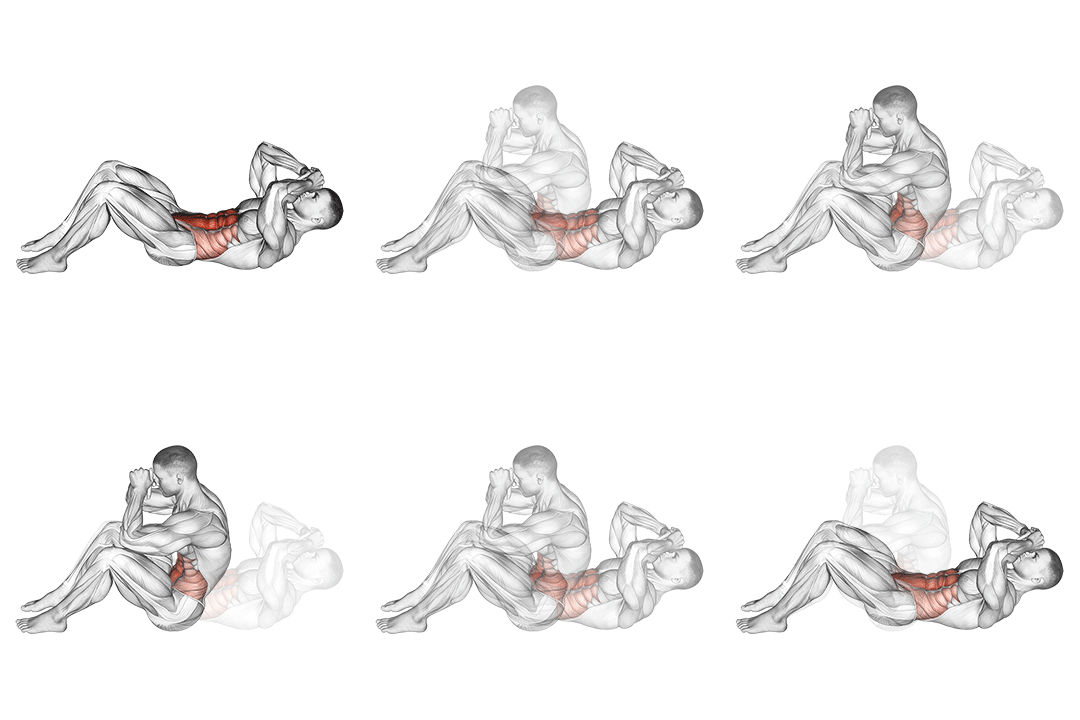
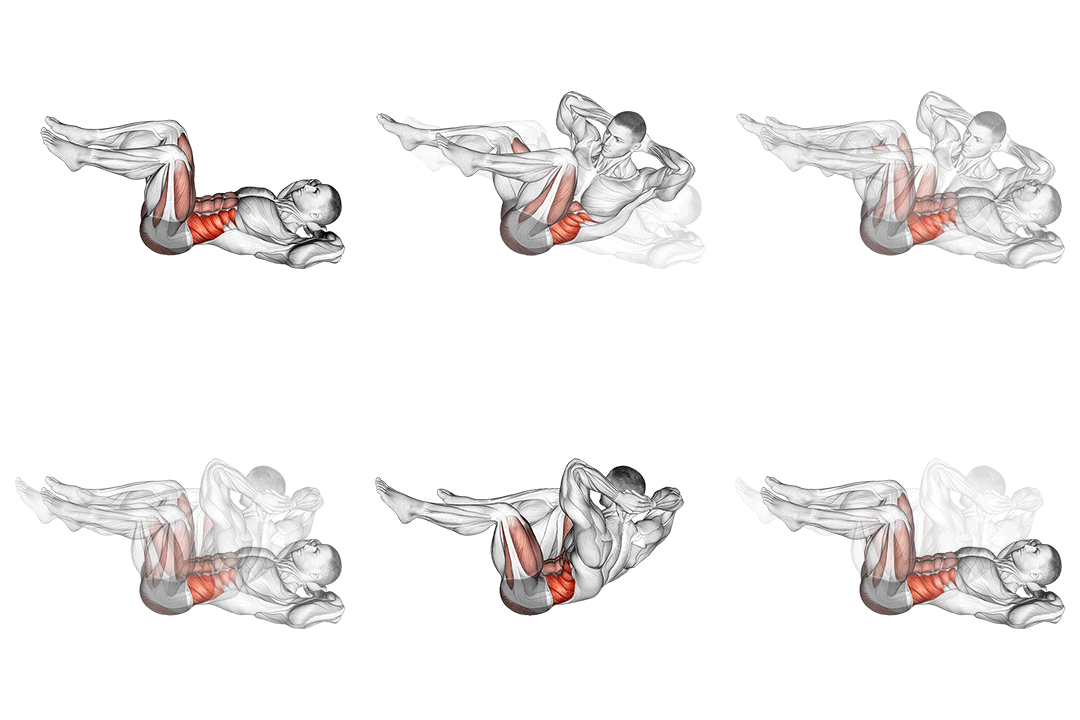
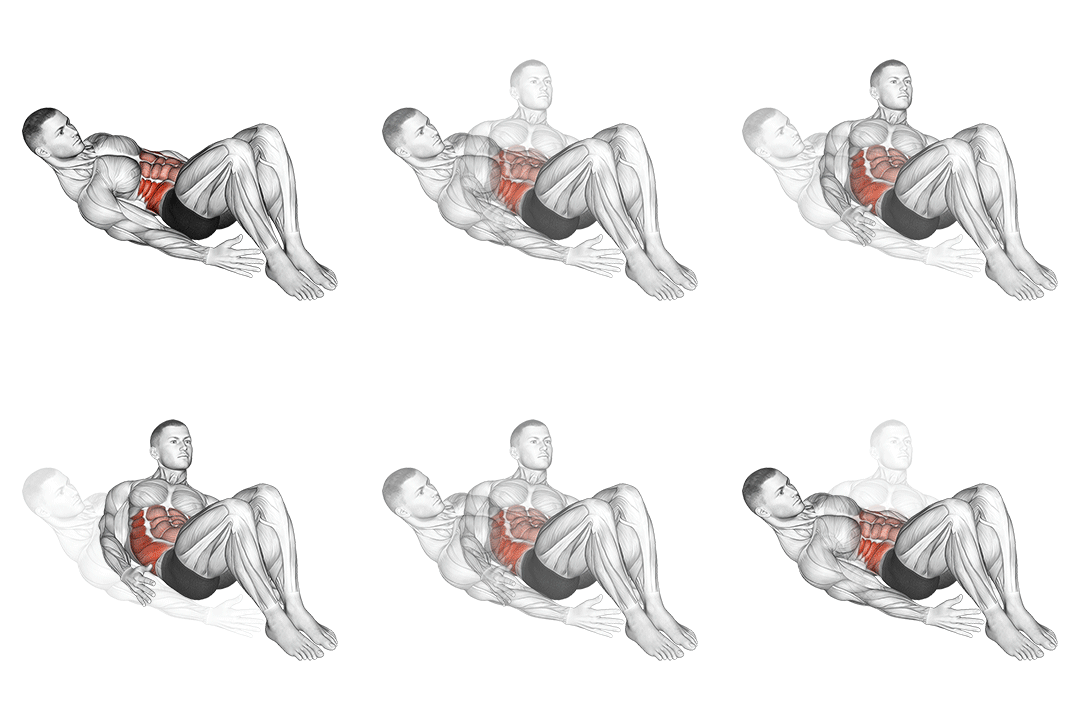
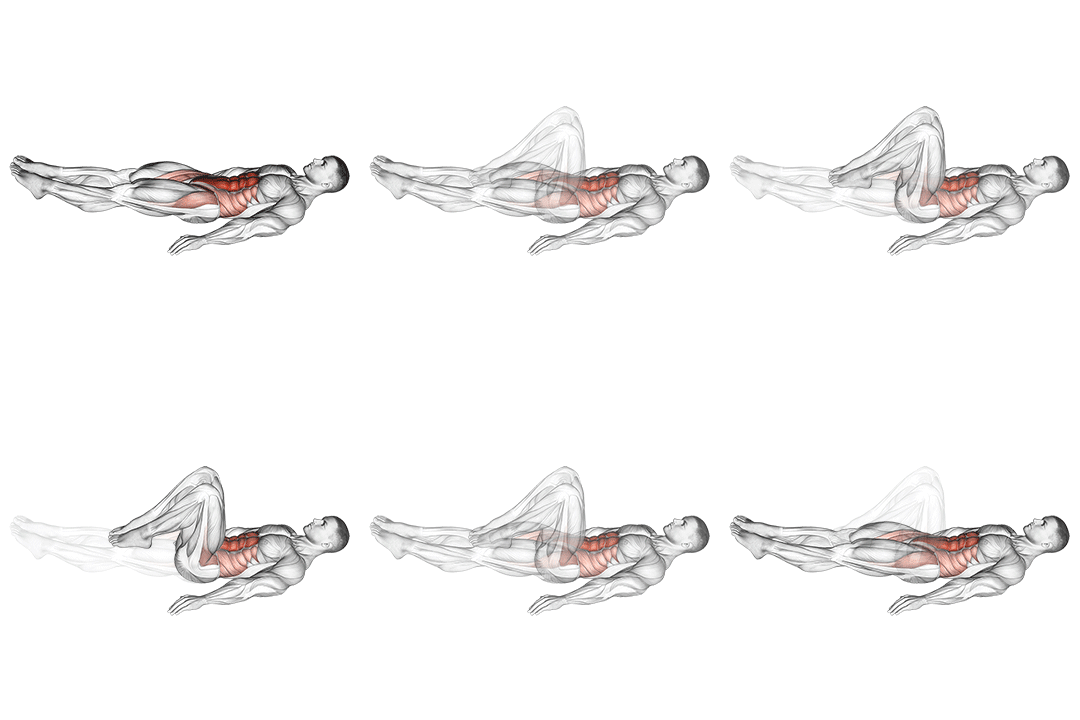
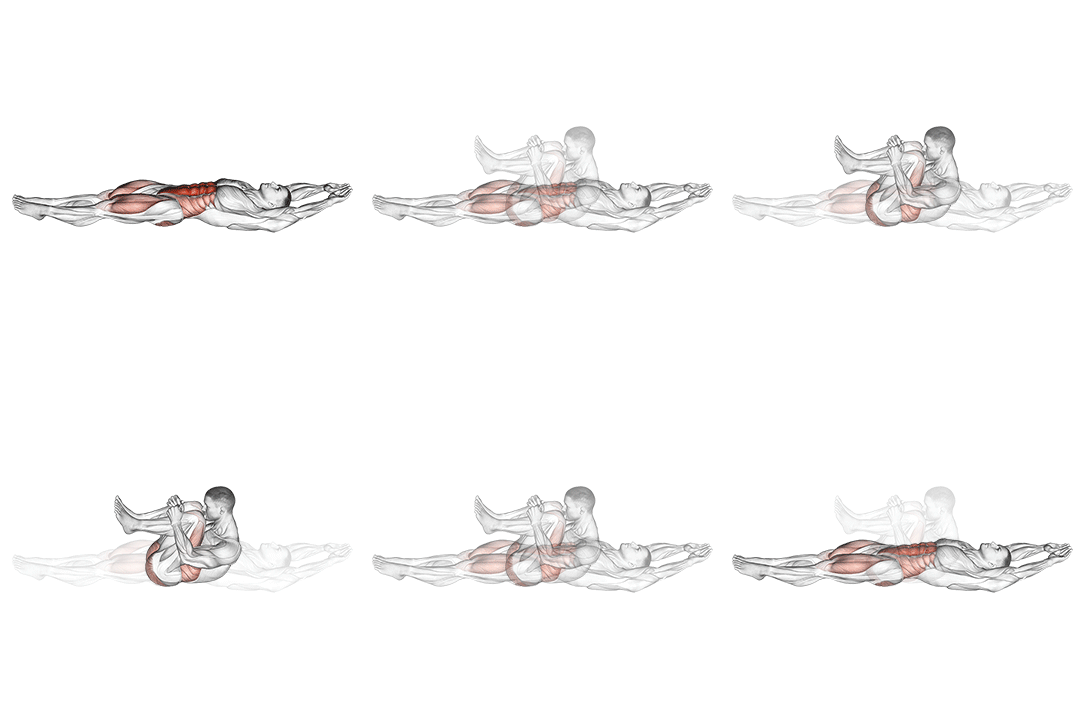
Dead Bug
beginner strength exercise · body weight · targets abs
- Body part
- waist
- Primary target
- abs
- Equipment
- body weight
- Difficulty
- beginner
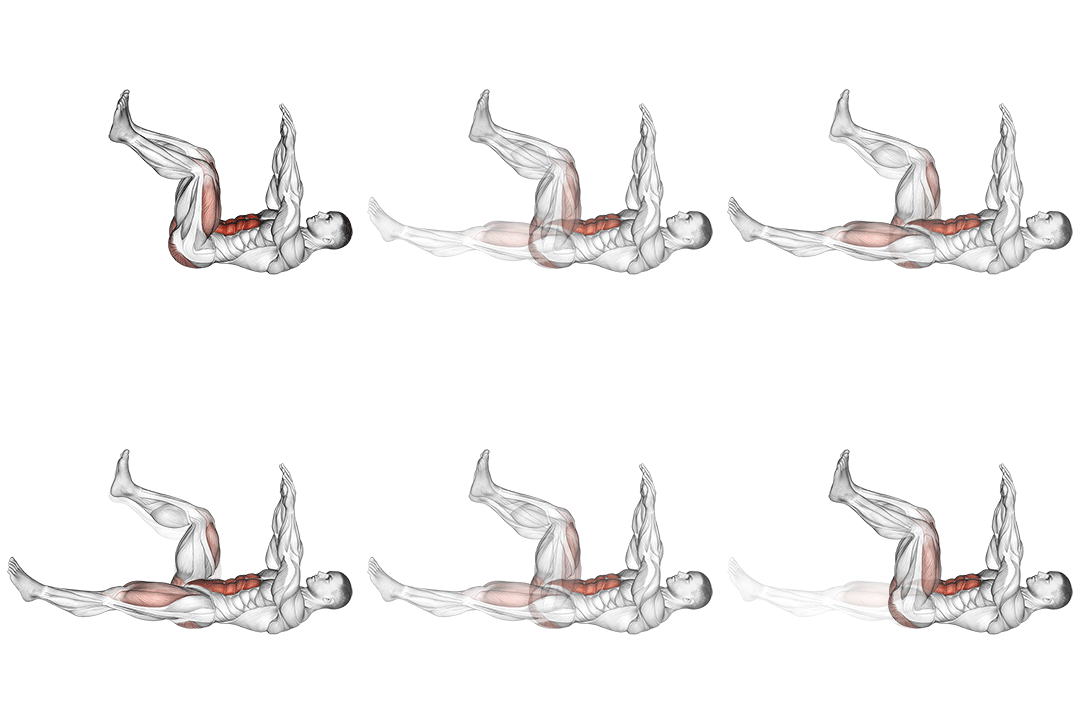
The dead bug is one of the most underrated core exercises in any program. From a face-up position with arms extended toward the ceiling and knees bent at 90 degrees, you slowly lower one arm overhead and the opposite leg toward the floor, then return and switch sides. The deceptive simplicity hides the real challenge: keeping the lower back pressed firmly into the floor throughout, which forces the deep core to work hard. What makes the dead bug worth the time is what it trains — the anti-extension function of the core. While crunches train the abs to flex the spine, the dead bug trains them to resist extension under the load of moving limbs. That's the function that matters most in real life: keeping the lower back stable while you lift, carry, run, or sit. Most lower back issues in active people come from a core that can't resist extension well, not from a core that can't crunch. It's also one of the safest core exercises available. The supine position eliminates spinal loading, which makes it appropriate for almost everyone — including people rehabbing back issues, pregnant women (with medical clearance), and trainees who feel the standard plank is too demanding. Despite the gentle position, programmed correctly the dead bug builds genuine deep-core strength that transfers to almost every other exercise in your program.
Why train the Dead Bug?
- Trains the deep core to resist extension — the function that matters most for low back health.
- Safe for almost everyone, including those rehabbing back issues or new to training.
- Builds the brain-body coordination of moving limbs while keeping the trunk stable.
- Carries over to deadlifts, squats, and overhead pressing by reinforcing the bracing pattern.
- Requires no equipment and minimal space — fits into any warm-up or cool-down.
- Reveals asymmetries — one side is usually noticeably harder than the other in the early weeks of training.
How to do the Dead Bug: step by step
- 1Lie flat on your back with your arms extended towards the ceiling.
- 2Bend your knees and lift your legs off the ground, creating a 90-degree angle at your hips and knees.
- 3Engage your core and lower back to press your lower back into the ground.
- 4Slowly lower your right arm and left leg towards the ground, keeping them straight and hovering just above the floor.
- 5Pause for a moment, then return to the starting position.
- 6Repeat the movement with your left arm and right leg.
- 7Continue alternating sides for the desired number of repetitions.
Muscles worked
Primary
abs
Secondary
hip flexors, lower back
Common mistakes to avoid
Letting the lower back arch off the floor
If a hand can slide between your lower back and the floor during the rep, the core has lost the fight. Press the lower back firmly into the floor and maintain that pressure throughout the entire movement — that pressure is the exercise.
Moving too fast for the core to keep up
Whipping the arms and legs through the range uses momentum and skips the actual core work. Take 3-5 seconds per rep, with the lowering phase being slower than the return. Quality of position matters more than rep count.
Holding the breath through the rep
Bracing tightly often means stopping breathing. Exhale steadily as you extend the arm and leg, inhale as you return. Continuous breathing while maintaining core tension is a skill that takes practice.
Letting the limbs touch the floor at the bottom
Once the heel or hand touches down, the tension drops and the next rep starts cold. Stop the limbs an inch above the floor — they should hover, not rest.
Going through the motions without focus
Dead bugs look easy and are easy to do badly. Pay attention to the lower back contact, the breath, the tempo. A focused 30 seconds of dead bugs trains more than a distracted 2 minutes.
Easier and harder variations
Easier
Move only the arm or only the leg at a time, not both simultaneously. This reduces the coordination demand and lets you focus on maintaining lower back contact. Build to alternating opposite arm and leg over 2-3 weeks.
Harder
Hold light weights in the hands (1-2 lb) or wear ankle weights. Add an exhale at the bottom position to deepen the core engagement. Or progress to a hollow body hold, which extends the same principle.
Alternative exercises
Bird dog
Performed on hands and knees instead of supine. Same anti-extension training in a different position. Useful for variety and to expose different stabilization demands.
Hollow body hold
Static version of the dead bug end position — arms overhead, legs extended, lower back pressed flat. Builds the same core endurance with less moving complexity.
Supine marching
Easier regression. Lie supine, lift one leg off the floor and lower, alternating. Trains the same lower-back stability without arm movement.
How to program the Dead Bug into your training
The dead bug works in any session as core warm-up, accessory, or stand-alone core training. It pairs especially well with strength work that demands core bracing (squats, deadlifts, overhead presses). As a warm-up: 2 sets of 8-10 reps per side at the start of any strength session. This activates the deep core before heavier loading. As core accessory: 3 sets of 8-12 reps per side with 30-60 seconds rest. Programmed 2-3 times per week, total weekly volume of 60-100 reps per side. In a complete core circuit: 3 rounds of 10 dead bugs per side, 30-second front plank, 10 reverse crunches, 30-second side plank per side. Done 2-3 times per week, this covers anti-extension, anti-rotation, and flexion patterns. For people with back issues (under medical guidance): start with 2 sets of 5 reps per side, focusing entirely on form. Build slowly over 4-6 weeks. The dead bug is often part of physical therapy programs for low back pain because of how safely it loads the core. Daily dead bugs in low volume (1-2 sets of 5-8 per side) are fine and useful as a morning core activation routine.
Recovery and frequency
Dead bugs have essentially no recovery cost. The load is low, the movement is safe, and daily training is fine. The deep core muscles trained by this exercise recover quickly between sessions. If the lower abs feel sore after the first few sessions, that's normal activation soreness and fades within a week. Lower back discomfort during dead bugs almost always means form errors — usually the back arching off the floor. Address the form issue and reduce range of motion (don't extend the limbs as far) until the position feels controlled.
Frequently asked questions
How many sets and reps of dead bugs should I do?
3 sets of 8-12 reps per side with 30-60 seconds rest. Quality of position matters more than rep count — stop the set when the lower back starts arching off the floor.
How often should I train the dead bug?
2-3 times per week as part of a structured program; daily is also fine at lower volume. The deep core recovers quickly and benefits from frequent practice.
Are dead bugs effective for getting abs?
Effective for building core strength and stability, less so for visible six-pack development. Visible abs come from low body fat (diet) plus muscle development. Pair dead bugs with crunches or hanging leg raises if visible abs are the goal.
Are dead bugs better than crunches?
Different tools. Dead bugs train anti-extension (resisting back arching), which matters most for low back health. Crunches train flexion and the upper rectus abdominis. For complete core training, both have a place.
Can I do dead bugs with lower back pain?
Often yes — they're frequently used in physical therapy for low back pain because of how gently they load the core. Confirm with a healthcare provider first, and start with reduced range (smaller arm and leg movements) until you have full pain-free control.
Why is one side so much harder than the other?
Almost everyone has core asymmetry. The dominant-arm side is usually easier because the body is more practiced at stabilizing for that arm. The asymmetry typically narrows within 6-12 weeks of equal-rep practice.
Useful tools for this exercise
Build a workout with the Dead Bug
Puna gives you guided bodyweight workouts you can do anywhere — no equipment, no gym, just structured progressions that build real strength.