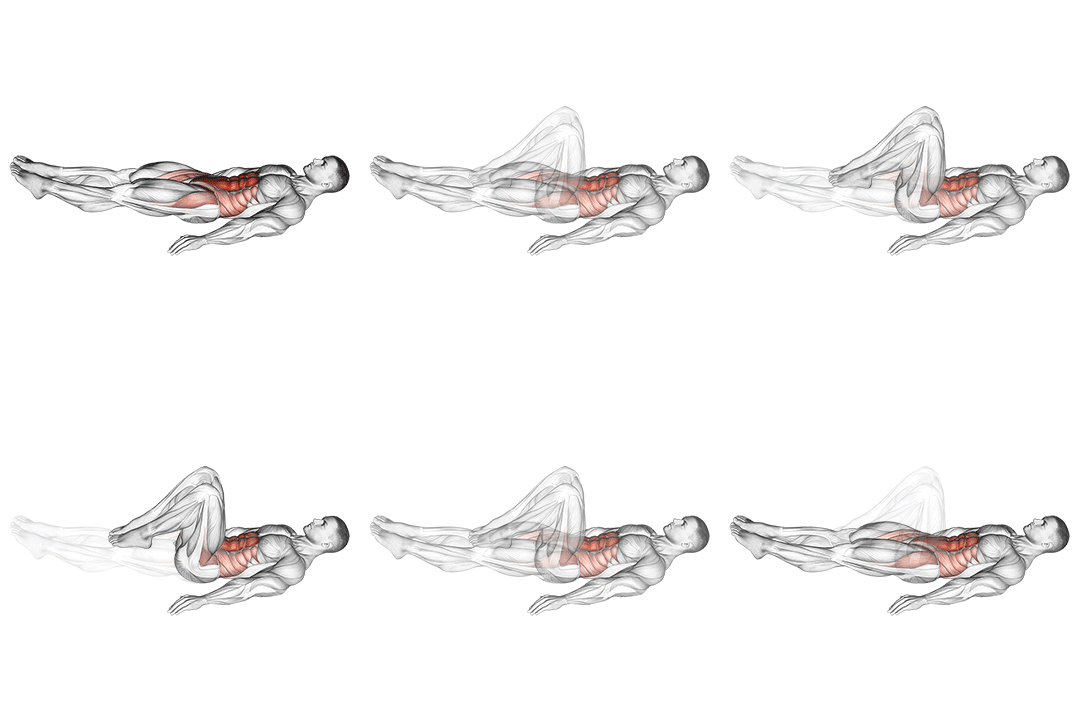
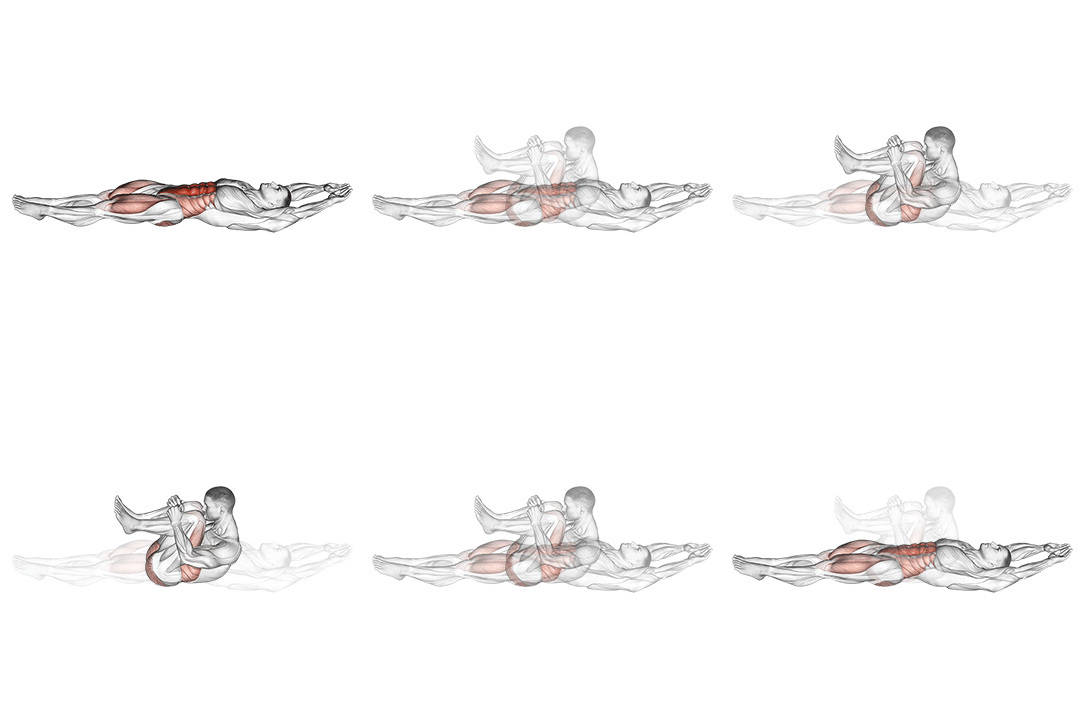
Curl-up
beginner strength exercise · body weight · targets abs
- Body part
- waist
- Primary target
- abs
- Equipment
- body weight
- Difficulty
- beginner
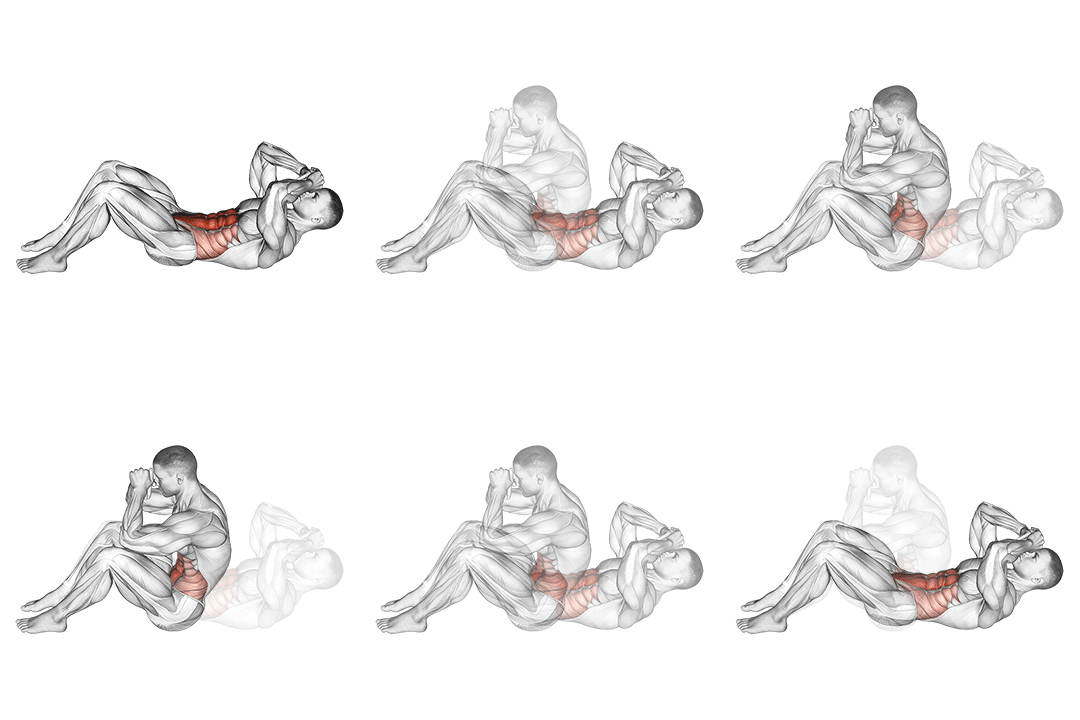
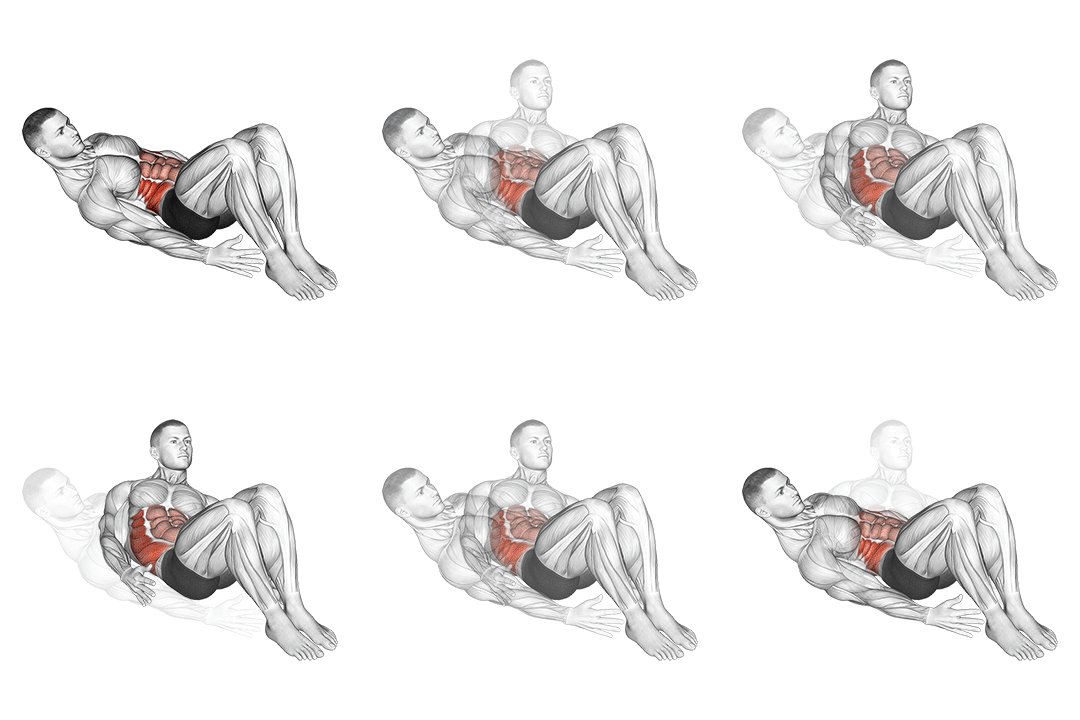
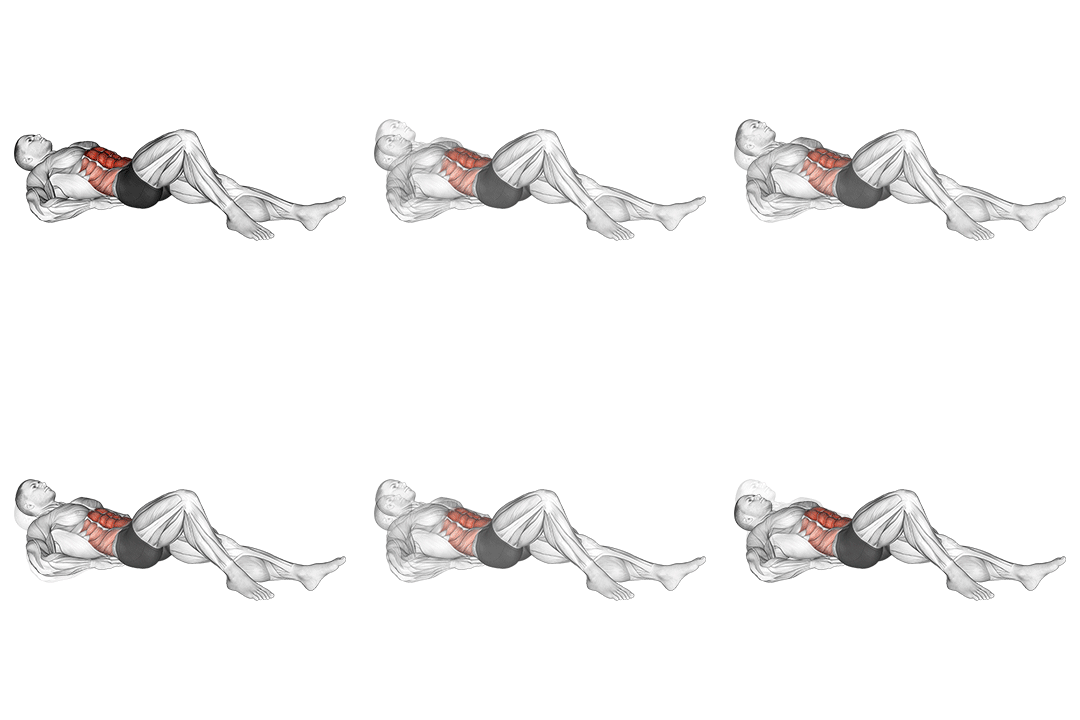
The curl-up is a foundational ab exercise that's a slightly different variation of the standard crunch. Performed lying on the back with knees bent and feet flat, you lift the shoulder blades off the floor (curl up) while keeping the lower back pressed into the floor, then lower under control. The motion targets the rectus abdominis through controlled spinal flexion. The curl-up is sometimes called the McGill curl-up after Stuart McGill, a renowned spine researcher who popularized this safer crunch variation. Compared to traditional sit-ups, the curl-up keeps the lumbar spine in neutral position, reducing disc compression while still training the abs effectively. For trainees with chronic lower-back issues, the curl-up is often part of safe core training programs. Where this earns its place is as foundational front-ab work for trainees prioritizing back safety. Combined with planks and bird dogs, curl-ups form the core training trio recommended by spine researchers for most adults. The trade-off is the modest training stimulus — pure curl-ups won't drive serious ab development; weighted variations or harder progressions produce more meaningful change.
Why train the Curl-up?
- Provides safer ab training than full sit-ups for trainees with back issues.
- Targets the rectus abdominis through controlled spinal flexion.
- Builds foundational ab strength.
- Accessible to all fitness levels including those returning from back injury.
- Pairs naturally with planks and bird dogs (McGill's 'big three').
- Costs nothing and requires no equipment.
How to do the Curl-up: step by step
- 1Lie flat on your back with your knees bent and feet flat on the ground.
- 2Place your hands behind your head with your elbows pointing outwards.
- 3Engaging your abs, slowly lift your upper body off the ground, curling forward until your torso is at a 45-degree angle.
- 4Pause for a moment at the top, then slowly lower your upper body back down to the starting position.
- 5Repeat for the desired number of repetitions.
Muscles worked
Primary
abs
Secondary
hip flexors
Common mistakes to avoid
Lifting too high
Only the shoulder blades come off the floor. Going further engages hip flexors and stresses the lumbar spine.
Pulling on the neck
Hands behind head are a guide. Let the abs do the work.
Bouncing through reps
Slow controlled motion produces ab engagement.
Letting lower back arch
Press lower back into floor throughout.
Holding the breath
Exhale on the curl, inhale on the lower.
Easier and harder variations
Easier
Reduce range — barely lift shoulder blades. Or perform shorter sets.
Harder
Slow tempo (3 seconds up, 3 seconds down). Or hold contracted position. Or progress to weighted curl-ups.
Alternative exercises
Standard sit-up
Full range version. More demand but more spinal load.
Plank
Anti-extension core work. Pair with curl-up for compound training.
Bird dog
Quadruped core stability. Part of McGill's big three.
How to program the Curl-up into your training
Sets and reps: 3 sets of 12-20 reps with 30 seconds rest. Frequency: 3-4 times per week. In core sessions: as foundational front-ab work. For those with back issues: 3 sets of 10-12 reps, 3 times per week alongside planks and bird dogs.
Recovery and frequency
Minimal recovery cost. Daily training tolerable.
Frequently asked questions
How many reps?
12-20 per set.
How often?
3-4 times per week.
Curl-up vs sit-up?
Curl-up has shorter range; sit-up has full range. Curl-up is safer for back.
Will this build abs?
Builds the muscle. Visibility comes from low body fat.
Why is it called McGill curl-up?
Stuart McGill popularized this variation as part of back-safe core training.
Is this enough ab work?
Foundational. Combine with planks and bird dogs for complete McGill big three.
Useful tools for this exercise
Build a workout with the Curl-up
Puna gives you guided bodyweight workouts you can do anywhere — no equipment, no gym, just structured progressions that build real strength.