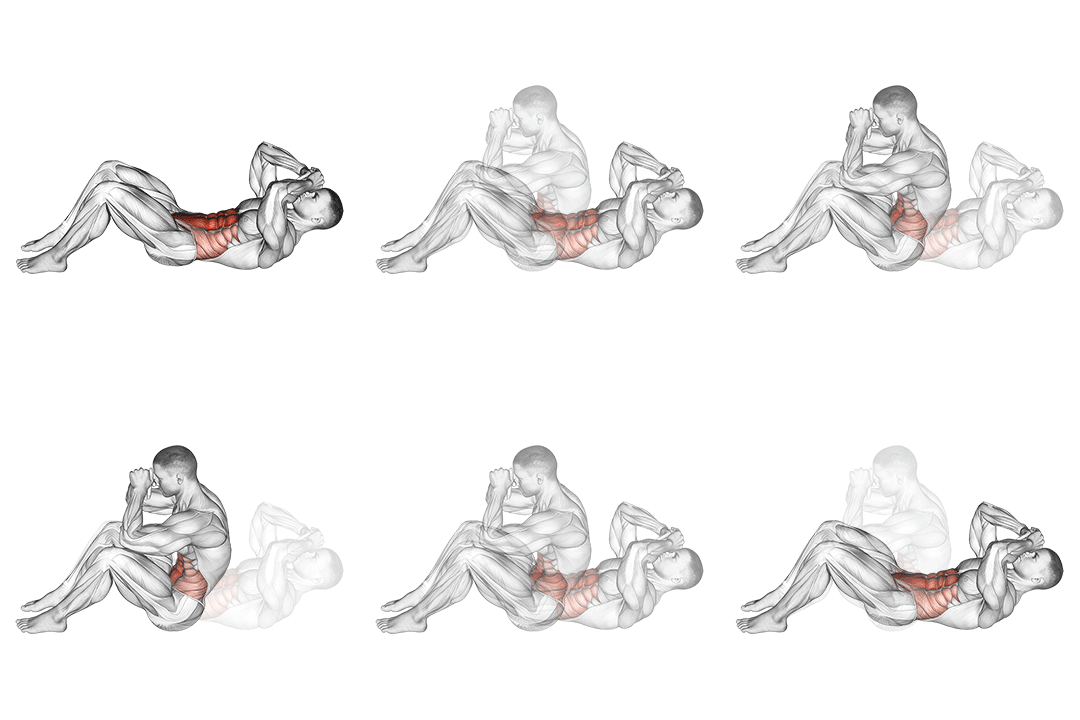
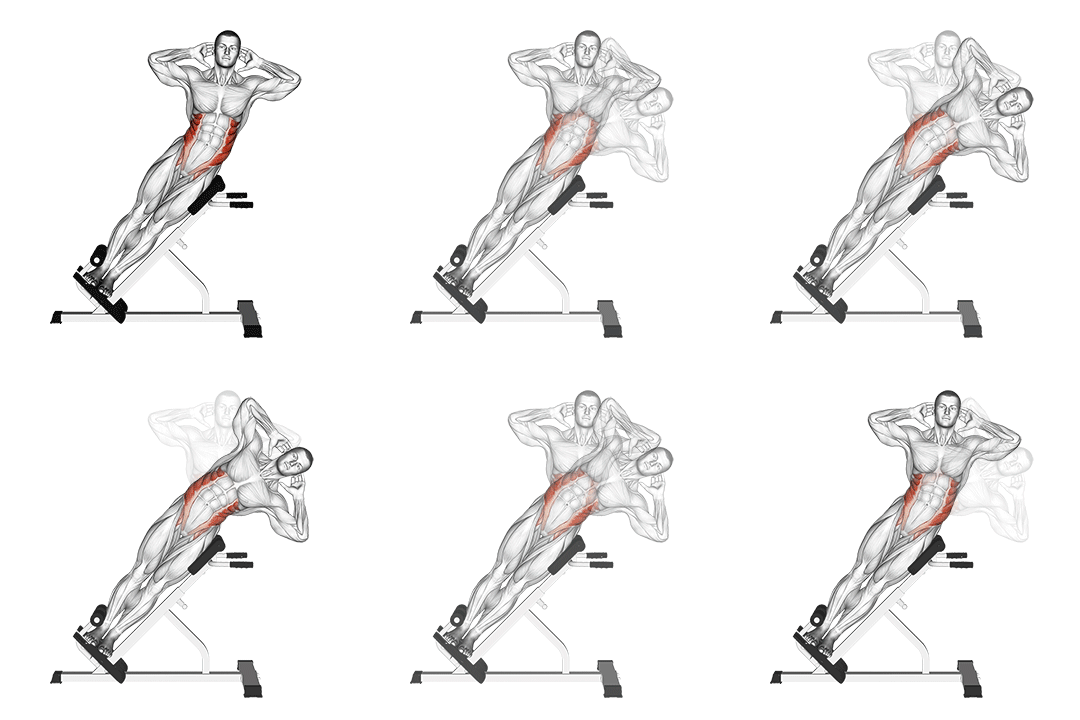
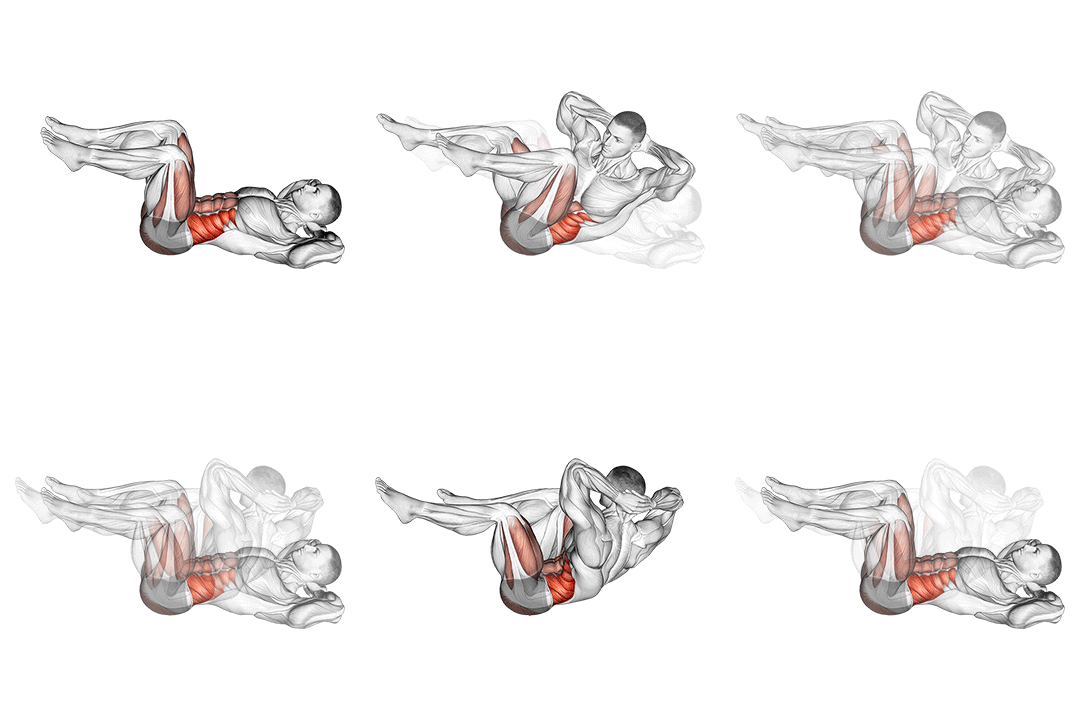
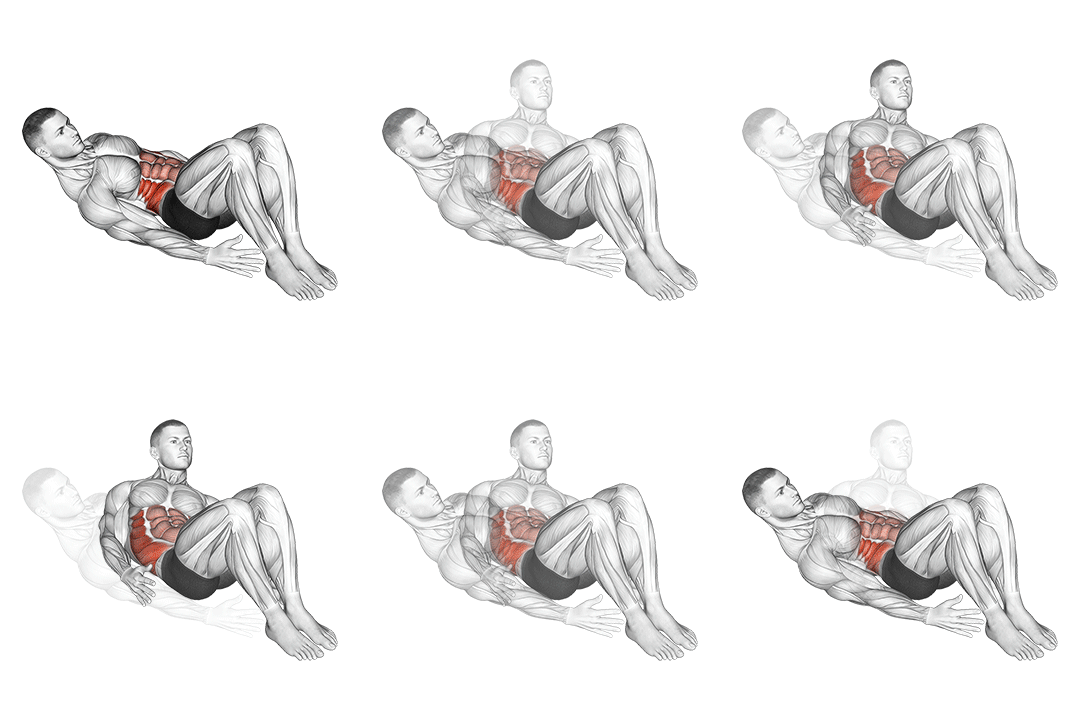
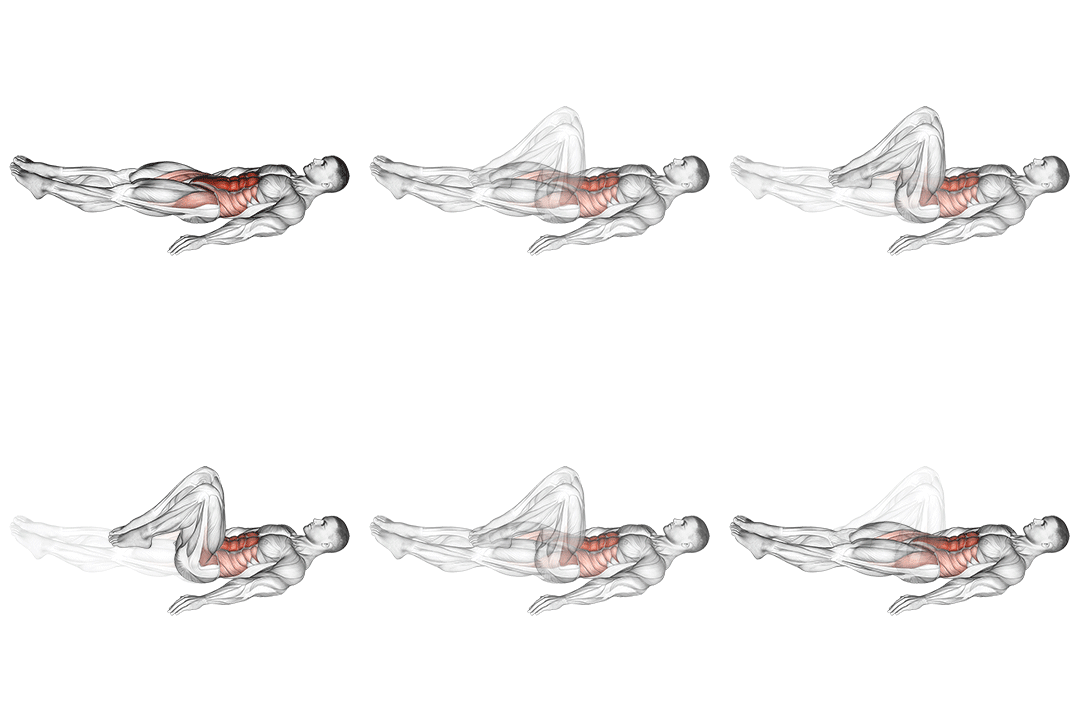
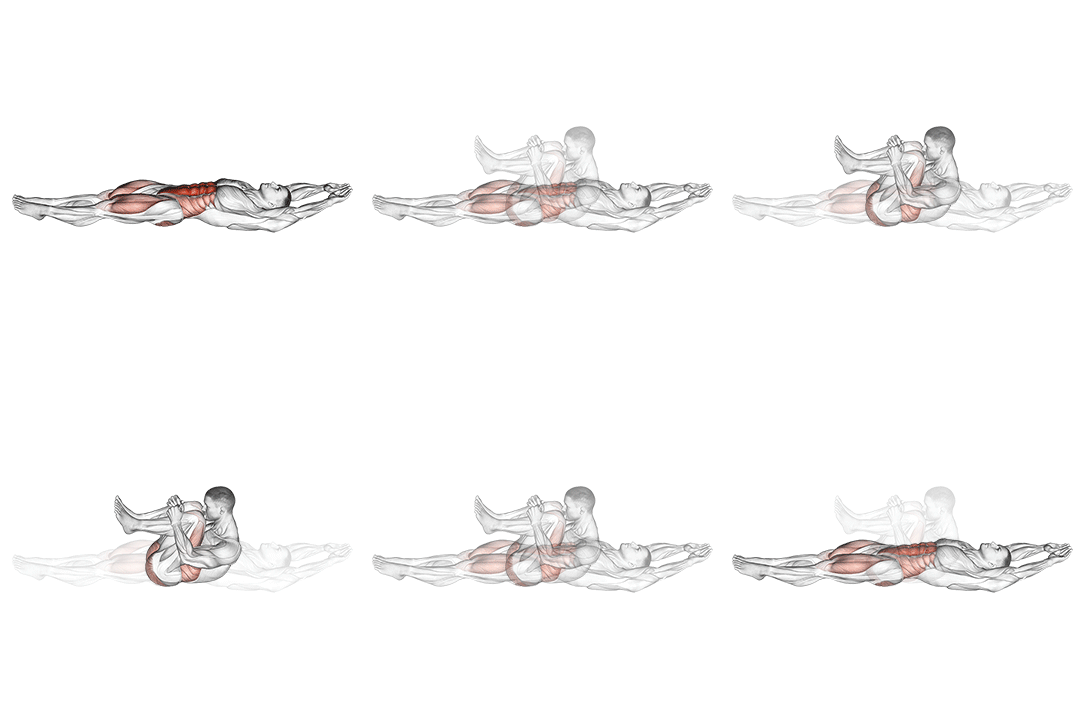
Bridge - Mountain Climber (cross Body)
intermediate strength exercise · body weight · targets abs
- Body part
- waist
- Primary target
- abs
- Equipment
- body weight
- Difficulty
- intermediate
The bridge mountain climber (cross body) is a hybrid exercise that combines a glute bridge hold with a cross-body mountain climber motion. From a glute bridge position (hips lifted, body straight from knees to shoulders), you bring one knee across the body toward the opposite elbow, then return and switch sides. The combination loads the glutes through the bridge hold while training the obliques and hip flexors through the dynamic knee-to-elbow motion. This is one of the more unusual hybrid exercises in calisthenics. The bridge position taxes the glutes isometrically while the cross-body knee movement loads the abs dynamically. The challenge is maintaining the bridge height as the legs move asymmetrically — most beginners find the hips drop when one leg lifts, defeating the glute hold. It's particularly useful for time-constrained training where you want glute, ab, and core stability work in one exercise. Three sets of bridge mountain climbers cross body accomplish what would otherwise require glute bridges + crunches + bird dogs as separate exercises. The trade-off is the moderate intensity per area — for maximum glute or ab development, separate exercises remain more effective.
Why train the Bridge - Mountain Climber (cross Body)?
- Combines glute, ab, and anti-rotation core work in one efficient exercise.
- Time-saving for shorter workouts.
- Trains the obliques in cross-body pattern.
- Reveals stability asymmetries between sides.
- Easy on the lower back due to the supine bridge position.
- Requires no equipment.
How to do the Bridge - Mountain Climber (cross Body): step by step
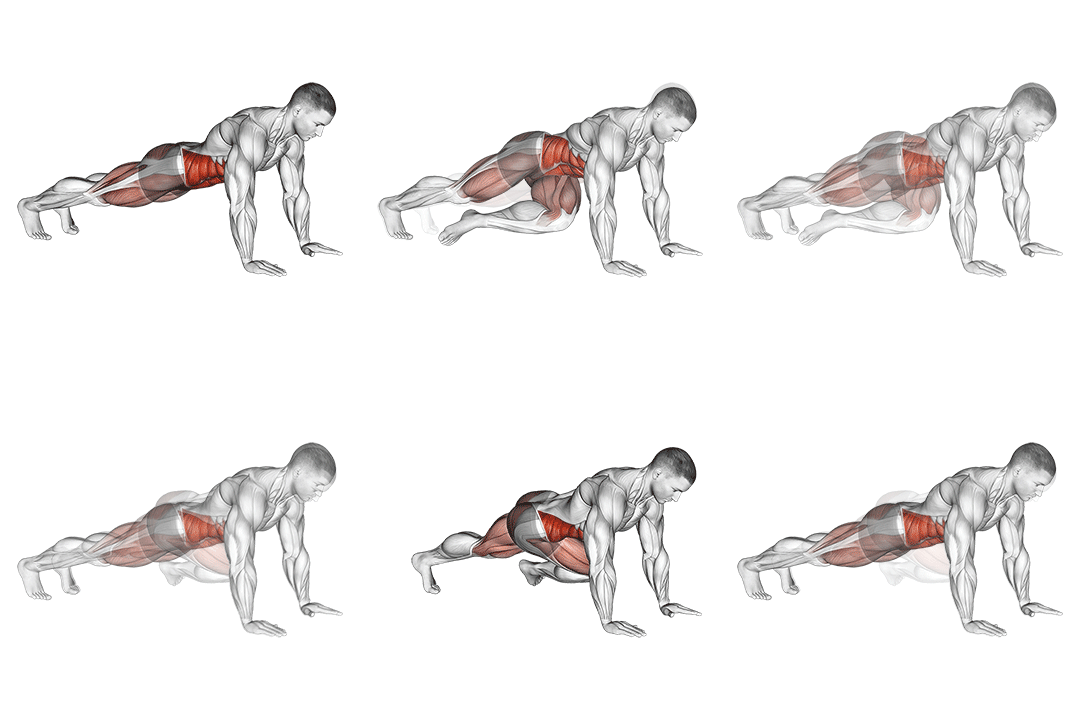
- 1Start in a high plank position with your hands directly under your shoulders and your body in a straight line.
- 2Engage your core and lift your right foot off the ground, bringing your right knee towards your left elbow.
- 3Return your right foot to the starting position and repeat the movement with your left foot towards your right elbow.
- 4Continue alternating sides, moving at a controlled pace.
- 5Keep your hips level and avoid lifting your hips too high or sagging them too low.
- 6Maintain a steady breathing pattern throughout the exercise.
- 7Repeat for the desired number of repetitions.
Muscles worked
Primary
abs
Secondary
glutes, quadriceps, hamstrings, shoulders, triceps
Common mistakes to avoid
Letting the hips drop when one leg lifts
The bridge height should be maintained throughout the entire set. If the hips drop as one leg moves, the glutes have stopped engaging. Squeeze the glutes hard to keep the hips elevated.
Twisting the trunk too much during the cross-body motion
The hips should stay relatively level even as one knee crosses the body. Excessive twisting indicates the obliques are losing control of the trunk.
Going too fast for the glutes to keep up
Speed kills the glute work. Move the legs slowly — 1-2 seconds per cross-body motion — so the glutes can maintain the bridge throughout.
Not bringing the knee fully across to the opposite elbow
If the knee only comes partway, the oblique work is reduced. Drive the knee fully across so it nearly touches the opposite elbow on each rep.
Choosing this before mastering basic bridges and mountain climbers
Both prerequisite exercises need to feel solid before combining them. Build the basic patterns first.
Easier and harder variations
Easier
Glute bridge with regular mountain climbers (knees go straight forward, not cross body). Or perform glute bridges and mountain climbers as separate exercises.
Harder
Add a hold at the cross-body position (1-2 seconds). Slow the tempo significantly. Or progress to single-leg glute bridges with cross-body knee drives.
Alternative exercises
Glute bridge march
Bridge with alternating leg lifts (no cross-body component). Easier glute and stability hybrid.
Cross-body mountain climber
Standard high-plank mountain climber with cross-body knee drives. Different position, similar oblique work.
Bird dog
Different position (quadrupedal) with similar anti-rotation training.
How to program the Bridge - Mountain Climber (cross Body) into your training
Bridge mountain climber cross body works as accessory or stand-alone core-and-glute exercise. Sets and reps: 3 sets of 8-12 reps per side with 60-90 seconds rest. Total weekly volume of 50-80 reps per side. As a finisher: 2-3 sets of 8-10 reps per side at the end of a workout. Adds combined glute and core volume in 5 minutes. In a complete circuit: 30 seconds bridge mountain climbers cross body, 30 seconds front plank, 10 push-ups, 10 squats — repeat 3-4 times. Daily moderate-volume work (1-2 sets per side) is fine as a morning routine.
Recovery and frequency
Bridge mountain climber cross body has moderate recovery cost. The combined glute and oblique demand can leave both areas slightly sore in the first 1-2 weeks. 48 hours between sessions is plenty. Lower back fatigue points to form errors — usually the hips dropping or excessive twisting.
Frequently asked questions
How many sets and reps of bridge mountain climbers cross body should I do?
3 sets of 8-12 reps per side with 60-90 seconds rest.
How often should I train this exercise?
2-3 times per week as part of a structured program.
Bridge mountain climber vs standard mountain climber: what's the difference?
Bridge mountain climber is performed in glute bridge position (face up). Standard mountain climber is performed in high plank position (face down). Different muscle emphasis but similar dynamic leg movement.
Will this exercise grow my glutes?
Modestly. The bridge hold trains glutes isometrically but doesn't load them as heavily as dedicated glute exercises. Use it for core and combined work, not primary glute building.
Should I count one rep as both sides or each side separately?
Each side separately. Counting per side reveals asymmetries.
Why is one side harder than the other?
Trunk and hip asymmetry — almost everyone has it. The asymmetry typically narrows within 6-12 weeks of equal-rep practice.
Useful tools for this exercise
Build a workout with the Bridge - Mountain Climber (cross Body)
Puna gives you guided bodyweight workouts you can do anywhere — no equipment, no gym, just structured progressions that build real strength.