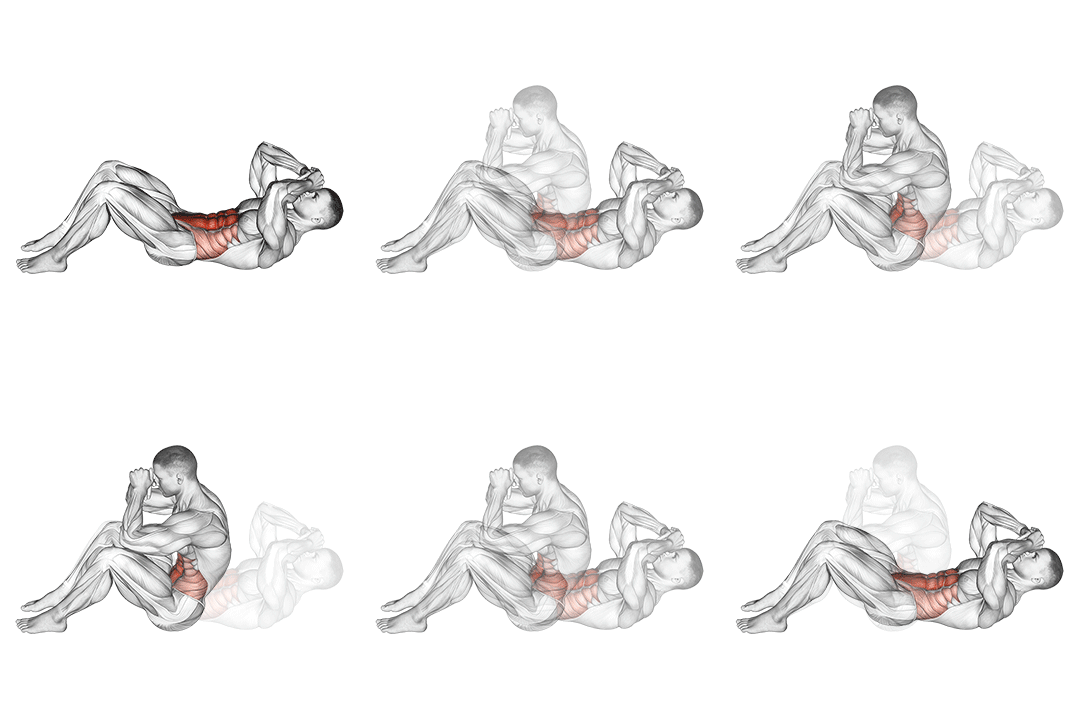
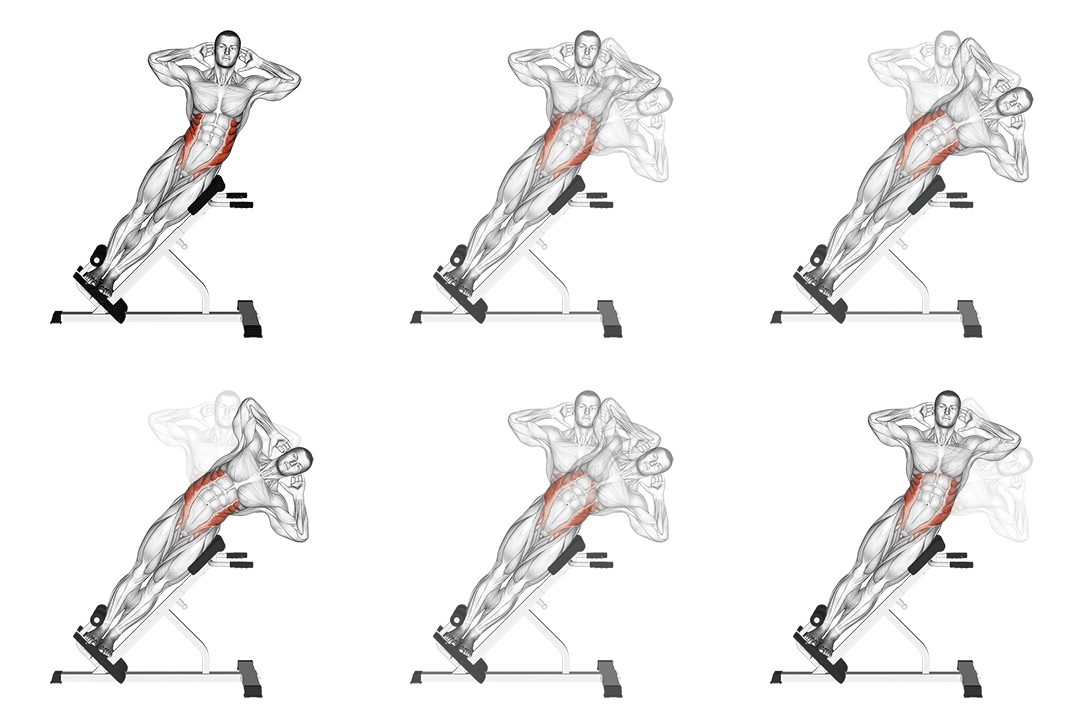
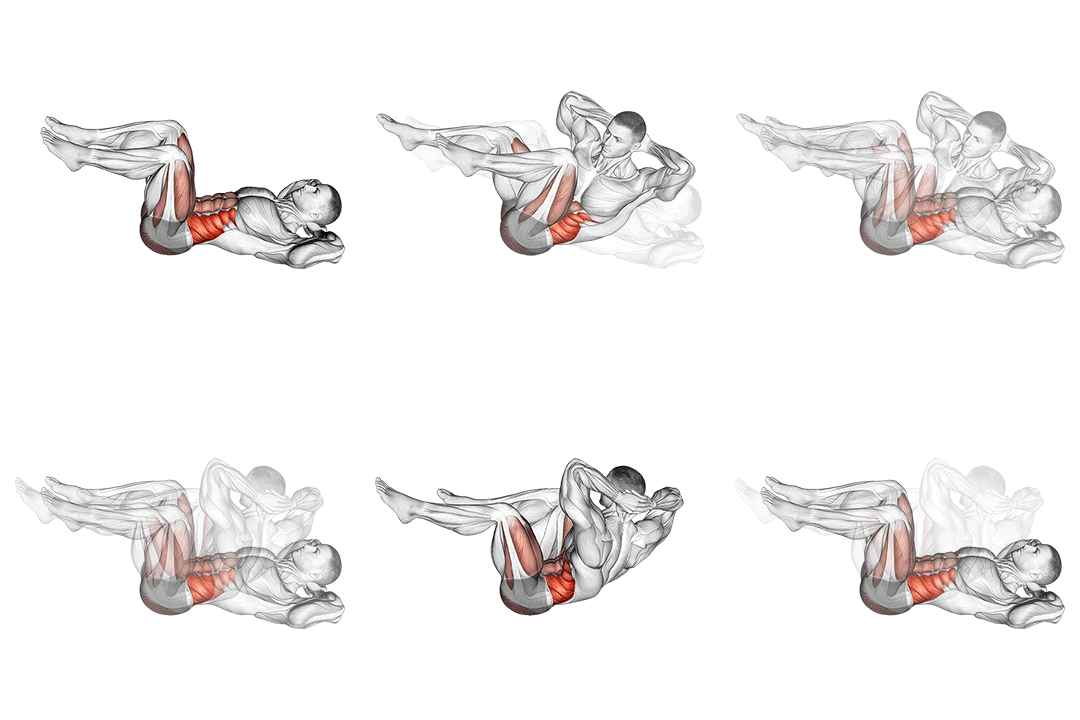
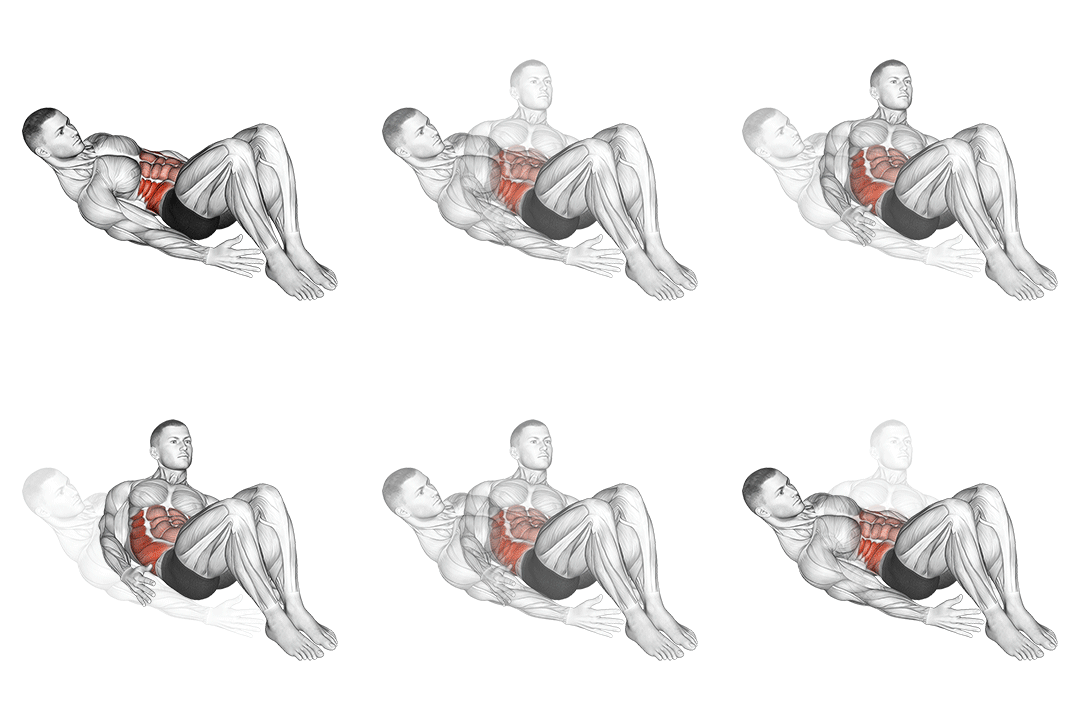
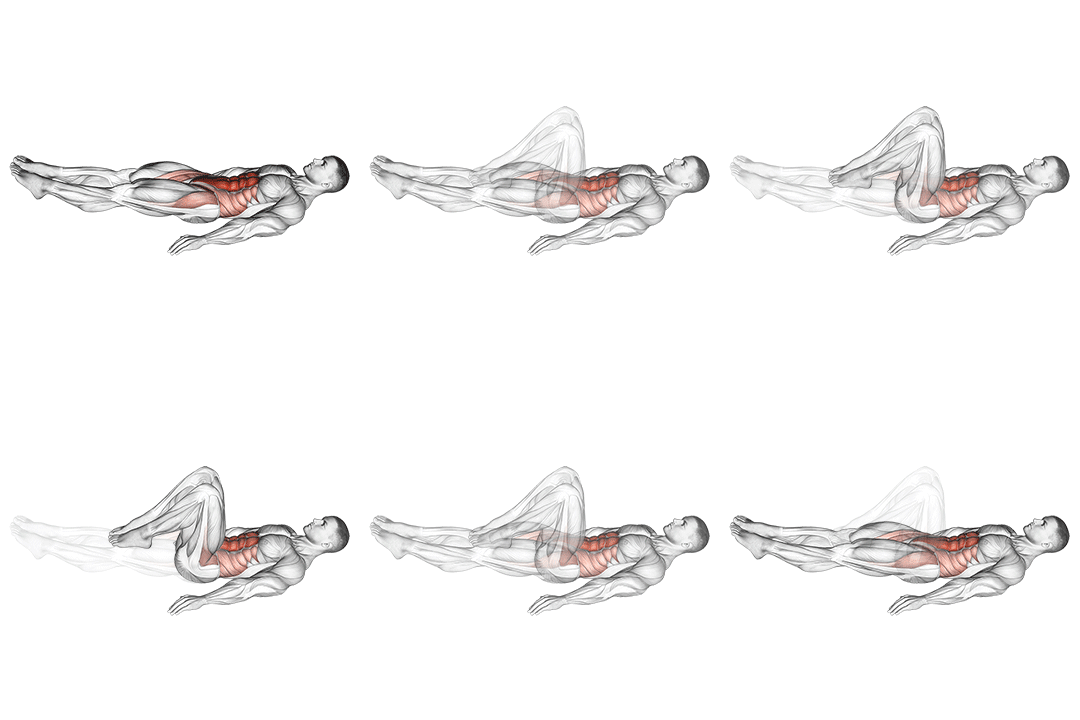
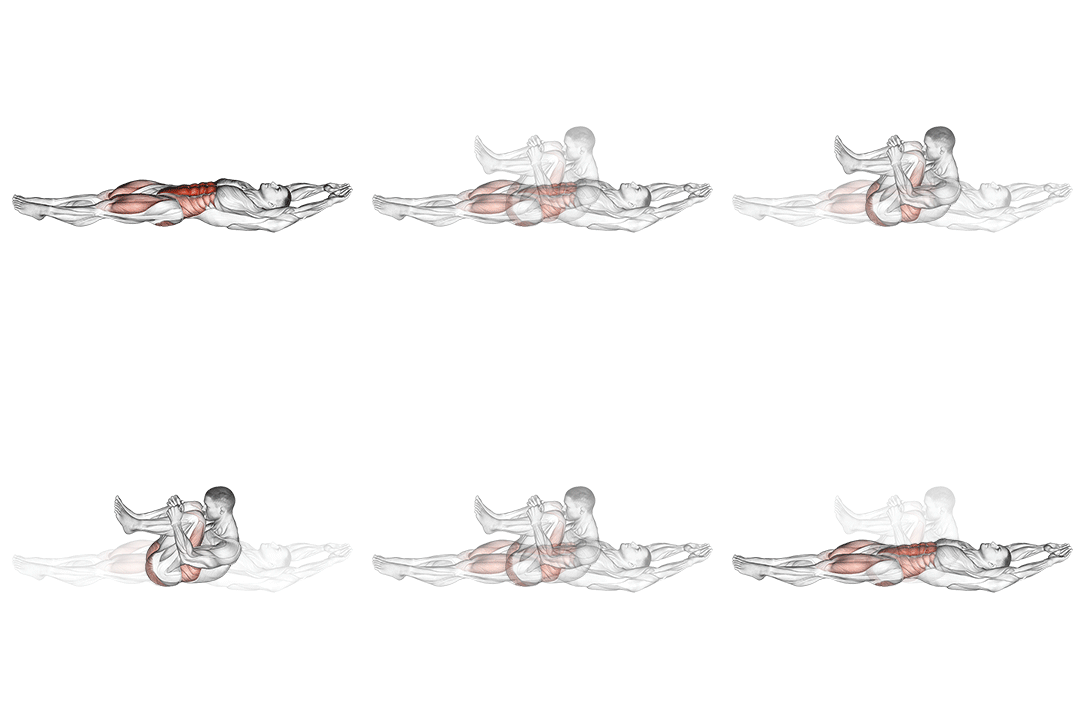
Bodyweight Incline Side Plank
beginner strength exercise · body weight · targets abs
- Body part
- waist
- Primary target
- abs
- Equipment
- body weight
- Difficulty
- beginner
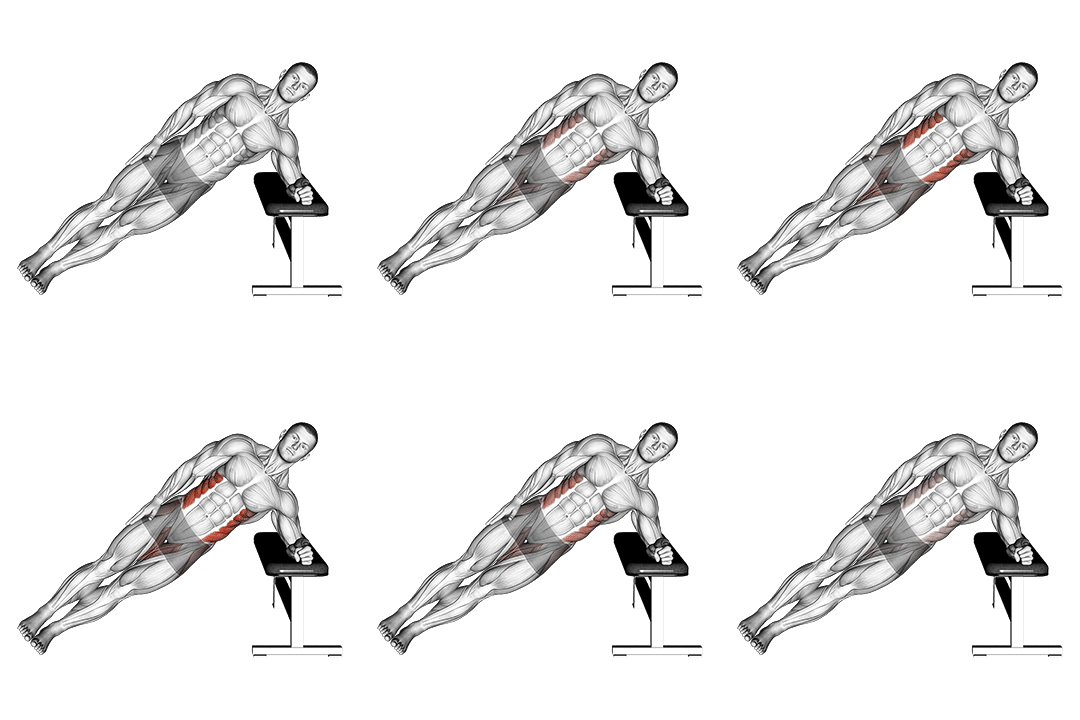
The bodyweight incline side plank is a side plank variation performed with the feet elevated on a bench or step instead of resting on the floor. Like the standard side plank, you support the body on one forearm with the body in a straight diagonal line, but the elevated feet shift more body weight onto the supporting arm and increase the demand on the obliques. It's a useful intermediate progression between standard side planks and harder variations like Copenhagen planks. Most trainees who can hold a 60-second standard side plank can hold an incline side plank for only 30-45 seconds in their first attempts. The increased load makes the exercise more efficient at building oblique strength per minute of holding. Like all side plank variations, form discipline matters. The hips want to drop on the supporting-arm side as fatigue sets in; maintaining the rigid diagonal line is what trains the obliques. Built up over 4-6 weeks, incline side planks bridge the gap to more demanding lateral core work.
Why train the Bodyweight Incline Side Plank?
- Increased load on the obliques compared to standard side planks.
- Builds toward harder side plank variations like Copenhagen planks.
- Trains shoulder stability under unilateral load.
- Reveals strength asymmetries between sides.
- Requires only a bench or step for foot elevation.
- Useful as a progression for trainees who have outgrown standard side planks.
How to do the Bodyweight Incline Side Plank: step by step
- 1Start by lying on your side with your legs extended and stacked on top of each other.
- 2Place your forearm on the ground directly below your shoulder, with your elbow bent at a 90-degree angle.
- 3Engage your core and lift your hips off the ground, creating a straight line from your head to your feet.
- 4Hold this position for the desired amount of time.
- 5Lower your hips back down to the ground and repeat on the other side.
Muscles worked
Primary
abs
Secondary
obliques, shoulders
Common mistakes to avoid
Letting the hips drop
The increased load makes the hips want to drop more than in standard side planks. Drive the hips up to maintain a straight diagonal line from heels to head — when the hips drop, the obliques have stopped working.
Setting the bench too high
Mid-shin to knee height works for most people. Higher than knee height tilts the body in ways that stress the shoulders.
Letting the supporting shoulder shrug to the ear
Pack the shoulder down (drive it away from the ear) and maintain that position throughout the hold — this protects the rotator cuff.
Holding for time when form decays
Stop the hold the moment the hips drop or the shoulder shrugs. Quality of position trains the core; chasing time at the cost of form trains the wrong pattern.
Choosing this before mastering standard side planks
Build to a 60-second strict standard side plank per side before adding the incline.
Easier and harder variations
Easier
Standard side plank (feet on the floor). Or kneeling side plank for the absolute easiest variation.
Harder
Add a leg lift (lift the top leg during the hold). Hold for longer durations. Or progress to Copenhagen planks (top leg supported on a bench, putting the adductors under heavy load).
Alternative exercises
Side plank
Standard floor version. Easier baseline.
Copenhagen plank
Significantly harder variation with the top leg supported on a bench.
Side plank with hip dip
Dynamic side plank variation that adds rotation work.
How to program the Bodyweight Incline Side Plank into your training
Incline side planks work as accessory or primary side plank work for intermediate trainees. Sets and reps: 3 sets of 20-45 seconds per side with 30-60 seconds rest. Total weekly volume of 4-8 minutes of holds per side. In a complete core circuit: 3 sets of 30-second incline side plank per side, 30-second front plank, 12 dead bugs per side, 12 reverse crunches. Done 2-3 times per week.
Recovery and frequency
Incline side planks have moderate recovery cost. Oblique soreness in the first 1-2 weeks is normal.
Frequently asked questions
How many sets and reps should I do?
3 sets of 20-45 seconds per side with 30-60 seconds rest.
How often should I train this exercise?
2-3 times per week as part of a structured program.
Incline vs standard side plank: which is better?
Standard is the easier baseline. Incline is the progression that adds load. Use standard until 60-second holds feel easy; then progress to incline.
Should I count time per side or per total?
Per side. Total time across both sides combined isn't as useful for progression tracking.
Why is one side harder?
Almost everyone has unilateral stability asymmetry. The asymmetry narrows within 6-12 weeks of equal-time practice.
How high should the bench be?
Mid-shin to knee height works for most people. Higher than knee height creates awkward angles.
Useful tools for this exercise
Build a workout with the Bodyweight Incline Side Plank
Puna gives you guided bodyweight workouts you can do anywhere — no equipment, no gym, just structured progressions that build real strength.