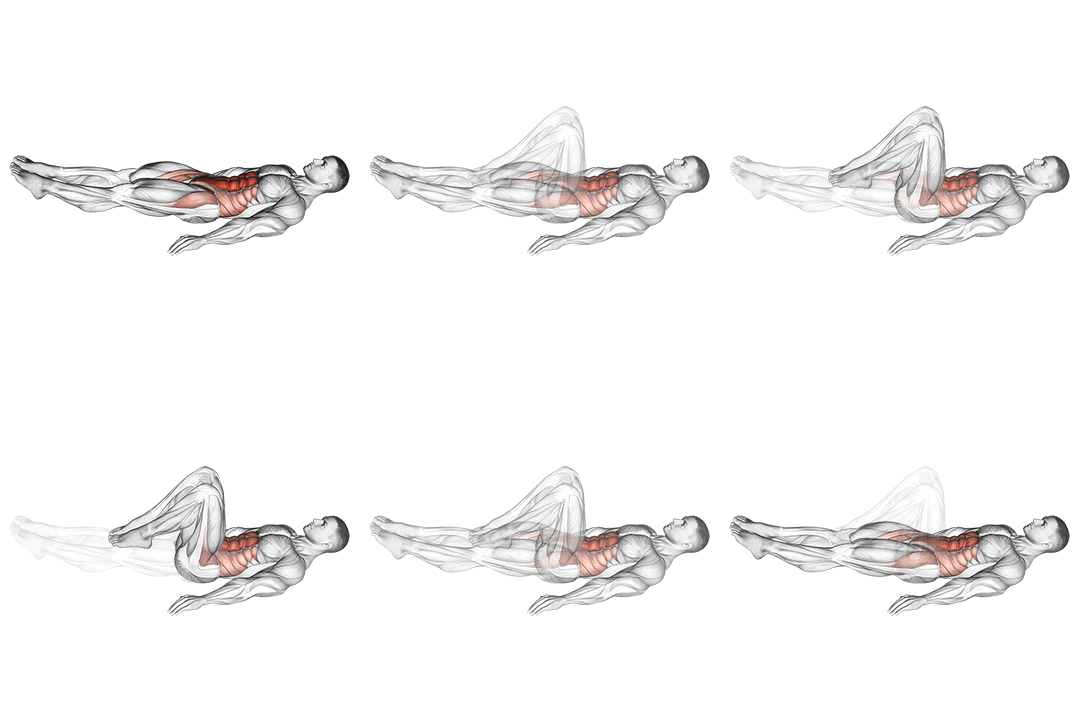
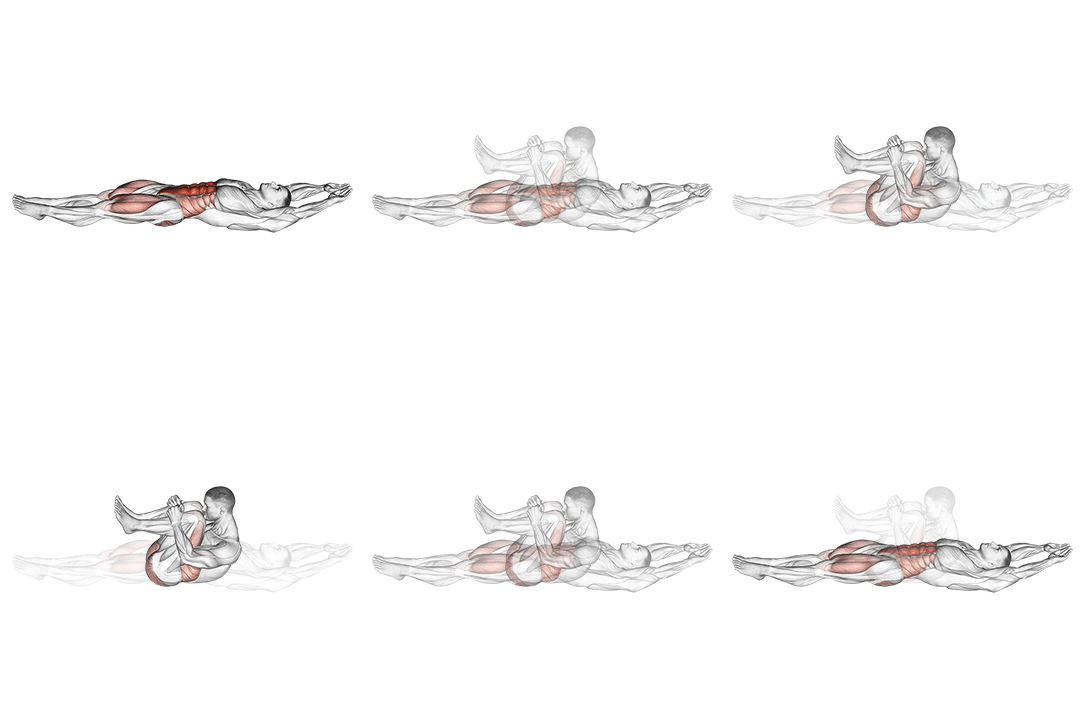
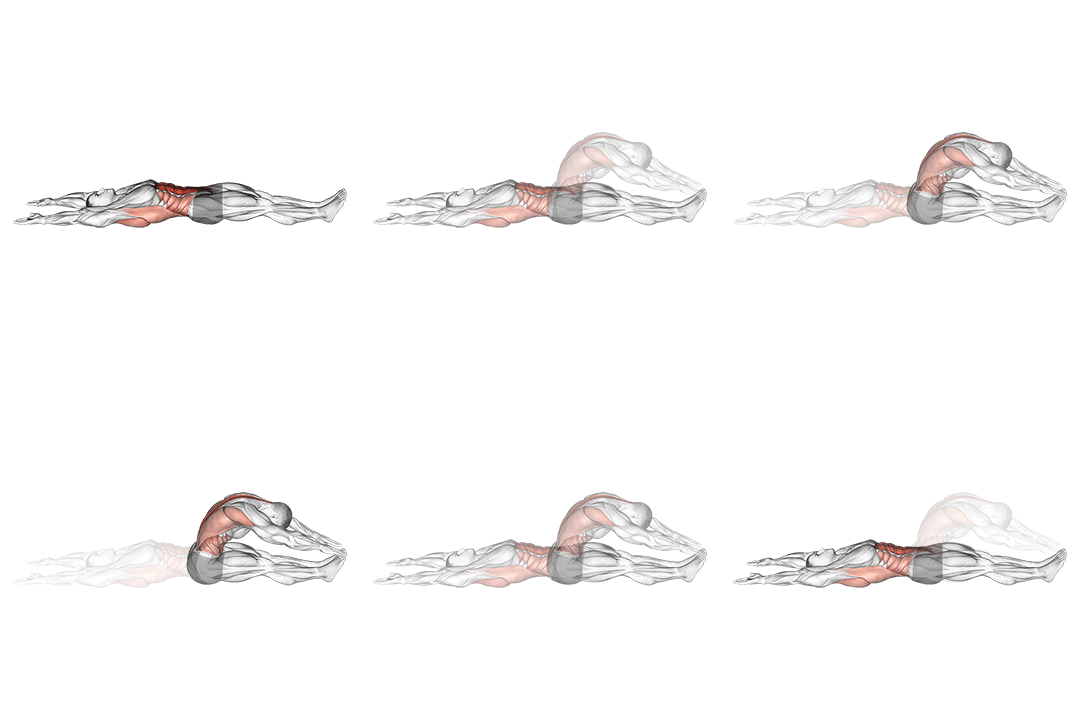
Arms Overhead Full Sit-up (male)
intermediate strength exercise · body weight · targets abs
- Body part
- waist
- Primary target
- abs
- Equipment
- body weight
- Difficulty
- intermediate
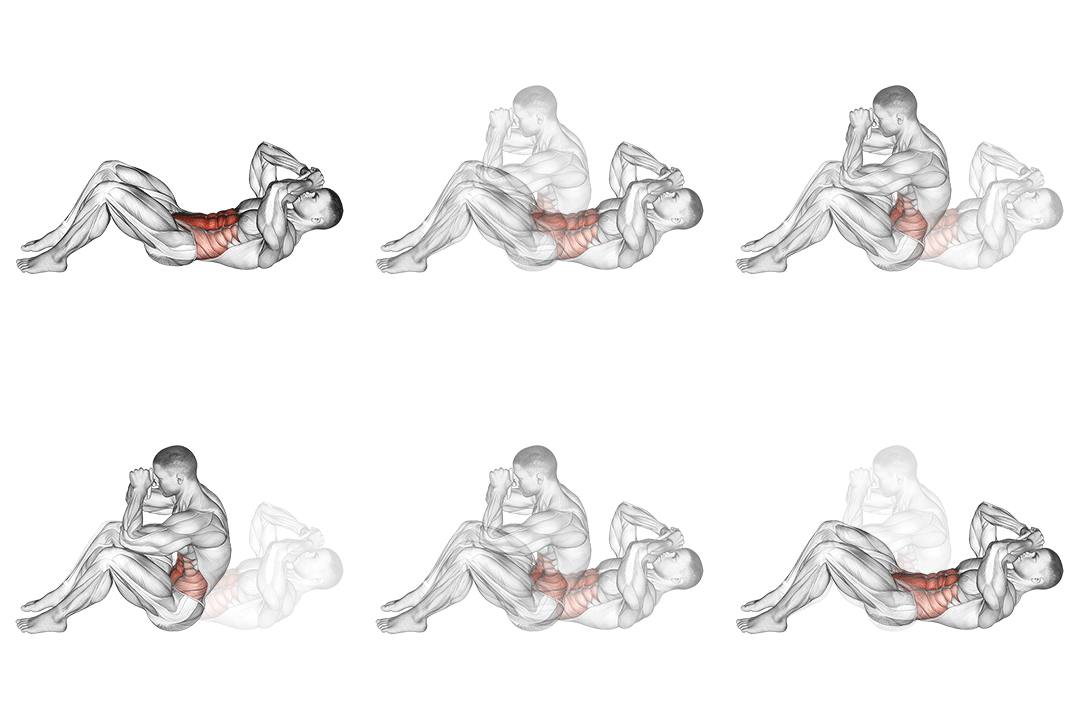
The arms overhead full sit-up adds a meaningful difficulty bump to the standard sit-up by extending the arms fully overhead throughout the rep. The extended arm position changes the lever arm of the upper body, requiring the abs to lift more weight per inch of sit-up height. The result is roughly 25-35% more difficulty than a standard sit-up with the same fundamental movement pattern. It's a useful intermediate progression for trainees who have outgrown standard sit-ups but don't yet have access to weights or a decline bench. The extended arms simply act as the load — held fully overhead, they create enough resistance to drive continued ab and hip flexor adaptation. Trainees often find it more demanding than they expected; counts that were easy with hands-at-chest sit-ups can drop by 30-50% with arms overhead. Like all sit-up variations, the form discipline matters more than the rep count. Without proper attention to neck position, range, and tempo, the overhead arms tempt people into using momentum to lever themselves up. Done correctly, the arms stay in line with the spine throughout — they don't move relative to the head; they just travel with the upper body as it lifts.
Why train the Arms Overhead Full Sit-up (male)?
- Increases load on the abs by 25-35% compared to standard sit-ups without weights.
- Provides progression for trainees who have outgrown basic sit-ups.
- Same muscle groups (rectus abdominis, hip flexors) trained with greater intensity.
- Naturally prevents neck strain since the hands aren't behind the head.
- Requires no equipment.
- Useful for military and police fitness test preparation when needing more challenge.
How to do the Arms Overhead Full Sit-up (male): step by step
- 1Lie flat on your back with your knees bent and feet flat on the ground.
- 2Extend your arms overhead, keeping them straight.
- 3Engaging your abs, slowly lift your upper body off the ground, curling forward until your torso is upright.
- 4Pause for a moment at the top, then slowly lower your upper body back down to the starting position.
- 5Repeat for the desired number of repetitions.
Muscles worked
Primary
abs
Secondary
hip flexors, lower back
Common mistakes to avoid
Swinging the arms forward for momentum
Extended arms tempt some trainees to swing them forward and use the resulting momentum to lever the body up. The arms should stay in line with the spine throughout the rep — they don't move relative to the head; they just travel with the upper body.
Letting the arms collapse forward over the chest
Some trainees let the arms drop forward as the upper body lifts. Keep the arms fully extended overhead throughout — palms together or shoulders relaxed but arms straight.
Anchoring the feet under heavy furniture
Anchored feet make the hip flexors do more of the work, which can stress the lower back. Keep the feet flat on the floor unanchored — the abs and hip flexors should do the work without external assistance.
Going too fast for control
Speed kills form, especially with extended arms. Move slowly: 1-2 seconds up, brief pause at the top, 2-3 seconds down. The slow tempo keeps the abs working and prevents momentum from taking over.
Choosing this variation before mastering standard sit-ups
Build to 3 sets of 20+ standard sit-ups before adding the overhead arm position. Trying the harder variation too early usually means form breakdown and frustration.
Easier and harder variations
Easier
Standard sit-ups (hands at chest or behind head). Or hold a weight at the chest instead of overhead — same load, more accessible position. Or 3/4 sit-ups (75% of the way up) with arms overhead.
Harder
Hold a weight (a plate or dumbbell) overhead in addition to the extended-arm position. Add a tempo (3-5 seconds per phase). Or progress to V-ups (legs lift toward the hands at the top of each rep).
Alternative exercises
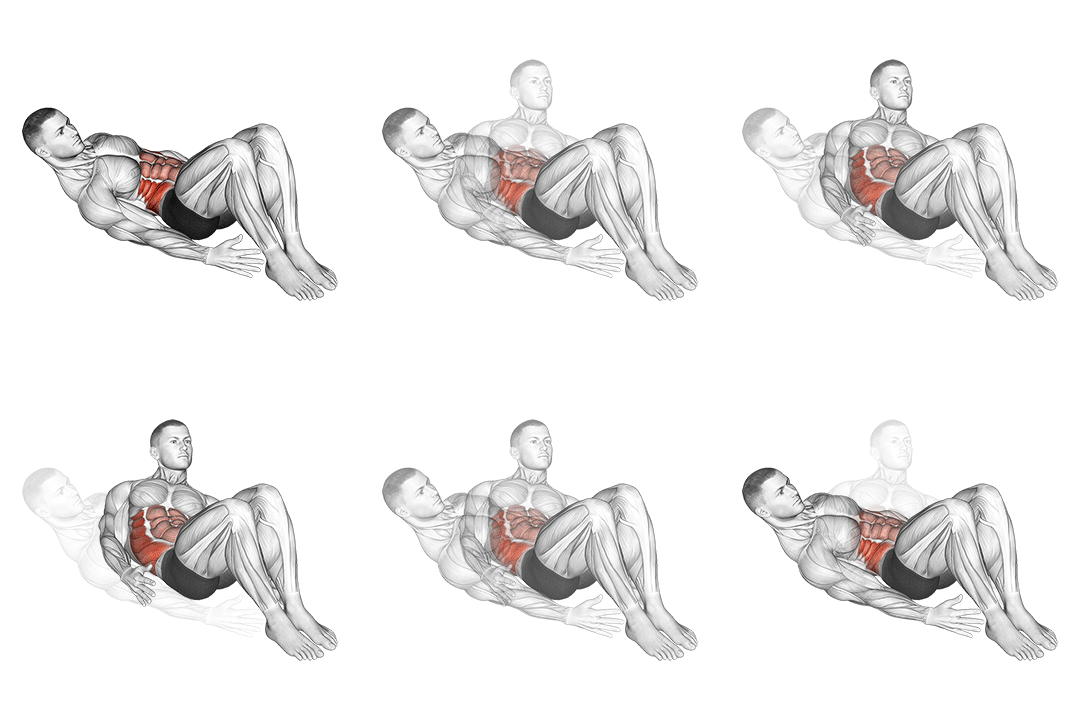
Standard sit-up
Same flexion movement without the extended arms. Easier baseline that builds toward the overhead variation.
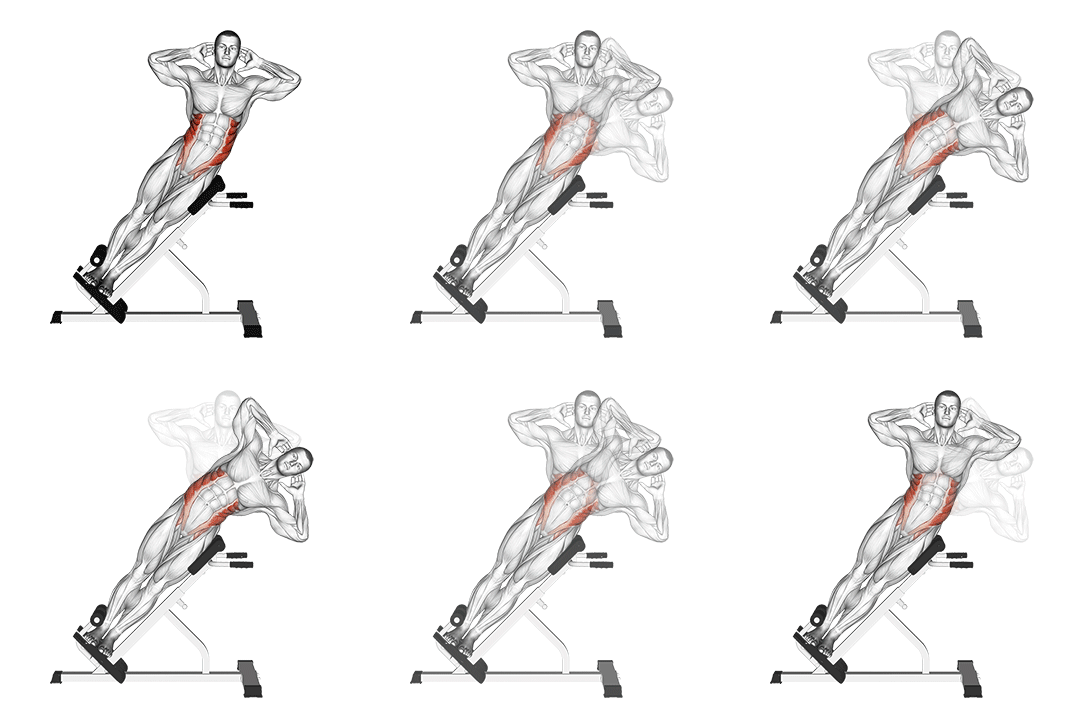
Decline sit-up
Different way to add load — uses the angle of a decline bench instead of arm position. Useful alternative if the overhead position is uncomfortable for the shoulders.
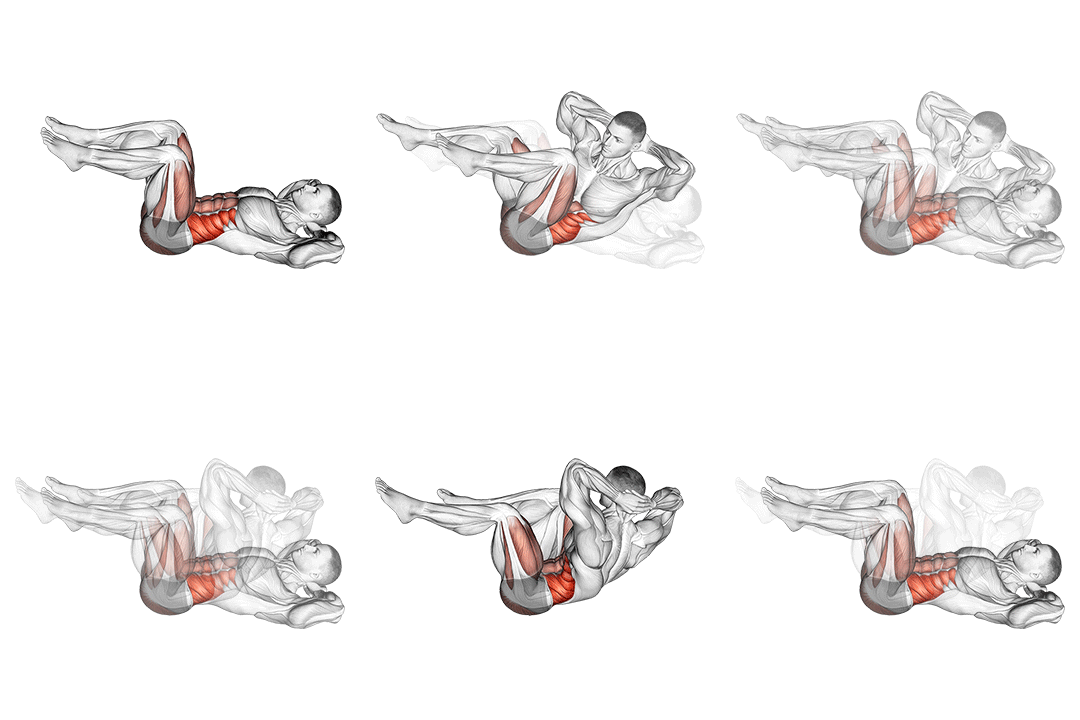
V-up
Combines the overhead arm position with simultaneous leg lift. Significantly harder full-body crunch variation.
How to program the Arms Overhead Full Sit-up (male) into your training
Arms overhead sit-ups work as either the primary ab exercise in a focused core session or as accessory work in a full-body program. Pair with planks (anti-extension) and reverse crunches (lower abs) for complete development. Sets and reps: 3 sets of 12-20 reps with 60-90 seconds rest. Total weekly volume of 75-150 reps drives most adaptations. In a complete core circuit: 3 sets of 15 arms overhead sit-ups, 3 sets of 30-second front planks, 3 sets of 12 reverse crunches. Done 2-3 times per week. For people who have outgrown standard sit-ups: replace standard sit-ups with the overhead variation in your existing program. Same volume guidelines, just more challenging exercise. As a finisher: 2-3 sets of 10-15 reps at the end of an upper-body session. Adds focused ab volume in 5 minutes. Daily arms overhead sit-ups in moderate volume (30-50 reps) are fine and can be done as a morning routine.
Recovery and frequency
Arms overhead sit-ups at moderate volume have low to moderate recovery cost. The increased difficulty per rep means soreness can be more pronounced in the first 1-2 weeks of training the variation, but it fades quickly with consistent training. Shoulder fatigue from the maintained overhead arm position is common, especially in trainees with shoulder mobility limitations. If shoulders feel achy after sessions, work shoulder mobility daily. Hip flexor tightness is also common; daily hip flexor stretches help.
Frequently asked questions
How many sets and reps of arms overhead sit-ups should I do?
3 sets of 12-20 reps with 60-90 seconds rest. Total weekly volume of 75-150 reps drives most adaptations.
How often should I train arms overhead sit-ups?
2-3 times per week as part of a structured program; daily at moderate volume is fine — the abs recover quickly.
Arms overhead vs standard sit-ups: which is better?
Standard sit-ups are the easier baseline. Arms overhead is the harder progression. Use arms overhead once standard sit-ups feel too easy (3 sets of 25+ without challenge).
Will arms overhead sit-ups give me visible abs?
They build the muscle, but visible abs come from low body fat. Diet drives the visibility; training drives the size.
Why do my shoulders hurt during arms overhead sit-ups?
Most likely shoulder mobility limitations — your shoulders can't fully extend overhead without compensating. Work shoulder mobility (wall slides, foam roller thoracic extensions) and consider holding weights at the chest until mobility improves.
Can I add weight to arms overhead sit-ups?
Yes — hold a small weight (5-10 lb) in the extended hands. Adds significant load while preserving the form. Build to comfortable bodyweight first before adding load.
Useful tools for this exercise
Build a workout with the Arms Overhead Full Sit-up (male)
Puna gives you guided bodyweight workouts you can do anywhere — no equipment, no gym, just structured progressions that build real strength.