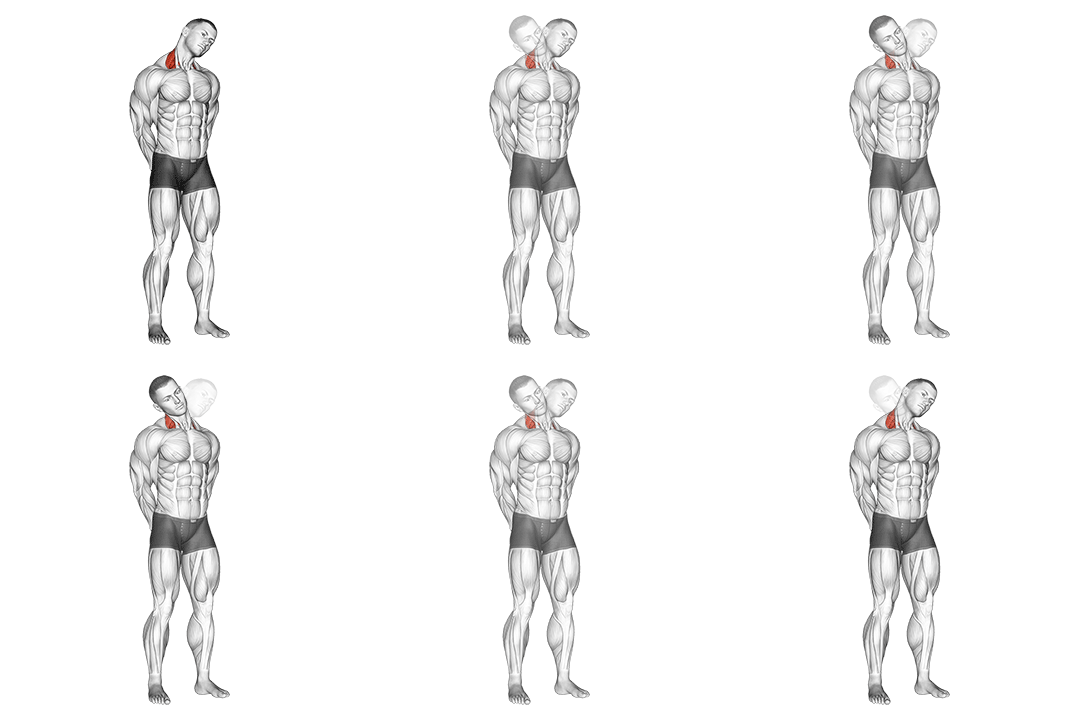
Side Push Neck Stretch
beginner stretching exercise · body weight · targets levator scapulae
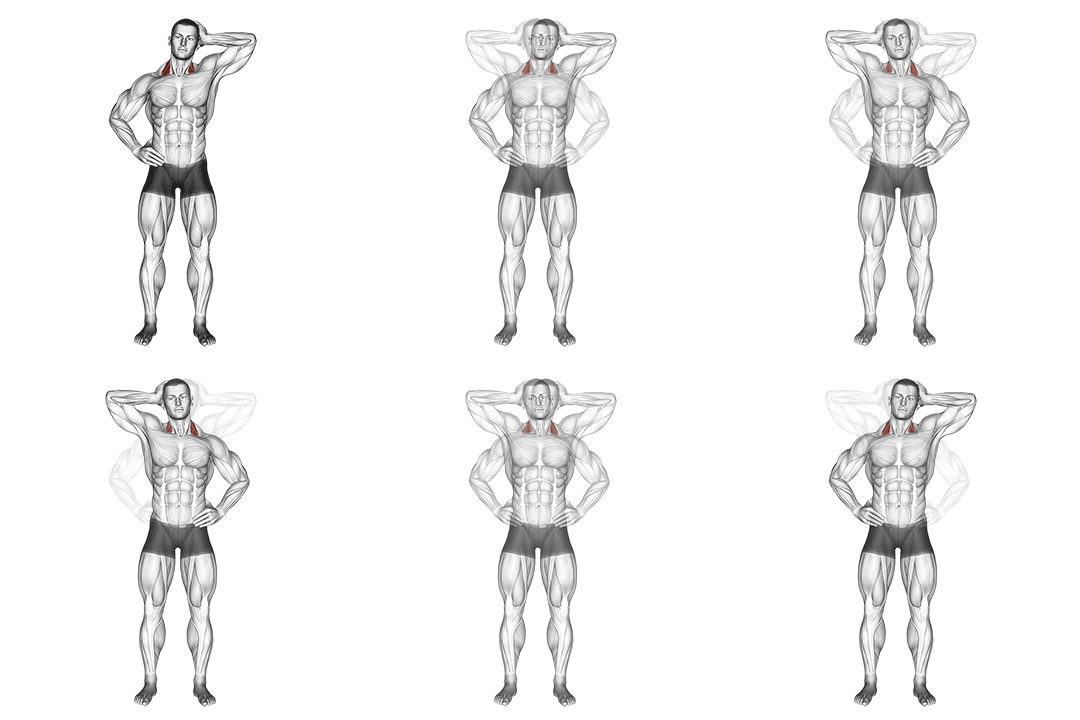
- Body part
- neck
- Primary target
- levator scapulae
- Equipment
- body weight
- Difficulty
- beginner
The side push neck stretch is the assisted version of the basic neck side stretch — same motion, but with the hand actively pressing the head down to deepen the stretch through the levator scapulae and upper trapezius. You sit or stand tall, tilt the head sideways so the ear approaches the shoulder, then lay the same-side hand on the opposite side of the head and add gentle downward pressure. The added force isn't dramatic; it just lets the stretch reach the deeper layers the unassisted version doesn't touch. This variation is particularly valuable for people with chronic neck tightness from desk work or phone use — those whose unassisted lateral flexion has plateaued. The basic neck side stretch maintains baseline mobility; the side push version actually increases range over time. The catch is that pushing too hard introduces real risk to the cervical spine, so the technique requires more attention than its bigger-name cousin. Used correctly — gentle pressure, slow holds, breath control — this is one of the most effective desk-worker stretches in existence. The levator scapulae sits at a strange anatomical hinge: it runs from the top four cervical vertebrae down to the inner top of the shoulder blade, so tightness here pulls the head, neck, and upper shoulder into a single binding pattern. Releasing it with the assisted side stretch frees up neck rotation, reduces the tension headaches that originate at the skull base, and softens the chronic upper-shoulder ache most desk-bound adults carry around.
Why train the Side Push Neck Stretch?
- Reaches deeper into the levator scapulae than the unassisted side stretch, addressing chronic shortening from desk work.
- Increases lateral neck flexion range over weeks of consistent practice, not just maintains it.
- Reduces tension headaches that radiate from the base of the skull around to the temples.
- Improves shoulder blade mobility, since the levator scapulae attaches at the inner upper edge of the scapula.
- Counters the chronic protected posture that sits develops after long phone or computer sessions.
- Pairs naturally with the upper trapezius stretch for full upper-shoulder release.
How to do the Side Push Neck Stretch: step by step
- 1Stand or sit up straight with your shoulders relaxed.
- 2Tilt your head to the right, bringing your right ear towards your right shoulder.
- 3Place your right hand on the left side of your head and gently apply pressure to increase the stretch.
- 4Hold the stretch for 15-30 seconds.
- 5Repeat on the other side, tilting your head to the left and applying pressure with your left hand.
- 6Repeat the stretch 2-3 times on each side.
Muscles worked
Primary
levator scapulae
Secondary
trapezius, sternocleidomastoid
Common mistakes to avoid
Pushing too hard with the assisting hand
The biggest risk with the assisted version. The cervical spine has limited tolerance for forceful end-range stretching, and aggressive pressure can strain ligaments or compress nerve roots. Apply only gentle force — the hand should weigh, not press. The depth comes from time, not pounds of pressure.
Lifting the opposite shoulder during the stretch
When the head tilts down to one side, the body wants to raise the opposite shoulder to reduce the stretch. Press the opposite shoulder down deliberately — even hold the seat of a chair with the opposite hand — to keep the levator scapulae actually elongating.
Adding rotation to the tilt
Twisting the head while you tilt changes which muscles are stretched and can compress one side of the cervical spine. Keep the chin facing forward throughout. Pure lateral flexion, no rotation, no looking down.
Holding for only 5-10 seconds
Neck musculature releases slowly. Brief holds barely cue the tissue to soften. Hold for 30-45 seconds, breathing slowly. The deeper release happens in the second half of the hold, not the first.
Forcing through pain instead of stretch
Stretch sensation is dull and pulling; pain is sharp and pinching. The neck is sensitive — the difference matters. If you feel pinching or radiating sensations down the arm, stop immediately and reduce the assist pressure. Pushing through neck pain courts injury.
Easier and harder variations
Easier
Skip the hand assist entirely and do a passive side tilt — gravity does the work. This is the basic neck side stretch, lower intensity but still beneficial. Useful when the assisted version feels too aggressive on a sore neck.
Harder
Combine the side tilt with a slight chin tuck (pulling the chin gently backward toward the throat) before pressing — this engages the upper trapezius alongside the levator scapulae. For maximum specificity, rotate the head 30 degrees toward the armpit on the opposite side after tilting; this isolates the levator scapulae more directly.
Alternative exercises
Levator scapulae stretch (look-at-armpit version)
Most targeted version of the levator scapulae stretch — combines tilt, rotation, and chin tuck. More intense; useful when the side push has plateaued.
Upper trapezius stretch
Targets the upper trap specifically, which often runs tight alongside the levator scapulae. The two stretches together address the full upper-shoulder tension complex.
Doorway pec stretch
Different muscle group entirely (pectorals), but addresses the same forward-head, rounded-shoulder pattern from the front. Pair with the side push neck stretch for compound postural improvement.
How to program the Side Push Neck Stretch into your training
The side push neck stretch is best programmed as a daily habit rather than a workout component. The neck musculature stays under constant low-grade tension throughout the day, and short repeated stretches release that tension better than infrequent long sessions. Daily routine: 2 sets of 30-45 seconds per side, performed at least twice per day. Anchor it to existing transitions — start of the work day, end of the work day, before bed. The structure makes adherence easier than 'I'll find time.' Desk worker protocol: 1 set of 30 seconds per side every 90 minutes during long work sessions. This frequency prevents tension from accumulating rather than chasing it after the fact. Tied to natural triggers (every coffee, every meeting end), the routine builds automatically. Post-workout protocol: 2 sets of 45 seconds per side after pulling sessions (rows, pull-ups), where the upper traps and levator scapulae work hard. The combination of warm tissue and post-exercise activation makes the stretch particularly effective for recovery. For those with chronic neck pain or tension headaches: 4-5 mini-sessions per day at 30 seconds per side, paired with reduced phone time and an ergonomic workstation review. Notable improvement typically appears within 2-3 weeks of consistency. A full upper-shoulder release sequence: 30 seconds side push neck stretch each side, 30 seconds upper trap stretch each side, 60 seconds doorway pec stretch. Three minutes total, performed once or twice per day, addresses the most common postural tightness patterns.
Recovery and frequency
The side push neck stretch has no recovery cost when performed gently. You can do it many times per day without consequence, provided the assist pressure stays in the 'gentle weight' range rather than 'forceful press.' The main warning signs are sharp pain in the neck, radiating sensations down the arm, or numbness or tingling in the fingers. Any of these indicate nerve involvement and warrant immediate cessation. Continuing through these signals risks aggravating cervical disc or nerve issues. For ordinary neck tightness with only stretch sensation, the stretch is safe, recovery is immediate, and consistency over 2-4 weeks produces noticeable improvements in neck range and tension levels.
Frequently asked questions
How long should I hold the side push neck stretch?
30-45 seconds per side, ideally 2 sets per side. Shorter holds don't give the deeper neck musculature time to release. Longer than 60 seconds offers diminishing returns; better to do another set after a brief rest.
How is this different from the basic neck side stretch?
The basic version is a passive tilt — gravity does the work. The side push adds a gentle hand assist, which pushes the stretch deeper into the levator scapulae. Use the basic version for daily maintenance, the side push for actually building range over time.
How often should I do this stretch?
Multiple times per day, especially during long desk-bound days. Aim for 4-6 mini-sessions on a heavy work day. The frequency matters more than the duration.
Why do I feel pinching instead of stretching?
You're either pushing too hard with the assisting hand or rotating the head while tilting. Reduce the assist pressure to almost nothing, ensure the chin stays forward, and the pinching should resolve. If pinching persists with gentle technique, see a physiotherapist.
Will this stretch help my tension headaches?
Often yes — many tension headaches originate from chronic levator scapulae and upper trap tightness pulling on the base of the skull. Daily practice combined with reduced phone time resolves most cases over 2-4 weeks. Persistent headaches warrant medical evaluation.
Can I do this stretch with neck arthritis?
Often yes, but with reduced intensity. Many people with cervical arthritis benefit from gentle daily stretching, though they need to stay well within a painless range. If the stretch produces sharp pain or radiating sensations, skip the assist and stick with the passive side stretch instead.
Useful tools for this exercise
Build a workout with the Side Push Neck Stretch
Puna gives you guided bodyweight workouts you can do anywhere — no equipment, no gym, just structured progressions that build real strength.