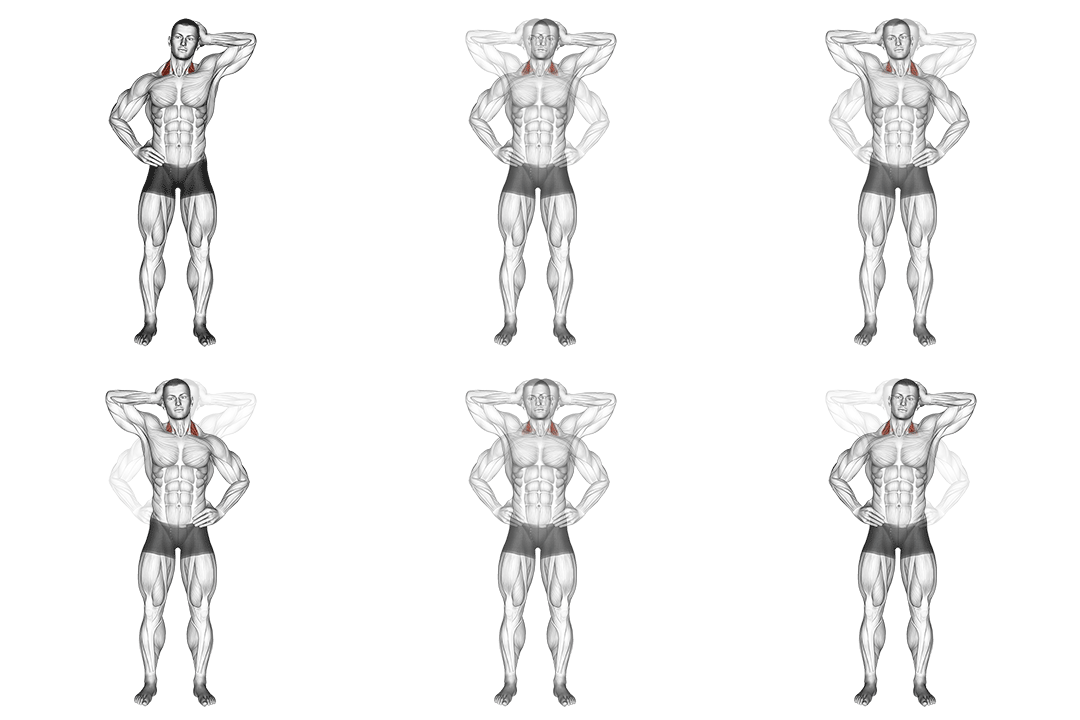
Neck Side Stretch
beginner stretching exercise · body weight · targets levator scapulae
- Body part
- neck
- Primary target
- levator scapulae
- Equipment
- body weight
- Difficulty
- beginner
The neck side stretch is a simple lateral flexion movement that targets the levator scapulae and upper trapezius — the muscles that knot up after long hours at a desk, looking down at a phone, or sleeping in awkward positions. You sit or stand tall, gently tilt your head so your ear moves toward your shoulder, and hold. The motion is small; the relief, when these muscles are tight, is disproportionate. This is one of the most useful stretches in a sedentary world. The levator scapulae runs from the upper neck vertebrae down to the inner edge of the shoulder blade, and it's chronically active in anyone who spends hours per day with their head tilted forward — which describes most modern adults. Tight levator scapulae shows up as a stiff, painful neck that won't rotate fully, headaches at the base of the skull, and shoulder tension that no amount of trapezius massage can resolve. The stretch costs nothing, takes 60 seconds, and can be done at a desk without anyone noticing. Done daily — morning, midway through a work session, and before bed — it acts as a chronic stress reset for the neck and upper shoulders. It won't fix a workstation that's too low or a phone habit that pulls the head down for hours, but it makes those issues more tolerable while you address the root causes.
Why train the Neck Side Stretch?
- Releases tight levator scapulae, the most common source of one-sided neck stiffness in desk workers.
- Reduces tension headaches that originate at the base of the skull and radiate forward.
- Improves neck rotation range, making it easier to check blind spots while driving and turn the head freely.
- Counters the chronic shortening pattern of forward head posture from phone and computer use.
- Can be performed at a desk in 60 seconds without equipment, attracting no attention.
- Pairs well with shoulder mobility work to address upper-body stiffness as a connected system.
How to do the Neck Side Stretch: step by step
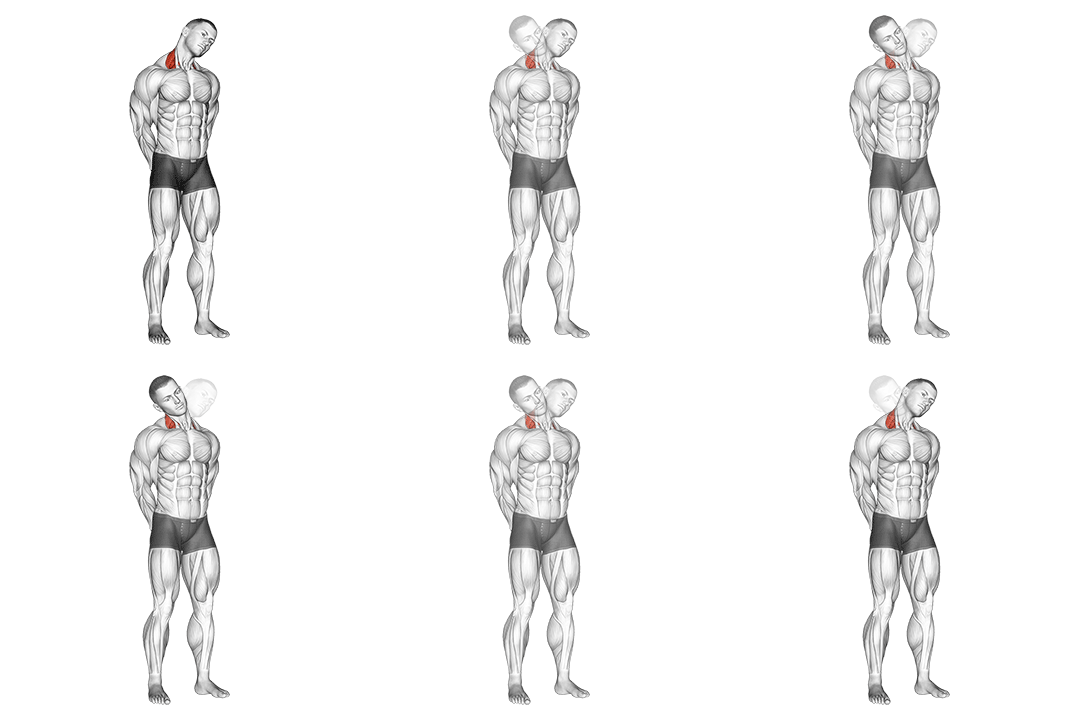
- 1Stand or sit up straight with your shoulders relaxed.
- 2Tilt your head to one side, bringing your ear towards your shoulder.
- 3Hold the stretch for 15-30 seconds.
- 4Repeat on the other side.
- 5Perform 2-4 sets on each side.
Muscles worked
Primary
levator scapulae
Secondary
trapezius, sternocleidomastoid
Common mistakes to avoid
Pulling forcefully with the hand
The hand placed on the side of the head should add only gentle weight, not active force. Pulling hard on the head can strain the cervical vertebrae and trigger the muscle's protective tightening reflex — the opposite of what you want. Let the head fall under its own weight, with the hand as a slight enhancer.
Lifting the opposite shoulder during the stretch
When the head tilts toward the right, the left shoulder often rises as the body tries to reduce the stretch. Press the opposite shoulder down (or let your arm hang heavy, even hold the seat of a chair) to ensure the levator scapulae actually elongates.
Rotating the head while tilting
The neck side stretch is pure lateral flexion — ear toward shoulder, nothing else. Adding rotation changes the muscles being stretched and can compress the cervical spine on the side you're tilting toward. Keep the chin facing forward.
Holding for too short a time
The neck musculature releases slowly. 5-10 second holds barely cue the tissue to soften. Hold for 30-45 seconds, breathing slowly, and you'll feel a second wave of release in the second half of the hold.
Stretching only the symptomatic side
Most people have one side that feels notably tighter. The temptation is to stretch only that side. Both sides should be done equally — even when one feels fine — because the tight side often pulls the spine into compensatory rotation that affects the symptom-free side over time.
Easier and harder variations
Easier
If sitting upright is uncomfortable, perform the stretch lying on your back with a small pillow under the head. Gravity does some of the work. Skip the hand assist entirely and just let the head tilt to one side under its own weight.
Harder
Hold the seat of a chair with the opposite hand to anchor the shoulder down — this deepens the stretch by preventing shoulder elevation. Or add a slight chin tuck (pulling the chin gently toward the throat) before tilting, which stretches the upper trapezius alongside the levator scapulae.
Alternative exercises
Upper trapezius stretch (head rotation variant)
Targets the upper trap specifically by rotating the head toward the opposite shoulder. Useful complement when the upper traps feel tight along with the side of the neck.
Levator scapulae stretch (look-at-armpit variant)
More targeted version that combines side bend, rotation, and chin tuck to isolate the levator scapulae. More intense; useful when the basic side stretch has plateaued.
Doorway shoulder stretch
Different muscles — pecs and front delts — but addresses the same forward-head, rounded-shoulder pattern from a different angle. Pairs naturally with the neck side stretch.
How to program the Neck Side Stretch into your training
Neck stretching works as a frequent, brief practice rather than as a workout component. The neck musculature stays chronically engaged through the day; short, repeated stretches release that tension better than a single long session. Daily routine: 2 sets of 30 seconds per side, performed at least twice a day. A useful anchor is at the start and end of each work session — the stretch becomes a transition cue between focused work and rest. Add a third session before bed if neck tightness affects your sleep quality. During long work sessions: a single 30-second hold per side every 60-90 minutes, paired with looking away from the screen at a far point, prevents tightness from accumulating in the first place. This is more effective than longer stretching after the tension has set in. For desk workers with chronic neck pain: schedule 4-5 mini-sessions throughout the day. Tie each one to an existing trigger (every coffee, every meeting, every email check). The frequency matters more than session length — neck tissue responds to repeated short exposures. For athletes after upper-body sessions (especially pulling work): 2 sets of 45 seconds per side post-workout, when tissue is warm. The neck musculature gets recruited heavily during pull-ups, rows, and overhead pressing, and post-session stretching speeds recovery. Don't program this as a separate 'mobility day' — small daily doses far outperform infrequent long sessions for neck tissue.
Recovery and frequency
The neck side stretch has no recovery cost. You can do it as many times per day as feels useful, before any activity or after, without negative consequences when performed with appropriate gentleness. Watch for sharp pain (as opposed to stretch sensation) anywhere in the neck, especially radiating pain down the arm or numbness in the hands. These signals point to nerve impingement and require a different approach — see a physiotherapist or doctor before continuing. For ordinary neck tightness, the stretch is safe, recovery is immediate, and consistent daily practice produces noticeable improvement within 1-2 weeks. Combine with reduced screen time and an ergonomic workstation review for compounding benefits.
Frequently asked questions
How long should I hold the neck side stretch?
30-45 seconds per side, ideally repeated 2 sets per side. Shorter holds don't give the muscle time to release. Longer than 60 seconds offers diminishing returns; better to do another set with brief rest in between.
How often should I stretch my neck?
Multiple times per day, especially during long work sessions. The neck stays under chronic tension throughout the day, and frequent short stretches outperform occasional long ones. Aim for 4-6 mini-sessions on long workdays.
Will this stretch help my tension headaches?
Often yes — many tension headaches originate from tight upper traps and levator scapulae pulling on the base of the skull. Daily stretching combined with reduced phone time and better workstation ergonomics resolves most cases over 2-4 weeks. Persistent headaches warrant a medical assessment.
Why does my neck pop or click during the stretch?
Crepitus (clicking or popping) in the cervical spine is common and usually harmless when not accompanied by pain. It often indicates joint surfaces gliding past each other. If it's painless, ignore it. If it comes with sharp pain or radiating sensations, see a professional.
Can I stretch my neck before bed?
Yes — pre-bed neck stretching is one of the highest-leverage uses. Many people sleep better and wake with less stiffness when neck and upper shoulders are released before lying down. Pair with a few minutes of slow breathing for a sleep-friendly routine.
What if one side feels much tighter than the other?
Common. The tighter side usually corresponds to the side of dominant phone holding or the side you tend to look at your monitor from. Stretch both sides equally and address the underlying cause: alternate which hand holds the phone, center your monitor, vary your sleep position.
Useful tools for this exercise
Build a workout with the Neck Side Stretch
Puna gives you guided bodyweight workouts you can do anywhere — no equipment, no gym, just structured progressions that build real strength.