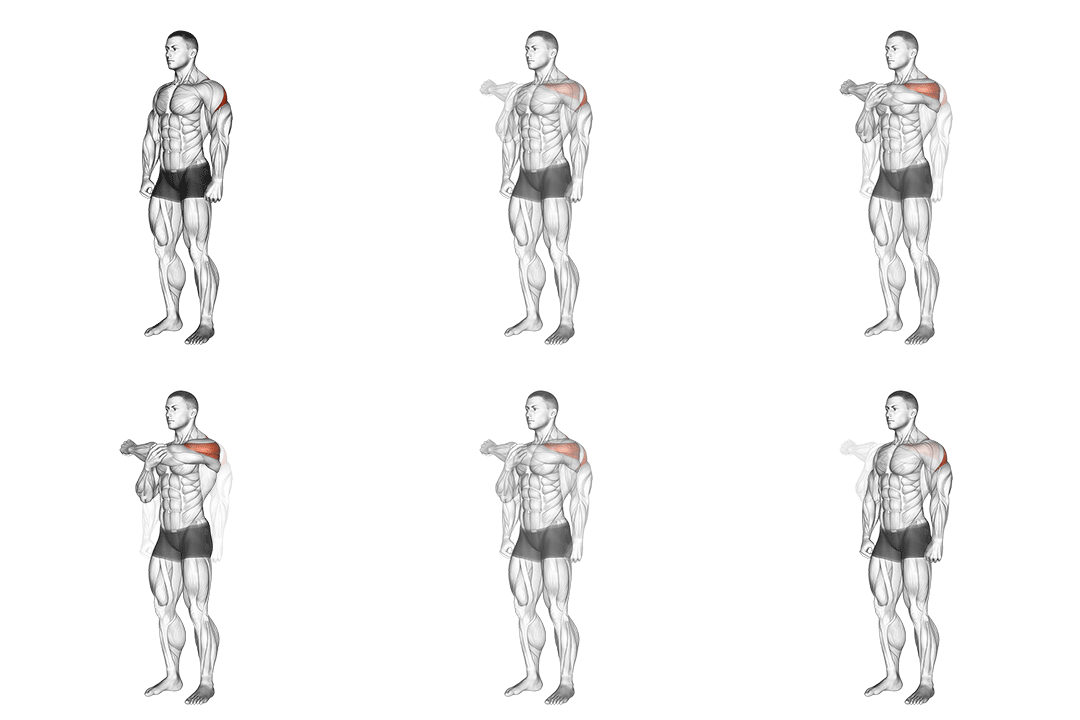
Rear Deltoid Stretch
beginner stretching exercise · body weight · targets delts
- Body part
- shoulders
- Primary target
- delts
- Equipment
- body weight
- Difficulty
- beginner
The rear deltoid stretch — also called the cross-body shoulder stretch — is the standard mobility drill for the back of the shoulder and the surrounding upper-back tissue. You bring one arm across your chest, hook the other arm at the elbow, and gently pull until you feel the stretch through the rear delt and the area between the shoulder blade and spine. The motion is unfussy; the carryover is broad. Most people first encounter this stretch in a generic warm-up routine and dismiss it as too easy to matter. That's a mistake. The rear deltoid and rhomboid region is one of the most chronically tight zones in modern bodies — pulled into a shortened position by hours of typing, driving, and looking at phones. Tightness here doesn't just feel stiff; it limits how much the shoulder blade can move, restricts overhead reach, and cascades into the kind of upper-back tightness that radiates into the neck. What makes this stretch valuable is its accessibility. It costs nothing, takes 60 seconds, can be done in a meeting, and addresses a region that almost every desk worker neglects. Done daily, it maintains a baseline of upper-back mobility that supports better posture, easier overhead movement, and reduced shoulder tension — none of which sound dramatic, but all of which compound over months and years.
Why train the Rear Deltoid Stretch?
- Releases the rear deltoid and infraspinatus, which tighten under the chronic protraction of desk and phone use.
- Improves shoulder blade mobility, allowing the scapula to move more freely during pulling and pressing.
- Reduces the upper-back tightness that often radiates into the neck and triggers tension headaches.
- Counters the rounded-shoulder pattern caused by sedentary positioning and chest-dominant training.
- Costs nothing, requires no equipment, and can be done discreetly anywhere — desk, plane, or commute.
- Pairs well with chest-opening stretches (like doorway pec stretches) for full upper-body postural restoration.
How to do the Rear Deltoid Stretch: step by step
- 1Stand tall with your feet shoulder-width apart.
- 2Extend your right arm across your chest, placing your left hand on your right elbow.
- 3Gently pull your right arm towards your left shoulder, feeling a stretch in your right shoulder.
- 4Hold the stretch for 15-30 seconds, then release.
- 5Repeat on the other side.
Muscles worked
Primary
delts
Secondary
trapezius, rhomboids
Common mistakes to avoid
Pulling the arm across with the elbow joint
Hooking the assisting arm at the wrist creates leverage on the elbow joint, not the shoulder. Catch the arm just above the elbow with the inside of your other arm; this directs the pull into the shoulder blade region where the stretch is meant to happen.
Rotating the torso to follow the arm
When you pull the arm across, the body wants to rotate to reduce the stretch. Keep the chest facing forward — the more the torso stays still, the more the shoulder actually moves. If you have to rotate to feel a stretch, the shoulder is already mobile here.
Letting the shoulder shrug up to the ear
As you pull the arm across, the trapezius often lifts the shoulder toward the ear. This shifts the stretch away from the rear delt. Press the working shoulder down and away from the ear before pulling, and keep it there throughout.
Rushing through with 5-second holds
The rear delt and surrounding tissue release slowly. A 5-second stretch barely cues the muscle to relax. Hold for 30-45 seconds, breathing slowly, and you'll feel the tissue noticeably soften about halfway through.
Doing only the side that feels tight
Most people have one shoulder noticeably tighter than the other (usually the dominant arm). Stretching only that side reinforces the imbalance over time, since asymmetric mobility creates compensatory loading patterns. Always do both sides equally.
Easier and harder variations
Easier
If hooking the elbow is uncomfortable for the assisting arm, place your hand on a wall or door frame at chest height with the working arm extended, then rotate your body away from the wall. The stretch is the same; the leverage is gentler.
Harder
Add a slight downward push on the working elbow to deepen the stretch, but only if the shoulder feels healthy — never force range. Or perform lying on your side with the working arm pulled across by gravity and slight body weight. The supine variation also stretches the rotator cuff more deeply for those who need it.
Alternative exercises
Sleeper stretch
Targets the posterior shoulder capsule and rear rotator cuff specifically. More intense than the cross-body stretch; useful when overhead athletes need internal rotation range. Requires careful introduction.
Thread the needle
Performed on hands and knees, threading one arm under the body. Adds rotation through the thoracic spine alongside the shoulder stretch. Excellent if the upper back feels stiff in addition to the rear delts.
Banded shoulder distraction
Different mechanism — uses a band to traction the shoulder joint rather than passively lengthening the muscle. Pairs well with the cross-body stretch for compound shoulder mobility work.
How to program the Rear Deltoid Stretch into your training
Rear deltoid stretching is most effective as a daily habit rather than as a periodic effort. The tissue adapts to consistent low-volume input far better than to occasional long sessions. Daily routine: 2 sets of 30-45 seconds per arm, once or twice a day. A natural anchor is at the start of any upper-body session, after light shoulder warm-up movements like arm circles and band pull-aparts. Desk worker protocol: 1 set of 30 seconds per arm every 60-90 minutes during long work sessions. The frequency prevents tightness from accumulating over the day rather than addressing it after the fact. Tied to an existing trigger (every email check, every coffee), it becomes effortless. Pre-workout warm-up: 1 set of 30 seconds per arm, after light cardio and band work, before any pressing or pulling. Warm tissue stretches better and prepares the rear delts for engagement during rows and pull-ups. Post-pulling protocol: 2 sets of 45 seconds per arm after pull-up or row sessions. The rear delts work hard during pulling movements and respond well to post-session lengthening for faster recovery. For those with chronic shoulder tightness or postural issues: 3-4 sessions per day at moderate length (30 seconds each). Pair with chest stretches and thoracic mobility work for compound benefit. Notable improvement in posture and shoulder mobility typically appears within 4-6 weeks of consistency.
Recovery and frequency
The rear deltoid stretch has essentially zero recovery cost. You can do it many times per day without consequence. There's no muscle damage, just gentle lengthening of tissue that's chronically shortened. The main signal to watch is sharp pain (rather than stretch sensation) at the front of the shoulder during the stretch. This can indicate impingement or rotator cuff irritation, and means the technique needs adjusting — likely you're letting the shoulder shrug up or rotating the torso. If pain persists despite cleaner technique, see a physiotherapist before continuing. For ordinary rear deltoid tightness, the stretch is safe, immediate-recovery, and benefits compound with daily practice.
Frequently asked questions
How long should I hold the rear deltoid stretch?
30-45 seconds per arm, ideally 2 sets per side. Shorter holds don't give the tissue time to release. Holding longer than 60 seconds offers diminishing returns — better to do another set after a brief rest.
How often should I stretch my rear delts?
Daily is ideal, multiple times per day on long desk-bound days. The rear delts and surrounding tissue stay chronically tight in modern lifestyles, and frequent short stretches outperform occasional long ones.
Will this stretch help my posture?
Indirectly. Tight rear delts and rhomboids combined with tight chest and front delts create the rounded-shoulder pattern. The cross-body stretch addresses one piece of that. Pair with chest stretches and rowing exercises for complete postural improvement, expected over 4-8 weeks.
Should I stretch before or after upper-body workouts?
Both, with different goals. Before: brief stretches (15-30 seconds) within a dynamic warm-up. After: longer stretches (45-60 seconds) when tissue is warm and adaptable. Post-workout is when most lasting tissue change happens.
Why does my shoulder feel tight even after stretching?
Tightness that persists despite stretching usually has another cause — weak posterior chain musculature, poor scapular control, or daily positioning that re-tightens faster than stretching releases. Add face pulls and band pull-aparts to your routine and review your desk setup; tightness usually resolves within a few weeks of addressing root causes.
Can I do this stretch if I have a shoulder injury?
Depends on the injury. The cross-body stretch is generally safe and often prescribed in rehabilitation for posterior shoulder tightness. But for acute injuries, recent surgery, or sharp pain during the stretch, consult a physiotherapist before continuing. When in doubt, default to a milder version (wall-supported) and stay well within painless range.
Useful tools for this exercise
Build a workout with the Rear Deltoid Stretch
Puna gives you guided bodyweight workouts you can do anywhere — no equipment, no gym, just structured progressions that build real strength.